Tech
How Zoho ERP Solves Inventory and Supply Chain Challenges for Retail Businesses
 8 min read
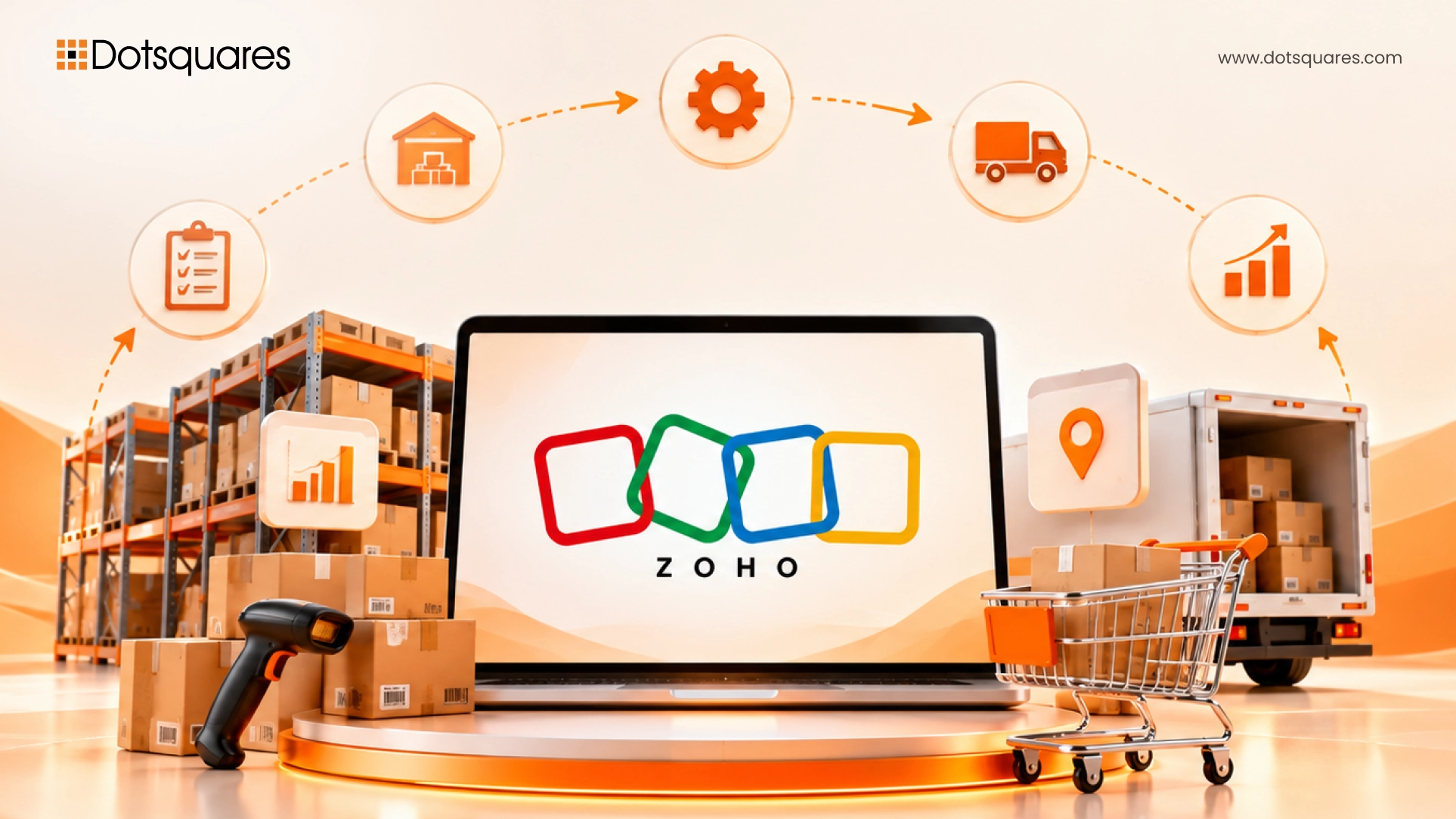
Ask any retail operations manager what keeps them busy, and inventory is almost always near the top of the list. Too much of the wrong stock, not enough of the right stock, suppliers who deliver late, and systems that do not talk to each other, these are the everyday problems that quietly eat into margin and frustrate customers.
The numbers behind this are significant. IHL Group projects that overstock and out-of-stock situations will cost global retailers around $1.7 trillion in 2026, roughly 6.2% of worldwide retail sales. Out-of-stocks alone account for 65.6% of that figure. For Australian retailers already managing cost pressures, the efficiency of your inventory operation is not a background concern. It is a core commercial one.
Zoho ERP, and specifically Zoho Inventory as part of the wider Zoho ecosystem, was built to address exactly these kinds of problems. Here is how it works in practice for retail businesses, and what it can actually do for your operation.
What Are the Real Inventory Challenges Retail Businesses Face?
Before getting into the solution, it is worth being specific about the problems. Because "inventory management" covers a lot of ground, and the right software needs to solve the right issues.
The most common pain points for retail businesses managing inventory across multiple locations are:
- No single view of stock across locations. If you run more than one store or warehouse, you need to know what is where in real time. Spreadsheets and disconnected systems make this nearly impossible to do accurately.
- Stockouts and lost sales. Running out of a product does not just mean one lost transaction. Research consistently shows that customers who cannot get what they want in one place often find another supplier, and do not always come back.
- Excess inventory and tied-up capital. Having excess inventory results in capital locked in the products instead of being used within the business. Additionally, it increases storage costs, risk of becoming obsolete, and usually involves substantial discounts.
- Manual and inefficient purchasing. Manually generated purchase orders that have to be tracked via e-mail and reconciled manually with invoices are inefficient and prone to errors, especially as the size of the business grows.
- Multiple sales channels that are not integrated. A retailer running both a brick-and-mortar store and online requires a unified inventory across all of these channels. This leads to customer experience issues and problems with accounting.
How Does Zoho ERP Handle Retail Inventory Management?
In Zoho ERP for retail, the processes of inventory, procurement, fulfillment, and analytics are all integrated in a cohesive system. This is because the main principle behind it is that all movements of inventory, from ordering to storage to sales and returns, occur in one place, providing you with an accurate overview at any point in time.
Real-Time Stock Visibility Across Every Location
Zoho Inventory enables you to monitor the inventory held in several warehouses and stores using one dashboard. Each store has its own records of stock levels, and each product has a separate transfer record and reorder level. When something drops below threshold, it moves into a pending replenishments list; no manual checking required. For multi-location retail businesses, this alone solves a problem that previously needed either a dedicated stock controller or a lot of time spent cross-referencing spreadsheets.
Automated Purchasing and Supplier Management
Zoho ERP takes care of the whole purchase process including purchase request, approvals, and purchase order generation. The suppliers have access to their own portals where they can view their orders, submit invoices, and also communicate directly. The three-way match of purchase order, receipt of goods, and supplier invoice is performed in Zoho ERP which eliminates a great amount of manual matching which takes time from the finance and procurement departments of most retailers.
Omnichannel Fulfilment From One Platform
Regardless of whether your order is created in the physical store, website or Amazon and eBay marketplaces, Zoho ERP sends it out from the same stock pool. Your orders are sent out from the lowest cost fulfillment location and the stock ledger is automatically updated upon any movement. The returns process includes updating the inventory and issuing of credit notes. This implies that retailers who are running on multiple sales channels will have one true source for their stock.
Demand Forecasting and AI-Assisted Replenishment
The Zia artificial intelligence engine in Zoho ERP uses sales history and velocity to predict demand trends and make replenishment suggestions. Zia also identifies any abnormalities in the purchase process and performs sentiment analysis on the suppliers. Thus, any possible supply risk is flagged by the system before it causes any inventory issues. Such a facility used to need a separate team of analysts. However, with Zoho ERP, it is part of the same system your team uses for normal processes.
Almost one in three Australian businesses are now using AI for demand forecasting tasks (RBA research cited by Enterprise Monkey). The Zia features within Zoho ERP bring that capability to retail businesses without needing to add a separate tool or a data science hire.
Reporting That Actually Tells You Something
Zoho ERP includes ABC classification (identifying your fastest and slowest moving stock), inventory ageing reports, stock consumption analysis, and over 100 prebuilt dashboards covering everything from warehouse performance to supplier reliability. For retail managers making buying decisions, these reports replace the guesswork that tends to drive overstock and understock situations.
Zoho ERP for Multi-Location Retail: Why It Matters
Single-location retailers have inventory challenges. Multi-location retailers have all of those challenges multiplied, and the added complexity of inter-store transfers, different demand patterns by location, and the risk of imbalanced stock distribution.
Zoho ERP's multi-location inventory management handles stock transfers between locations, sets location-specific reorder points, and gives a consolidated view of total stock alongside a location-by-location breakdown. When one store is running low and another has surplus, the system flags it. The transfer can be initiated and tracked within the same platform. This is the kind of operational visibility that makes a real difference when you are managing more than two or three locations.
Dotsquares works with Australian retail businesses across exactly these multi-location scenarios as part of our retail and FMCG technology services. Getting the Zoho ERP configuration right for a multi-location setup is where good implementation makes the biggest difference, the software has the capability, but it needs to be set up to reflect how your specific operation works.
What Does Implementation Actually Look Like?
A few things are worth being direct about here. Zoho ERP is a competent software, however, as with any other ERP, its effectiveness depends much on how it is configured. Poorly configured system, taking into account your processes, suppliers, and multi-site needs, will not function as it supposed to work.
Dotsquares is a Premium Zoho Partner based in Australia. This means that Dotsquares' team possesses enough technical skills to properly configure Zoho ERP for your retail business, including creation of custom workflows, connecting Zoho ERP to your current POS or e-commerce platform, site specific reporting, user training, etc.
If you are evaluating Zoho ERP alongside other options, our guide to selecting the right Zoho consulting partner in Australia covers what to look for when making that decision.
Is Zoho ERP the Right Fit for Your Retail Business?
Zoho ERP is a good solution for retail organizations which are struggling with the task of managing their inventory at different locations or channels with manual processes of procurement and fulfillment which have not been able to scale up and are in search of one integrated platform for managing stock, procurement, and omni-channel sales in place of four separate platforms.
This solution is a great match for midmarket Australian retail organizations which have outgrown the level of spreadsheet and stock management software usage but don’t want the burden of implementing enterprise ERP.
If that sounds like where your business is, the next step is a conversation about what your specific operation looks like and how Zoho ERP would be configured to fit it. Dotsquares Zoho consulting services team works through that scoping process with Australian retailers before any implementation work begins.
Frequently Asked Questions
What is Zoho ERP for retail?
The Zoho ERP for Retail solution offers an integrated platform that includes features related to inventory management, procurement, omnichannel fulfillment, supplier management, and reporting. The software allows tracking the inventory in brick-and-mortar stores, online, and warehouses, and helps retailers manage their inventory in one unified platform.
Can Zoho ERP manage inventory across multiple store locations?
Yes, Zoho ERP provides multi-location inventory management. This includes transfers of stock between different locations, location-specific reorder points, and a unified dashboard for all the locations. Each of the locations keeps track of its stock while also providing an overview of the entire business.
How does Zoho Inventory help prevent stockouts and overstock?
Zoho Inventory sets low stock warnings and automated reorder alerts for each of the items per location. Demand forecast analysis provided by Zia AI identifies reordering requirements even before any potential stockouts happen and notifies about any potential overstock of slow-moving products.
Does Zoho ERP work with both physical stores and online channels?
Yes, Zoho ERP unifies in-store POS, e-commerce platforms, and marketplaces stock in one pool. The inventory is updated instantly, independent of the sales channel, which solves the issue of selling inventory that has been sold somewhere else.
Why do I need a Zoho consulting partner for ERP implementation?
The customization options offered by Zoho ERP for Retail are extensive and offer flexibility. However, this is also one of the main disadvantages because the configuration out-of-the-box is not always appropriate for the retail business. The company works with Zoho partners for configuration, integration, and training purposes.


Related Post
 October 27, 2026
How Zoho ERP Solves Inventory and Supply Chain Challenges for Retail Businesses
See how Zoho ERP helps Australian retailers fix stock errors, streamline supply chains and cut costs. Talk to Dotsquares, a Zoho Premium Partner.
Keep Reading October 26, 2026
Foldable Phones and Agentic AI: The Future of Adaptive Mobile App Development
Explore how foldable phones and agentic AI are shaping mobile app development, with insights into adaptive design, automation, use cases and modernisation.
Keep Reading October 26, 2026
How Much Does It Cost to Build an MVP App?
Discover the MVP app development cost in 2026-27, including feature-wise pricing, key cost factors, development timelines, and tips to reduce expenses.
Keep Reading