Tech
How CRM Solutions Help Retail and FMCG Businesses Improve Customer Relationships
 6 min read
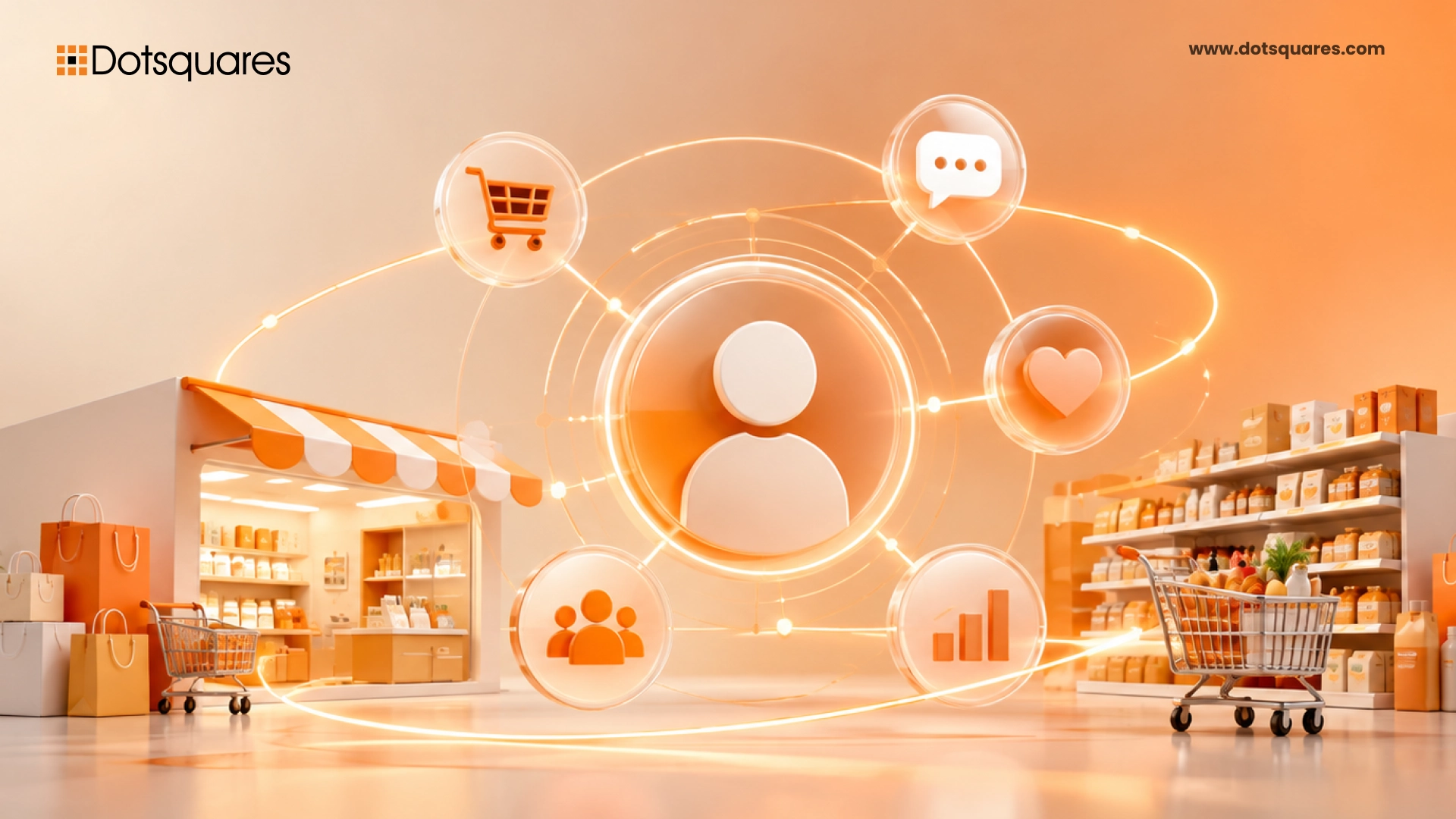
You've bought coffee beans from the same shop for three years. Last week they emailed you a "10% off your first order" coupon. Annoying, right? It's a small thing, but it tells you the shop doesn't really know you.
Now multiply that by thousands of shoppers, and you can see why CRM solutions for retail and FMCG matter so much. Customer relationship management in retail is mostly about remembering people: what they bought, what they complained about, what they ignore. Businesses that do it well keep customers longer. The ones that don't lose them without ever finding out why.
It's already showing up in the numbers. Purchase tracking data from 2026 found that eight of the top ten U.S. retailers captured a smaller share of their own shoppers' spending than a year earlier. People are spreading their money around.
What Is a CRM Solution?
Think of it as a shared notebook about your customers. Every purchase, support call, loyalty point, and complaint goes into one record, and anyone on your team can open it. No digging through spreadsheets, no "let me check with the other department." A decent retail CRM software also nudges you: this customer hasn't ordered in 60 days, that one just reached a new loyalty tier.
Why Retail and FMCG Businesses Face Unique Customer-Relationship Challenges
Retail has a channel problem. One customer might browse your app, buy in-store, and post the item back a week later. FMCG has a distance problem. You make the product, but a distributor ships it, a wholesaler stocks it, and a corner shop sells it. You rarely meet the person who actually buys. Both end up guessing, just about different people.
How CRM Solutions Improve Customer Relationships in Retail
Unified 360° customer view across online & offline channels
A customer buys a jacket in-store on Saturday. On Tuesday she messages support about a broken zip. Without a CRM, the agent has no idea she bought it. With a CRM for retail business, the agent sees the purchase, the store, even the last time she called. Nobody makes her repeat herself.
Personalized marketing and loyalty programs
Research puts it at 76%: that's how many consumers get frustrated when a brand treats them like everyone else. A CRM fixes the basics. You can split people by what they actually do, like monthly regulars, people who drifted away, and people who only turn up for sales, and write to each group differently. Loyalty points should work online and in-store too. Customers notice when they don't.
Curious what that looks like in practice? Have a look at our Retail & FMCG CRM Development Solutions.
Faster, more consistent customer service
Agents move faster when everything sits on one screen: the order, the earlier complaint, the loyalty tier. Half the time the problem gets fixed on the first call. Saved replies help too, so a customer in Leeds hears the same answer as one in Delhi.
Inventory and demand insights tied to buying behavior
Stock data on its own only tells you what sold. Tie it to customers and you learn who bought it and whether they'll be back. If your 200 best repeat buyers all want the same product, you'd rather know before it runs out. An empty shelf annoys loyal customers most.
How CRM Transforms Customer Relationships in FMCG
FMCG margins are thin and volumes are huge, so the relationship with the trade counts as much as the one with shoppers.
Distributor and retailer relationship management
A CRM for FMCG companies gives every distributor and retailer their own record: orders, credit terms, visit notes, open claims. When one distributor's orders slip for two months, you'd like to hear about it in week one. Not at quarter end. Reps and account managers work from the same record, which stops the classic mess where one team promises a discount another team already refused. Some brands also start selling to other shops directly, and we've covered how to create a wholesale channel without losing track of who's ordering what.
Field sales force automation (SFA)
Reps log visits, book orders, and photograph shelves from their phones, offline too. Managers see which outlets were actually visited today. And nobody copies a paper notebook into a laptop at 9 pm.
Trade promotion and scheme management
Industry research says consumer goods companies put about 20% of revenue into trade promotions, and 59% of those promotions lose money worldwide (72% in the U.S.). Often nobody checks afterwards. A CRM matches each scheme to outlet-level sales, so you repeat what worked and drop the rest.
Real-time order and stock visibility
When reps and distributors can see live stock and order status, deliveries show up when promised. Shop owners remember who kept their shelves full during festival season.
Core Features to Look for in a Retail/FMCG CRM
Whatever CRM software for retail industry needs you're shopping for, check for:
- One profile per customer across channels
- Offline mobile app for field teams
- Scheme and promotion tracking
- Links to your ERP, POS, and online store
- Reports people can read without an analyst
The ROI of CRM in Retail & FMCG (at a glance)
The global CRM market is worth about $126 billion this year. Returns are smaller than the old headlines claim: the latest analysis puts the average at $3.10 per $1 spent, not the $8.71 still doing the rounds.
Off-the-Shelf vs. Custom CRM Development
Ready-made platforms are quick to set up, but when distributor hierarchies or scheme rules get messy, our Bespoke CRM Development Services are a better fit. Off-the-shelf works if your process is standard. Custom costs more upfront but matches how you actually sell. Plenty of businesses pick the middle route: a standard platform with custom work on top.
How Dotsquares Helps Retail & FMCG Businesses Build the Right CRM
Dotsquares has delivered hundreds of CRM projects, on ready-made platforms and custom builds. With retail and FMCG clients, we start by mapping how customers, distributors, and field teams actually buy and sell. Then we pick a platform (or build one), plug it into your existing ERP, POS, and online store, and keep supporting it after launch.
Conclusion
Pick one problem first, maybe repeat purchases or slow distributor orders, and fix that. A CRM only pays off when people use it daily, so keep version one simple. If you'd like to talk it through, get in touch with the Dotsquares team.
FAQs
Do small stores need retail CRM software?
If you have repeat customers, yes. Even a basic setup beats spreadsheets once your customer list and orders start piling up.
How is a CRM for FMCG companies different from a retail CRM?
It tracks distributors, outlets, schemes, and field visits, not just individual shoppers.
How long does it take to build a CRM?
Anywhere from a few weeks to several months, depending on scope and integrations.


Related Post
 September 30, 2026
One Intranet for Six Content Worlds: How a Large Care Organisation Finally Got Its Internal Information Under Control
See how a community care organisation unified HR, governance, IT, training and community content in a self-managed SharePoint Online intranet.
Keep Reading September 30, 2026
Dreamforce 2026: Every Major Salesforce Announcement and What It Means for Your Business
Explore Dreamforce 2026 announcements, including AIforce, ClaudeForce, SlackForce, Agentforce, Builder Central and Koa, plus their impact on businesses.
Keep Reading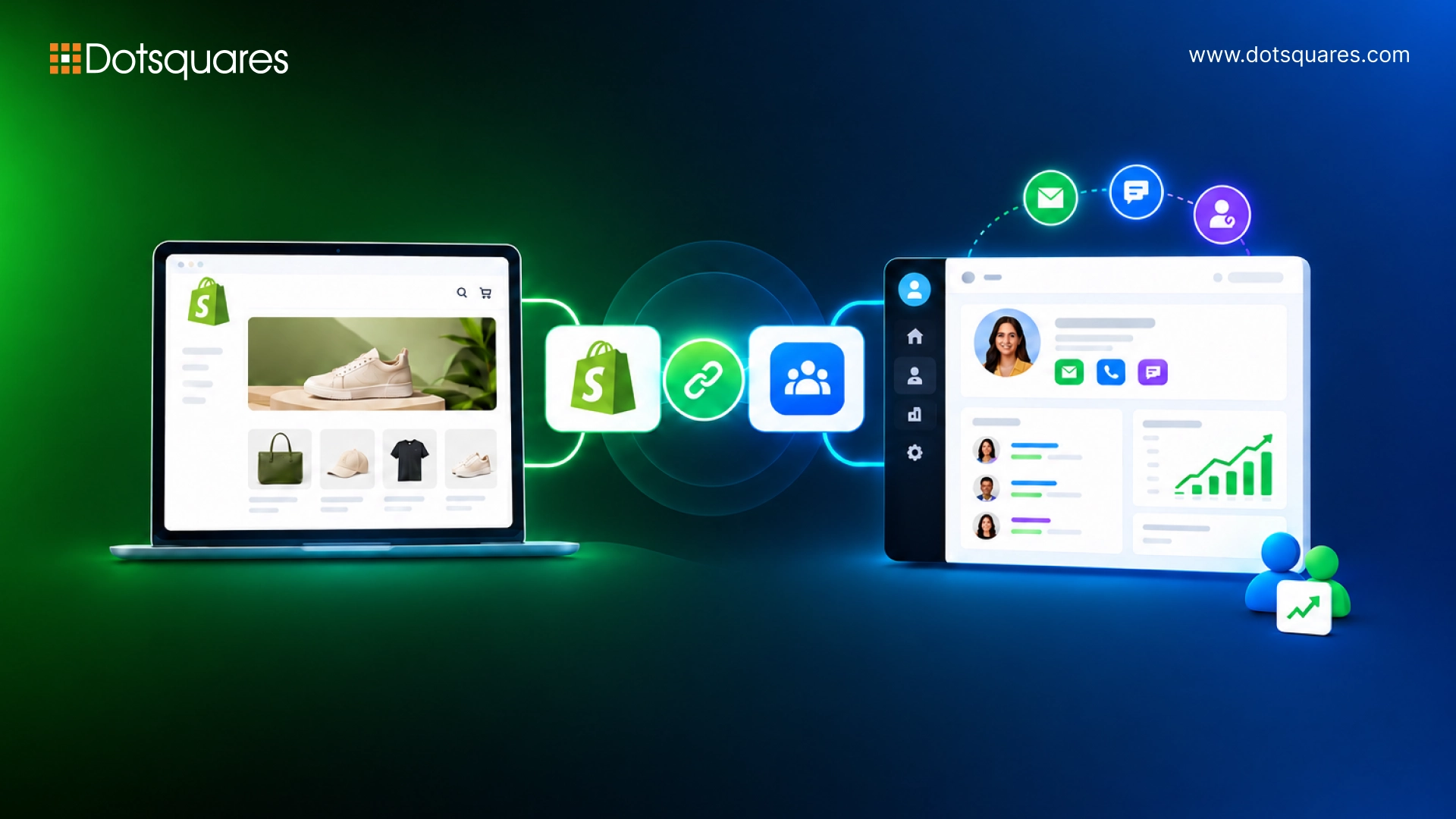 September 30, 2026
Shopify CRM Integration: How to Connect Your Store With a CRM
Learn how Shopify CRM integration connects customer data, automates marketing, improves segmentation, and helps you choose the right CRM for your store.
Keep Reading