Tech
What is the difference between business intelligence and business analytics?
 4 min read
Businesses generate huge volumes of data from sales, customer interactions, marketing activities, financial transactions, and their day-to-day operations. Collecting the data is only the first step; companies have to understand it and use it to make better decisions. That is why business intelligence and business analytics are so important.
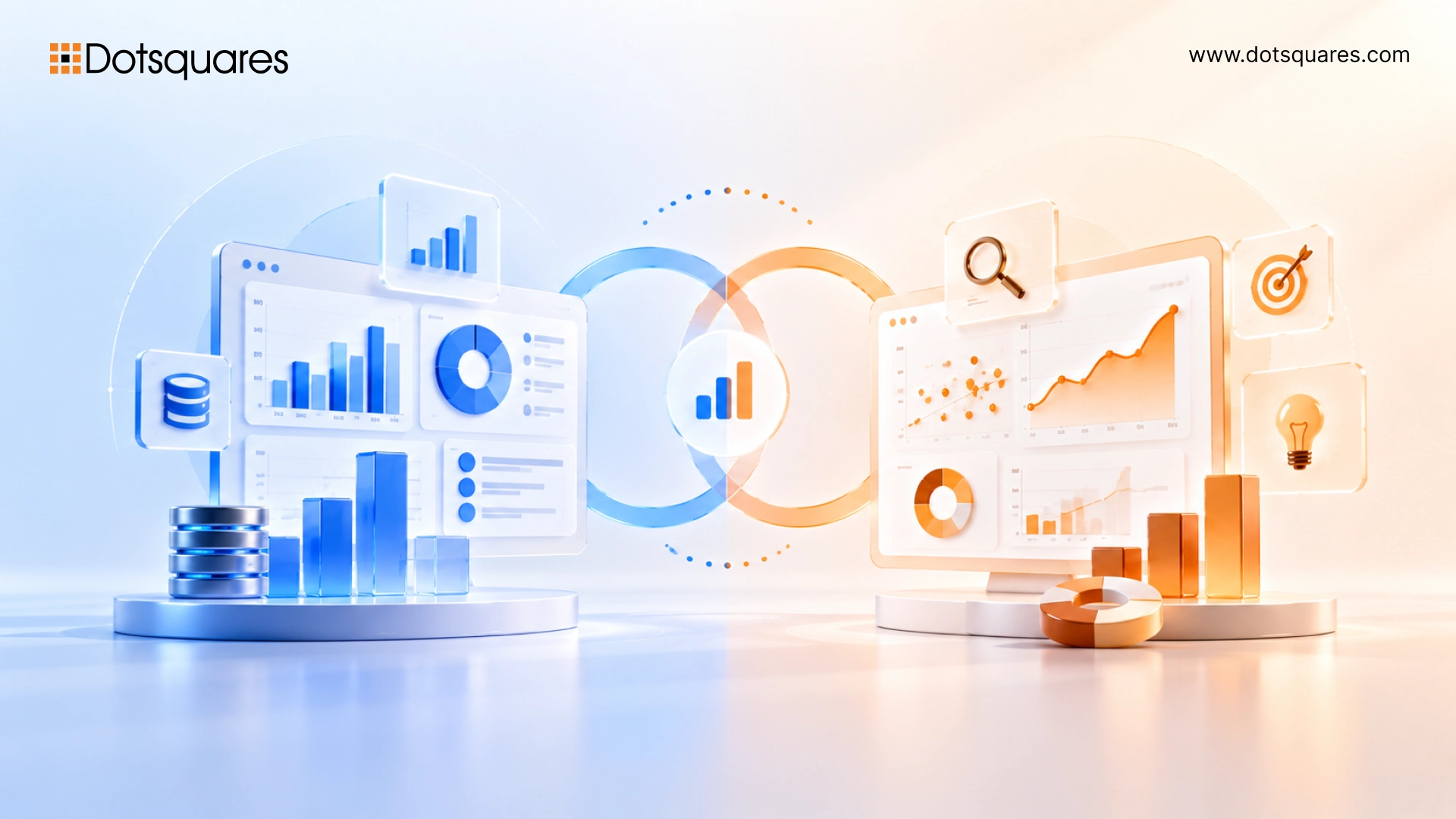
Although these terms are often used interchangeably, they serve different purposes. Business Intelligence mainly enables companies to see what has already happened and what is currently happening, while Business Analytics seeks out patterns, makes predictions as to what might happen in the future and aids in making decisions.
What Is Business Intelligence?
Business intelligence consists of collecting, organising, verifying and presenting business data in a manner that is easy to understand; it enables companies to keep an eye on their performance and to see what is happening in various parts of the company.
Business intelligence tools are able to convert data into dashboards, reports, graphs, and key figures. Managers can make use of these tools to monitor sales, income, costs, customer activities, and the overall performance of the business.
For instance, a clothing shop can apply business intelligence to examine sales on a monthly basis, check its stock levels, find out which items are selling the most and see how the various stores are performing.
Common uses of BI are:
- Monitoring performance: Keeping a close eye on sales, income, expenses and other key figures.
- Preparation of reports on business and daily activities.
- Data visualisation: Presenting information using graphs and dashboards.
- Enhancing performance: Identifying areas in which the business could improve.
Microsoft Power BI, Tableau, Qlik, and SAP Analytics solutions are among the more popular BI tools.
What Is Business Analytics?
Business analytics goes a step beyond this by employing data verification, the use of figures, making guesses, and other types of checking in order to identify patterns and assist with business decisions. Rather than merely considering what has already happened, it enables companies to understand why something occurred and also to anticipate what might happen in the future.
For instance, an online shop can analyse customers' purchases, the actions they take, the times of year and their visits to the website in order to predict which products might be wanted next; this in turn helps the company to plan its inventory and marketing more effectively.
Common Uses of Business analytics:
- Making predictions: this involves guessing sales, demand, and customers' actions.
- Observing customers: Gaining an understanding of their buying habits and customer groups.
- Checking the risks: Identifying financial and work-related risks.
- Selecting the options: Considering the various plans and their possible outcomes.
Business analytics makes use of tools such as Excel, Python, R, number models, data checking and computer learning.
Business Intelligence vs Business Analytics
The way in which business intelligence differs from business analytics is in their area of focus. Business Intelligence mainly seeks to answer questions such as "What happened?" and "What is happening now?" whereas Business Analytics is more concerned with questions such as "Why did it happen?" "What might happen next?" and "What should we do?"
BI is generally associated with reporting, with the use of dashboards to display data and with monitoring performance. On the other hand, BA makes use of sophisticated analytical techniques in order to identify trends, produce predictions, and examine possible business plans.
BI and BA aren't rivals, though; in fact, they usually work together. For example, a BI dashboard could indicate that sales have fallen in a particular area. The Business Analytics team could then examine customer behaviour, prices, competitive conditions and the time of year in order to find out the reason. Here's what is likely to happen next.
Which of the two does your business require?
It all comes down to what the company is aiming to achieve. If a business needs reports in order to keep an eye on its performance and to find out how things are going, it can obtain assistance from business intelligence. On the other hand, companies which want to predict trends, understand business issues or assist with major planning can get help from Business Analytics.
In some cases, companies are able to use both of them; BI shows how things are currently going, whereas BA helps to turn that information into better ideas for the future.
Conclusion
Business intelligence and business analytics may have different roles but are aimed at the same overall objective: assisting companies in making intelligent decisions based on data. Business Intelligence enables companies to see what has already happened and what is currently happening, whereas business analytics uses checks to identify patterns, make guesses about what might happen in the future, and assist with future planning.
Using both companies allows you to monitor performance, understand customers, improve their work, manage risks, and identify opportunities, thereby promoting long-term growth.


Related Post
 October 07, 2026
What is the difference between business intelligence and business analytics?
Learn the difference between business intelligence and business analytics, including their uses, tools, benefits, & how they support better business decisions.
Keep Reading October 07, 2026
How AI Is Building the Next Generation of Secure Digital Banking
Discover how AI in banking powers fraud detection, biometric authentication, and compliance to build secure digital banking. Explore Dotsquares' insights.
Keep Reading October 07, 2026
How AI Is Helping Financial Institutions Detect Fraud in Real Time
Learn how AI fraud detection helps banks prevent fraud in real time using machine learning, behavioural profiling, anomaly detection and AI-powered KYC.
Keep Reading