
Is Your Business AI-Ready?

Tech
 5 min read
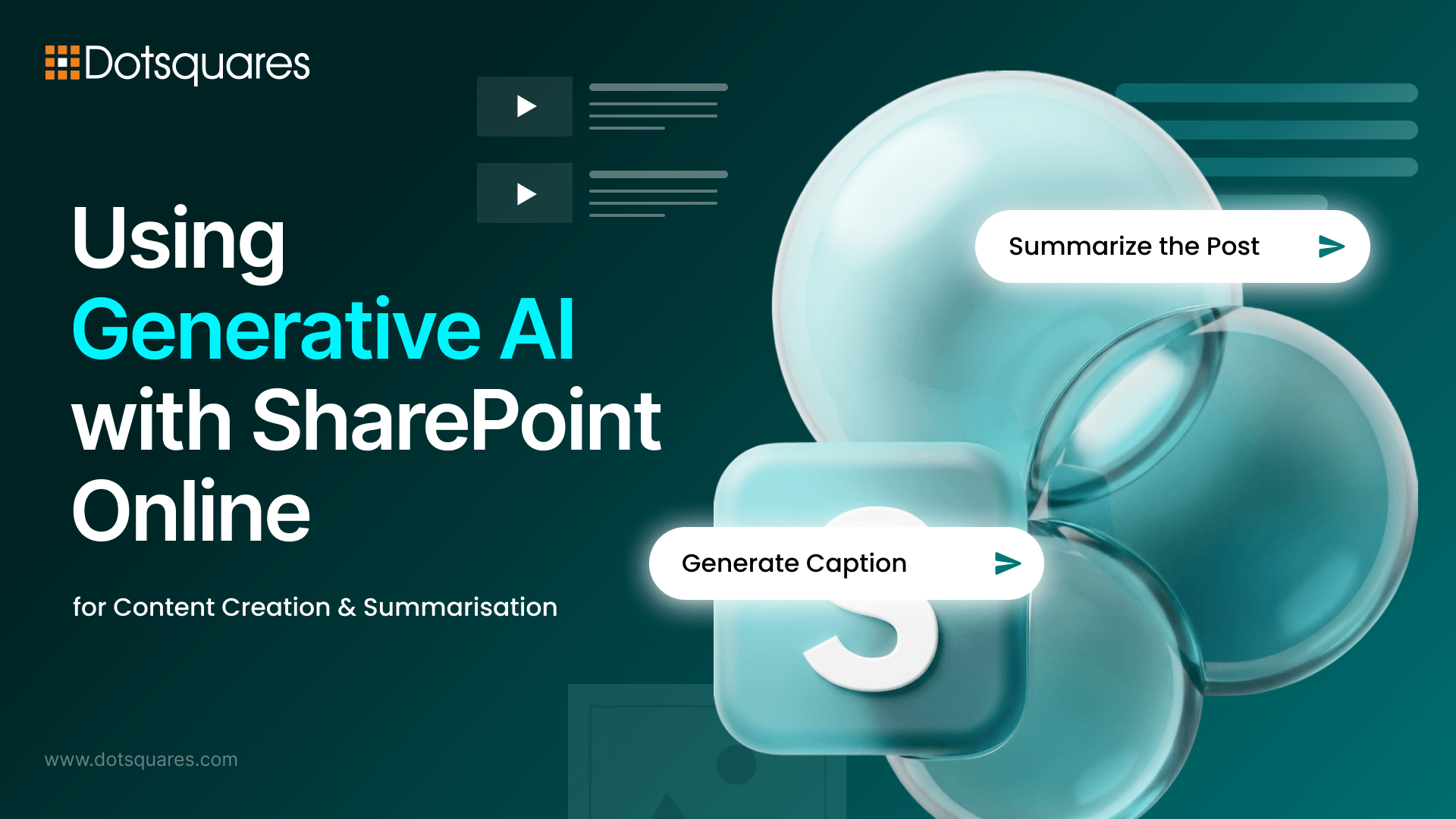
Most SharePoint environments are full of content nobody reads.
Contracts, policy documents, meeting notes, project reports, etc., uploaded, filed and forgotten. When someone needs that information two weeks later, they run a search, get 60 results, skim three of them and make a decision without the full picture. It happens constantly, and most teams have just accepted it as normal.
That is the actual problem Generative AI fixes inside SharePoint. The gap between content that exists and content that actually gets used.
Here’s something most teams do not track: how much time goes into producing content that follows the exact same structure every single time.
Internal announcements, project briefs, SOPs, client-facing summaries. The format barely changes from one to the next, however, effort somehow always does.
When Generative AI is integrated into SharePoint Online, that changes. A team member enters a few key inputs, project name, audience, main points and gets a structured first draft without leaving the SharePoint workspace.
What separates a useful AI integration from a gimmicky one is context. A properly configured setup pulls from your existing SharePoint content, past documents, approved templates, internal language, so the output actually sounds like your organisation. That matters when content is going out to clients or sitting in a compliance library.
Where this gets used most:
The work that used to take two hours takes twenty minutes. More importantly, it starts from what your team already knows, not from scratch.
A typical SharePoint environment holds thousands of documents such as some are recent, some are two years, out of date. Most people cannot tell without opening them.
Reading time adds up fast. And most of it is skimming, looking for the three sentences that actually matter in a 40-page report.
AI summarisation cuts straight to those three sentences. Upload a procurement report, ask for a summary and get key decisions, outstanding actions and relevant figures in under ten seconds. Same for contracts, compliance documents, meeting transcripts, technical specs.
The more useful feature, and the one most teams overlook initially, is targeted extraction. You do not have to summarise the whole document. You can ask specific questions of it. “What are the renewal terms in this contract?” returns a direct answer. “What risks are flagged in this project report?” surfaces only those sections. It behaves more like a conversation than a search.
This works well, though only when the document library is reasonably well-organised and documents are filed consistently. Though AI summarisation cannot fix a chaotic folder structure, it is good at reading content. Organisations looking to modernise these environments often combine SharePoint with Power Platform tools to create more intelligent and automated business processes.
When SharePoint Online development is set up properly, summarisation becomes part of the workflow instead of an extra manual task.
Nobody triggers these manually, instead they run when the document arrives.
AI-assisted content creation and summarisation only deliver real value when they happen without someone remembering to start them.
Power Automate development services connect the AI layer to SharePoint workflows, so document arrives, summary generates, notification sends, task creates, all in sequence without manual input. Good Power Automate consulting builds in the logic for document types, permissions, routing rules and what happens when something does not fit the expected pattern. That last part is where a lot of generic builds fall apart.
The most technically impressive AI integration will go unused if the interface makes it harder than just doing the task manually.
Power Apps development services put a purpose-built front end in front of content teams. A user picks a document type, fills in the relevant fields and receives a draft or summary, without navigating SharePoint’s admin structure. Certified Power Apps developers build around how teams actually work day-to-day, not around what the technology can theoretically do.
Most teams that skip the interface step end up with an AI tool their people quietly stop using after the first week.
Microsoft Copilot is a reasonable starting point. It is not a finished solution for organisations with specific content workflows, compliance requirements or document taxonomies that do not match the generic use case it was built for.
Custom SharePoint solutions from experienced SharePoint Online Developer Services teams give businesses AI that works with their actual data structures, including control over how AI accesses and outputs content, which regulated industries require and most generic tools cannot deliver.
The Gap Is Growing
Teams already running AI-assisted content workflows inside SharePoint are pulling ahead. The technology is not experimental anymore, the use cases are proven, the platform is already in place and the gap between early movers and everyone else is widening.
If your team is still drafting from scratch and reading every document manually, that is fixable. Talk to Dotsquares about building a Generative AI integration into your SharePoint environment.
Get in touch today.


 October 15, 2026
Learn how low-code integration connects business apps and APIs, its key benefits, common use cases, limitations, and when to choose custom integration.
Keep Reading October 15, 2026
Learn about SAP BW to cloud migration, including benefits, challenges, AWS options, cost factors and planning steps for a successful migration.
Keep Reading October 12, 2026
Learn how React Native works, where it saves time and cost, which industries use it, and whether it's still a good choice in 2026.
Keep Reading