Tech
Future of Blockchain in B2B: Trends & Opportunities
 4 min read
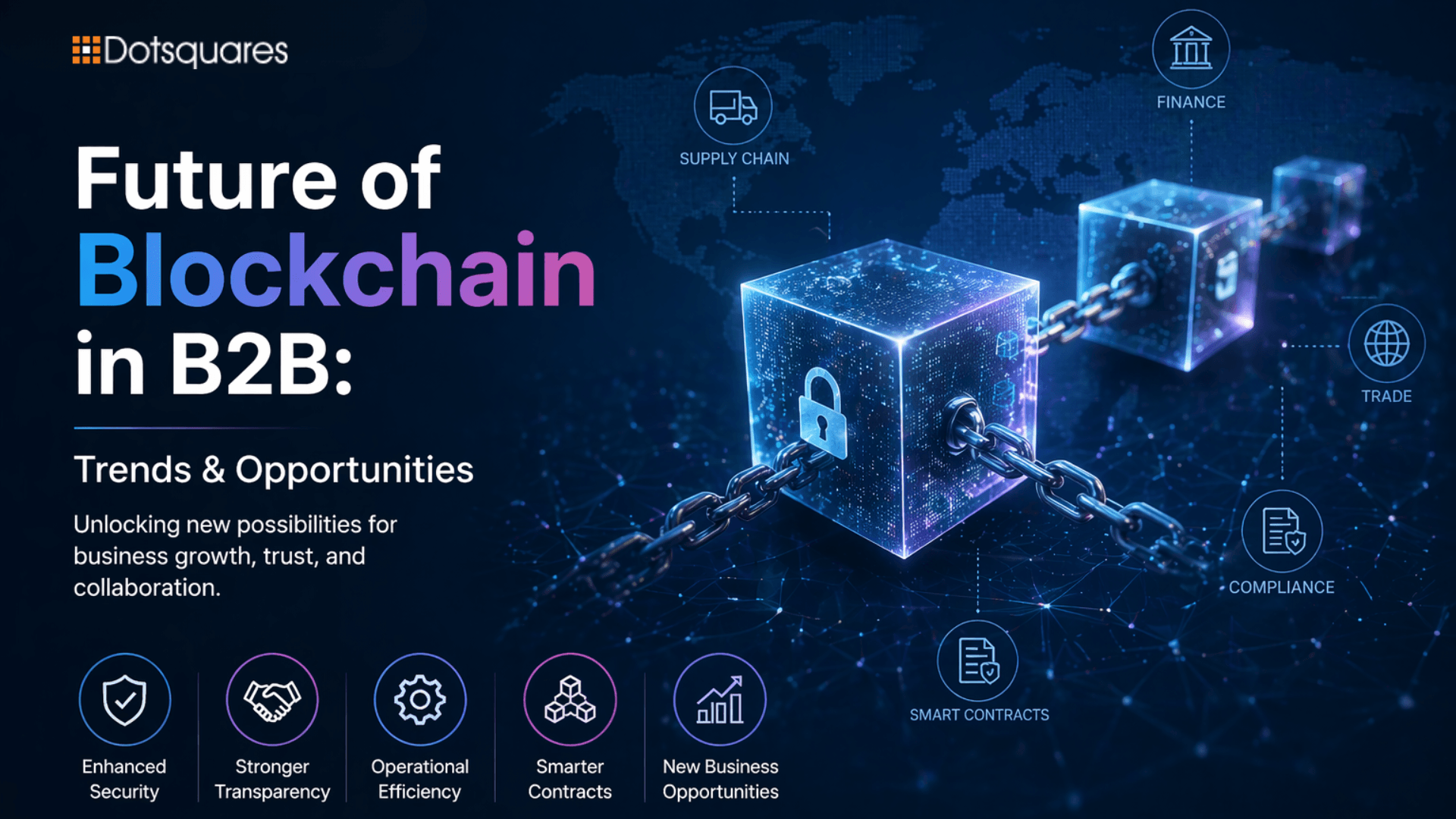
Blockchain technology is strongly changing the process of business operations, especially in the B2B sector. The concept of using this emerging technology as a synonym for cryptocurrency is no longer acceptable. Today, it is considered one of the most powerful tools for enhancing transparency, efficiency, and trust between organisations. With the expansion of digitalisation, the future of blockchain in B2B is expected to bring significant changes across industries.
What Blockchain Means for B2B
Blockchain is a decentralised ledger system that records transactions securely across multiple networks. In business collaboration where accuracy and trust are essential between two groups, this technology allows businesses to share verified data without the help of a third party. This reduces delays and enhances operational efficiency.
Key Trends Shaping the Future
Greater Transparency in Supply Chains: There are various channels involved in the supply chain business, making it difficult to manage multiple activities effectively. The use of this blockchain technology provides real-time information about the movement of products from one channel to another. This tracking facility of products within different sources reduces the chances of fraud and builds trust between stakeholders.
Adoption of Smart Contracts: Smart contracts solutions are self-executing agreements. They perform every activity accordingly once the conditions meet their predefined criteria. The use of smart contracts reduces paperwork, minimises the chances of errors, and helps in finishing tasks faster than before. All these activities are highly important in B2B transactions.
Tokenisation of Assets: The concept of tokenisation is gaining popularity across the world. Tokenization services makes it easier for businesses to represent their physical assets as digital assets. Converting assets into digital tokens helps organisations to invite investment in these assets.
Integration with Emerging Technologies: It is one of the notable features of blockchain technology. It is easier to merge it with technologies like artificial intelligence and the Internet of Things (IoT). The combination of these contemporary technologies helps in improving data analysis, automation, and decision-making processes.
Blockchain-as-a-Service (BaaS): Many organisations are now turning to blockchain-as-a-service platforms to adopt the technology without investing huge amounts of money in making their existing infrastructure compatible with the new ecosystem. This is no less than a boon for small and medium-sized enterprises.
Focus on Interoperability: With its increasing adoption, businesses are looking to make different systems work together. Interoperability makes communication easier between networks, enabling smoother collaboration between two businesses.
Improved Data Privacy and Compliance: With the implementation of strict rules for data protection, businesses are looking for solutions that maintain transparency with privacy. Use of these advanced techniques is helping organisations to work according to government rules and regulations while maintaining secure data sharing.
Opportunities for Businesses
The future of blockchain in B2B holds many exciting possibilities, such as:
- Increased Efficiency: Automation and less reliance on middlemen make business operations more efficient.
- Stronger Trust: Shared and immutable records boost healthy relationships between partners.
- Faster Transactions: The process of making payments between two countries becomes quicker and more cost-effective.
- Enhanced Security: The use of decentralised systems protects from data hacks.
- Innovation in Business Models: Companies can explore new practices such as decentralised platforms and digital identity systems.
Challenges to Consider
Despite its advantages, the shift to this technology comes with many problems.
- Difficulty in managing large volumes of transactions
- Limited standardisation across different platforms
- Absence of regulatory measures in various regions
- Initial costs associated with implementation
Once businesses find an appropriate solution to these issues, they will be able to unlock the full benefits of this technology.
What Is The Future
Considering the increasing adoption of blockchain technology, it is believed that it will extend its reach to all industries. As the technology matures, businesses will increasingly rely on it to improve collaboration and streamline operations. Its use will not only enhance efficiency but also open new doors for growth and innovation.
Conclusion:
Blockchain is no longer a required technology; it is becoming an important tool for businesses. By embracing the ongoing practices and preparing for upcoming changes, organisations can expect substantial benefits from the existing situations. Its increasing use in B2B presents a compelling opportunity for companies aiming to stay competitive in a rapidly changing digital economy.
If you are ready to embrace the power of blockchain in your business operations, then you need to seek the recommendations of blockchain experts familiar with this technology.


Related Post
 October 15, 2026
Low-Code Integration: What It Is, How It Works and When Businesses Should Use It
Learn how low-code integration connects business apps and APIs, its key benefits, common use cases, limitations, and when to choose custom integration.
Keep Reading October 15, 2026
SAP BW to Cloud Migration: Benefits, Challenges and Planning Steps
Learn about SAP BW to cloud migration, including benefits, challenges, AWS options, cost factors and planning steps for a successful migration.
Keep Reading October 12, 2026
Mobile App Development with React Native and What You Need to Know
Learn how React Native works, where it saves time and cost, which industries use it, and whether it's still a good choice in 2026.
Keep Reading