Tech
Building an Advanced LMS with SharePoint Online, Power Apps, and Power Automate
 4 min read
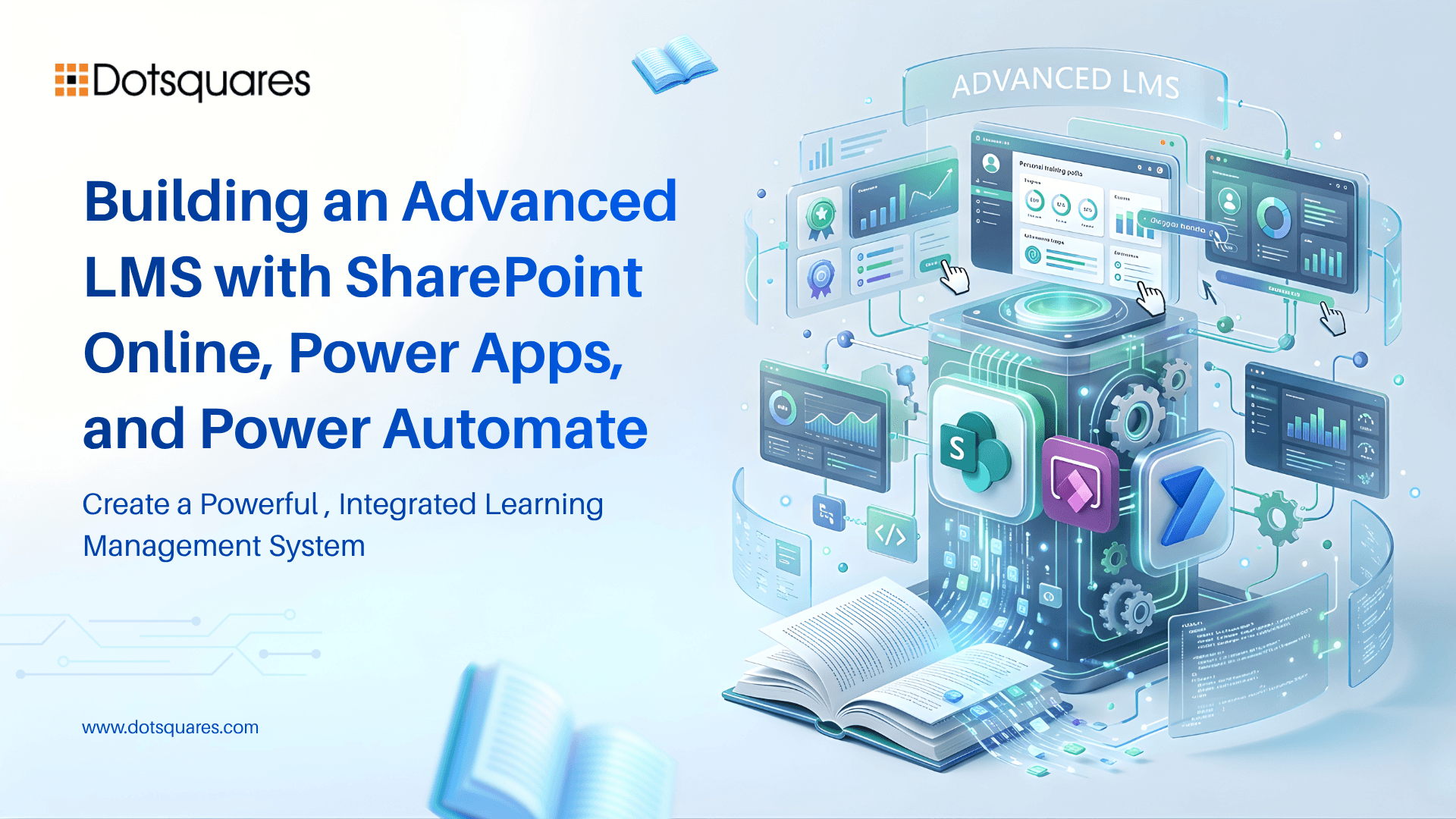
Most companies already pay for Microsoft 365. Yet when it comes to employee training, they go out and buy a separate LMS, pay per seat and spend months trying to get it to talk to systems they already own.
There’s a more direct route.
SharePoint Online, Power Apps and Power Automate, used together, can carry the full weight of a functional Learning Management System, without pulling your data into a third-party environment or locking you into someone else’s product roadmap.
SharePoint Online as the Content and Records Layer
SharePoint Online holds more than documents. Lists track learner records, completion status and assigned courses and quiz scores. Libraries store the actual content, such as videos, PDFs, interactive modules, etc. Pages present it all in a structured, navigable format.
What makes this foundation worth building on is how well it fits inside an organisation’s existing Microsoft 365 setup. No additional data residency headaches. No separate login for staff. Permissions inherit from the same directory your IT team already manages.
Working with a specialist SharePoint development agency matters here because the underlying data model shapes everything that comes after. A well-structured SharePoint environment is invisible to the end user; they see a training portal that works.
Power Apps Builds the Interface Learners Actually Use
Raw SharePoint views work fine for admins. For the person sitting down to complete a course, they fall flat, and that’s exactly the gap Power Apps fills.
A canvas app built on top of SharePoint data can show each employee exactly what they are assigned, how far along they are, what’s due, and what they have completed. It can surface a quiz, collect responses and write results back to a SharePoint list, all without the user ever seeing the backend.
The same setup supports a separate manager view: team completion rates, outstanding assignments and certificates approaching expiry. No SharePoint access required on their end.
This is where Custom SharePoint solutions earn their value. The interface isn’t generic. It reflects the organisation’s workflows, terminology and structure, which is what off-the-shelf tools rarely do well.
Power Automate Handles What No One Should Do Manually
Training programmes involve repetitive coordination. A new hire joins, someone needs to assign their onboarding modules, send them login details and notify their manager. A learner passes an assessment, a certificate should be generated and the completion record should be updated. A deadline passes without action, and a reminder needs to go out.
Power Automate development services handle all of this through configured flows that run without human input. The trigger might be a new list item, a form submission, or a calendar date. The action might be an email, a Teams message, a document created in SharePoint, or a record updated in an HR system.
Microsoft Power Automate Automation becomes particularly useful in compliance-heavy contexts. When training completion is tied to regulatory requirements, manual tracking is a liability. Automated flows make the audit trail consistent and remove the margin for oversight.
How the Three Tools Fit Together
SharePoint Online holds the data, course content, learner records, completion history, configuration. Power Apps presents it through interfaces built for two different users: the learner and the administrator. Power Automate connects events across the system and reaches into external tools when needed, making sharepoint lms integration seamless and efficient.
The architecture scales without significant rework. A new department’s training content slots in through existing lists and libraries. The interfaces and automation flows are already in place.
Data stays inside your Microsoft 365 tenant. That alone removes a category of GDPR headaches that come with third-party platforms. Your IT team isn’t onboarding a new vendor they are working inside a environment they already know.
Where Projects Go Wrong
The technical side of this build is well within reach for teams experienced in SharePoint Online Development Services. Nine times out of ten, the trouble isn’t technical. It’s a learner data model that nobody mapped out properly or automation flows that got built before the underlying lists were actually stable.
Sort the data architecture first. Everything else, the interfaces, the flows, the reporting, sits on top of it. Get that foundation wrong and you are refactoring six months in.
If your organisation is running on Microsoft 365 and still paying for a separate LMS, it’s worth having a conversation about what a SharePoint-based build would actually cost and cover. Dotsquares builds custom Microsoft solutions for organisations that need something built to spec, not bought off a shelf. Talk to the team.


Related Post
 October 15, 2026
Low-Code Integration: What It Is, How It Works and When Businesses Should Use It
Learn how low-code integration connects business apps and APIs, its key benefits, common use cases, limitations, and when to choose custom integration.
Keep Reading October 15, 2026
SAP BW to Cloud Migration: Benefits, Challenges and Planning Steps
Learn about SAP BW to cloud migration, including benefits, challenges, AWS options, cost factors and planning steps for a successful migration.
Keep Reading October 12, 2026
Mobile App Development with React Native and What You Need to Know
Learn how React Native works, where it saves time and cost, which industries use it, and whether it's still a good choice in 2026.
Keep Reading