Tech
Why Global Textile Sourcing Is Still Broken And What a Smart Platform Actually Fixes
 6 min read
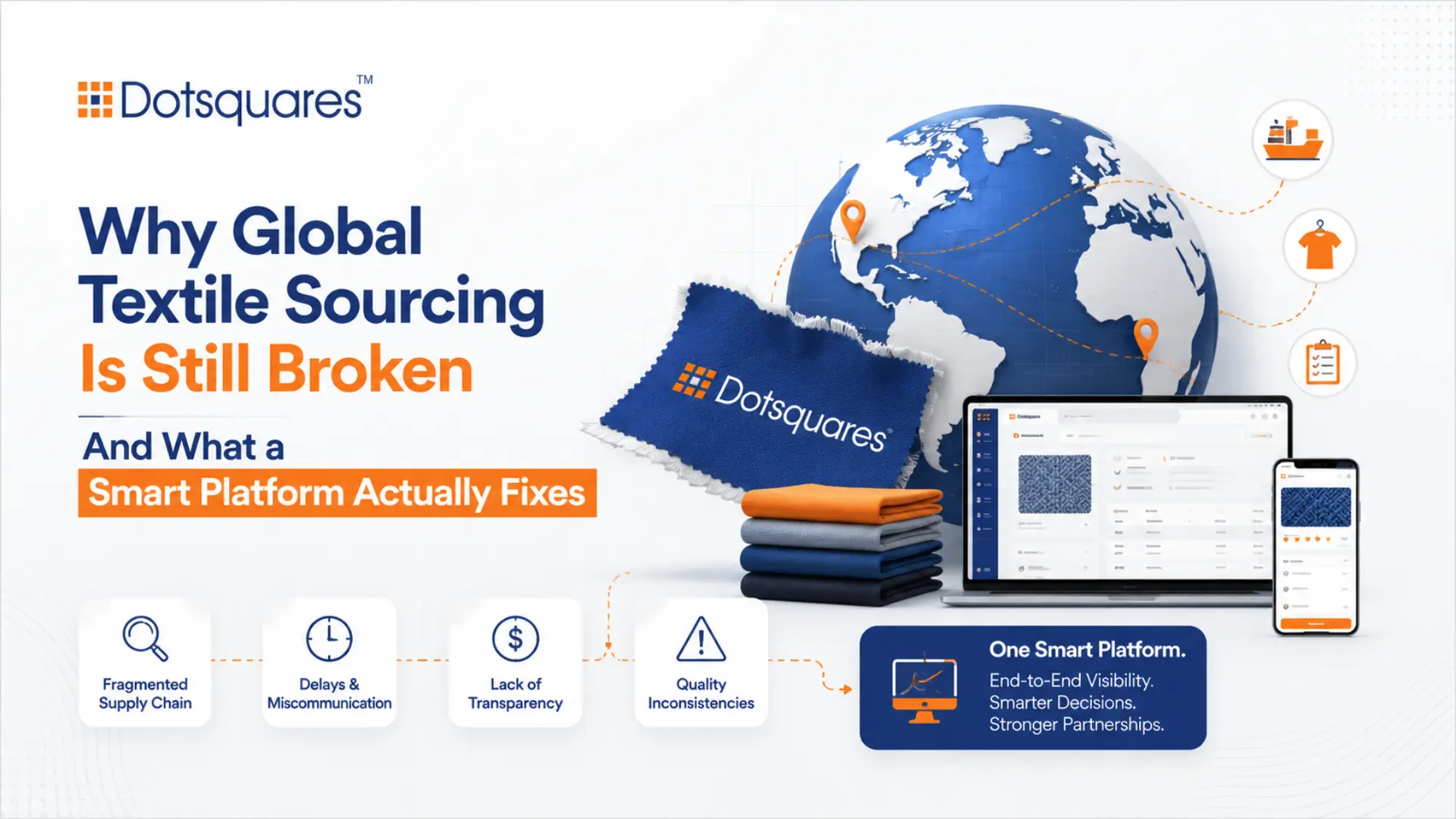
Textile sourcing has not changed as much as it should have. Buyers still spend hours searching across disconnected directories, emailing suppliers manually, and tracking orders through spreadsheets. Suppliers still struggle to get visibility in front of the right buyers. And somewhere in the middle, deals fall through not because the materials were wrong but because the process was too slow, too opaque, or too fragmented to hold together.
The global textile and apparel market is projected to reach $1.7 trillion by 2030. The infrastructure managing most of that sourcing activity looks nothing like that number suggests it should.
This is how a centralised digital textile sourcing platform was built to close that gap, connecting buyers and suppliers in a single system, with the workflows, data quality management, and integration behind it actually designed to work at scale.
The Problem With How Textile Sourcing Works Today
At the core of the challenge is a structural one. Textile sourcing involves multiple parties, buyers, suppliers, administrators, each with different needs, different data, and different workflows. When those parties operate across disconnected tools, every interaction becomes a manual handoff. And manual handoffs, at sourcing volumes, become delays, errors, and lost deals.
The specific problems that needed solving:
- Fragmented design and navigation - a platform handling marketplace listings, material requests, order management, ESG reporting, and financial tracking cannot function if each of those modules feels like a separate product; users get lost, workflows break down, and adoption suffers
- Multiple sub-pages within single tabs - the system creates confusion throughout all user levels because its deep nested structures lack any visible hierarchies. The system creates confusion for buyers who need to filter materials and for suppliers who need to control their product listings.
- Integration dependencies - the system requires all its components which include payment gateways and email systems and external tools to establish secure communication links. A single component of the system breaks down all operations which depend on that component.
- Data consistency across modules - the system experiences ongoing problems with mismatches and duplication because material data and user records and transaction histories exist in separate locations which lack a common validation system.
- Order and request workflow complexity - a sourcing transaction progresses through multiple steps which include material request and supplier offer and counteroffer and approval and order and delivery tracking. The process requires real-time management which enables both parties to see everything but it becomes very challenging to develop an effective system.
None of these are small problems. And fixing one without fixing the others does not solve the underlying issue, which is that the whole system needs to be designed as a system, not assembled from parts.
What Was Built and How It Works
The platform was built around a single design principle: every stakeholder, buyer, supplier, and administrator should be able to complete their entire workflow without leaving the system or relying on external tools to fill the gaps.
Here is how each major challenge was addressed:
- Structured design architecture - role-based dashboards were built for each user type, with clear user journeys mapped before any interface was designed; consistent UI & UX patterns were applied across all modules so that a buyer moving from the marketplace to their order history to their financial dashboard is always in the same system, not switching contexts
- Modular interface management - the platform divides its functions into distinct sections which contain separate navigation systems for the marketplace, requests, orders, ESG reporting and financial tracking modules while users can always see their current location and navigation options through the tabbed interface system.
- Secure API-based third-party integration - the system establishes safe API connections between payment gateways and email systems and external tools while including features to detect errors and switch to backup systems; the system achieves real-time synchronisation which decreases the probability of integration layer delays and data loss.
- Centralised data management - a unified database handles materials, users, and transactions with validation rules applied at the point of entry; this prevents duplication, keeps data consistent across modules, and means a buyer's order history and a supplier's stock records are always working from the same source of truth
- End-to-end workflow automation - the complete procurement process starts with material requests and continues until delivery tracking through a single automated workflow which provides real-time status updates for both parties involved at every point of the process.
What the Platform Actually Delivers
For buyers, the practical change is in how quickly and confidently they can find and procure materials:
- Advanced material search - buyers can filter by material type, category, location, price range, and sustainability attributes simultaneously, reducing the time spent searching and the risk of sourcing from unverified suppliers
- Structured request and offer workflow - buyers create material requests within the platform, receive structured supplier responses including offers and counteroffers, and move through to approval without any communication happening outside the system
- Full order visibility - from approval through to delivery tracking, every stage of the order is visible and managed in one place
For suppliers, the change is in how effectively they can manage and present their inventory:
- Stock and SKU management - the platform allows suppliers to upload product information and maintain their inventory while buyers receive real-time stock updates.
- Product showcase with certifications - materials can be listed with complete certification information and sustainability features and accompanying documents which build trust and accelerate the sourcing process.
For the operation overall:
- Integrated payment and financial tracking - the platform provides complete visibility of all financial transactions which includes invoices and payments and transaction histories. This eliminates the necessity of using different accounting software to match procurement expenses.
- ESG and sustainability reporting - the platform includes circular marketplace functions together with ESG data. Users can access sustainability data through their standard operating procedures without needing to conduct separate reporting tasks.
The Bigger Picture
The textile industry's sourcing infrastructure has lagged behind the scale and complexity of the market it supports. Most sourcing still relies on relationships managed through email, catalogues distributed as PDFs, and order tracking done in spreadsheets.
The platform exists as a solution to your problem because it offers more than better directory filters. The system handles complete management of sourcing transactions which begins with discovery and ends with delivery and payment while maintaining consistent data and automatic workflow execution and user-friendly interfaces.
That is what was built here. The system functions because multiple elements work together with its core design which includes data architecture and workflow automation systems that were developed according to real textile sourcing processes instead of using standard components which required subsequent modifications.
For an industry moving toward greater transparency, traceability, and sustainability accountability, having the infrastructure to support that is not optional. It is where the competitive advantage will be built.


Related Post
 October 15, 2026
Low-Code Integration: What It Is, How It Works and When Businesses Should Use It
Learn how low-code integration connects business apps and APIs, its key benefits, common use cases, limitations, and when to choose custom integration.
Keep Reading October 15, 2026
SAP BW to Cloud Migration: Benefits, Challenges and Planning Steps
Learn about SAP BW to cloud migration, including benefits, challenges, AWS options, cost factors and planning steps for a successful migration.
Keep Reading October 12, 2026
Mobile App Development with React Native and What You Need to Know
Learn how React Native works, where it saves time and cost, which industries use it, and whether it's still a good choice in 2026.
Keep Reading