
Is Your Business AI-Ready?

Tech
 6 min read
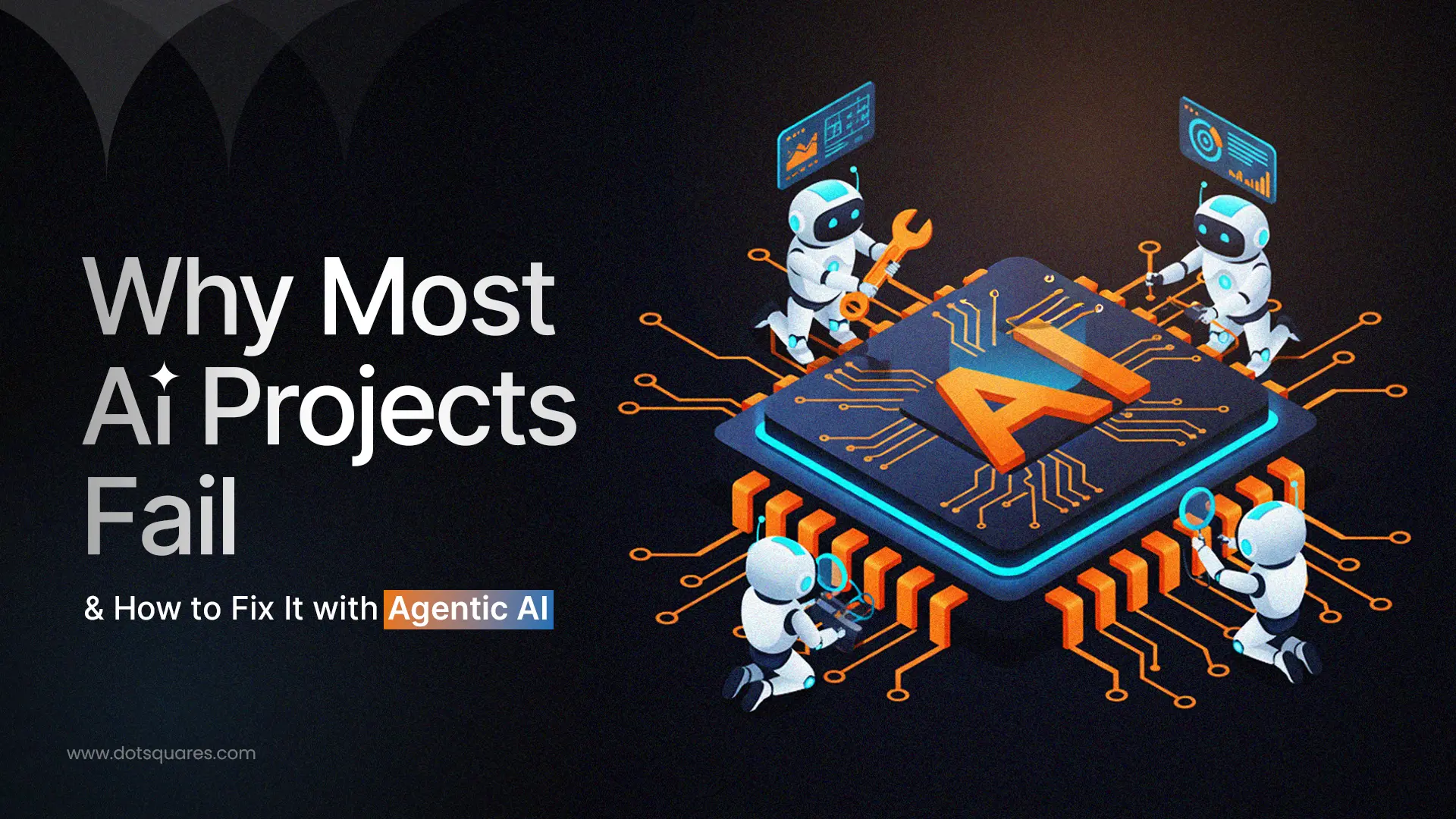
Let's get real for a minute. Everyone is talking about AI, but for many business leaders, it feels like they’re throwing money into a black hole. You buy a new system, it works great in the demo, but it sits there on the shelf. The promise of transformation turns into a mountain of half-finished projects. Sound familiar? You’re not alone.
Latest reports from the front lines show this frustration is widespread. A 2025 S&P Global Market Intelligence survey found that 42% of companies had to abandon most of their AI projects this year, a huge jump from just 17% the year before. The simple reason? Most businesses are still treating AI like a new app, not as a core part of their operations. They're building a bunch of powerful, but disconnected, tools. And when those tools can't talk to each other, you're not getting a smart system—you're getting more chaos.
This is exactly what Agentic AI is designed to fix. It’s not just another piece of software; it’s an entirely new way of thinking about how technology can run your business. Instead of simply responding to commands, an agentic system acts on its own, with a clear purpose and a memory. It’s the difference between a simple GPS that tells you where to go and a self-driving car that navigates the road for you.
We know a lot of these projects don't work, but why? It's usually not a lack of talent or technology. According to a 2025 IBM report, the top three challenges for AI adoption are all about the data: its accuracy, quality, and privacy. You can have the best AI in the world, but if your data is a mess, the whole thing falls apart.
Here’s where it goes wrong for most companies:
This is why we keep seeing a cycle of big promises and small results. Companies are buying technology that’s powerful in isolation but completely useless when it needs to work as part of a team.
So, what does Agentic AI look like when it's done right? Think of it as a virtual employee for your business. It's designed to do a few key things:
This level of intelligence is what separates a truly innovative business from the rest. It’s about building a system that doesn’t just answer questions, but actively works to achieve a defined business goal.
For Agentic AI to really work, it needs a rock-solid foundation. That’s where an Event-Driven Architecture (EDA) comes in. Think of an EDA as the nervous system of your business. It sends out small messages, or "events," whenever something happens—like a new customer placing an order or a supplier running out of stock.
In an EDA, these messages go to a central hub that any application or AI agent can subscribe to. This gives the AI agents the real-time data they need to act instantly.
When you put Agentic AI and an EDA together, you build a system that can:
This approach isn't about saving a few minutes of time; it’s about giving your business a competitive advantage. It's about having a system that can manage complexity and act with intelligence, all while your team focuses on strategy and innovation.
This isn’t just theory. Companies with advanced AI capabilities are seeing real results. A 2025 McKinsey report found that organisations using sophisticated AI are 3.5x more likely to report a significant increase in revenue compared to their competitors. Agentic AI is a big reason why.
Imagine an agentic system that could:
The value here is in having a system that can not only handle routine work but can also adapt to the unexpected.
The companies that will win in the next few years won't be the ones that just dabble in AI. They'll be the ones that embed it deep into their business. This means letting go of the old idea that technology is just a tool for one specific job.
Building a future-proof business means building a new kind of architecture. It requires you to move away from reactive, one-off solutions and toward proactive, agentic systems that can operate at a massive scale. It’s a shift that requires new technology and a new mindset. It's about looking beyond the buzzwords and building a business that can not only survive volatility but truly thrive in it.


 October 09, 2026
Compare ERC-20, ERC-721 and ERC-1155 token standards, their key differences, use cases, benefits and how to choose the right standard for your blockchain project
Keep Reading October 09, 2026
Planning a mobile banking app? See the features to include, how to secure it, the step by step process, and what development costs in 2026.
Keep Reading October 08, 2026
Learn how to build an AI-first business in 2026 by identifying the right use cases, improving workflows, building strong data foundations and scaling AI.
Keep Reading