LLM Development Services Built Around Your Business
 Custom Language Solutions
 Multilingual Capabilities
 Content Generation & Summarization
 Automated Document Processing
 Sentiment Analysis
 Continuous Improvement




Partnered with Startups and Fortune 500





































The LLM Development Company That Ships Real Products
Most businesses have worked out that language models could help them. Far fewer have figured out how to actually get them into production in a way that sticks. At Dotsquares, we close that gap. Our LLM developers don’t hand you a proof-of-concept and leave — we build custom LLM applications shaped around your workflows, your data, and the outcomes your business is actually trying to hit. Whether that’s a focused LLM app, a fine-tuned model trained on your own content, or a full enterprise integration, we build things that work in the real world, not just in a demo.
LLM Development Services That Solve Problems Worth Solving
A general-purpose model trained on the internet is a decent starting point. It’s rarely a great finishing point. Our custom LLM development practice takes foundation models and makes them yours — fine-tuned on your content, aligned to your processes, and evaluated against the specific tasks your business needs them to handle reliably.

A model with no application is just potential. Our LLM app development team builds the software that turns that potential into something your users can actually use — whether that’s an internal tool that cuts manual work, a product your customers interact with, or a backend service quietly processing text at scale.
Building an LLM application for enterprise isn’t the same as building a side tool. The scale is different, the security requirements are different, and the integration surface is an order of magnitude more complex. Our LLM developers have done this before — and we know how to build solutions that fit inside your infrastructure rather than sitting awkwardly alongside it.
RAG is one of the most reliable things you can do with an LLM in a business context. Instead of asking a general model to recall facts it may or may not have, you give it access to your verified content at query time — dramatically cutting hallucination and making the system genuinely trustworthy for knowledge-intensive tasks. All without the cost and complexity of full model retraining.
The chatbots most people have encountered have set very low expectations. LLM-powered conversational systems can do a lot more — handling genuinely nuanced queries, remembering context across a long conversation, adapting how they communicate to different users. The key phrase is “when built properly”. That’s where we come in.
An LLM tool that sits outside your core systems is convenient at best and ignored at worst. The real leverage comes when language model capability is woven into the systems your business already runs on — your CRM, your ERP, your data warehouse, your daily workflows. We build that integration layer.
If your business runs on documents — generating them, reviewing them, extracting information from them, managing them — then LLMs have probably already crossed your mind. They should have. These are among the most reliable LLM use cases in production today. We build the solutions that turn that potential into real operational savings.
LLMs can fail in ways that traditional software simply doesn’t — prompt injection attacks, unintended data leakage, biased outputs that seem plausible but aren’t, and behaviour that falls apart under adversarial conditions. We take this seriously and build safety controls into the architecture from the very beginning, not as a compliance exercise at the end.
LLM costs have a way of sneaking up on you. What looks affordable at prototype scale can become a significant infrastructure line item once your application is handling real workloads. We bake cost management into our LLM development solutions from the architecture stage, so you’re not firefighting spend after launch.
Get Custom Solutions from our AI Expert Consultants

The Technologies We Actually Work With Every Day
We’re not a team that learned LLMs last year and is catching up. Our developers have hands-on experience across the full stack — foundation model APIs, fine-tuning pipelines, RAG infrastructure, vector databases, deployment tooling — and we reach for whatever’s right for your context, not whatever we used most recently.

Deep Learning
We utilize advanced neural network architectures to enable machines to learn from vast amounts of data, allowing for complex pattern recognition, natural language processing, and image recognition applications.

Data Science
With us you can employ statistical techniques and computational algorithms to extract insights and knowledge from large volumes of data and leverage advanced statistical models, machine learning algorithms, and data visualization techniques to uncover patterns, trends, and correlations within data sets.

Generative AI
Harness algorithms that can create new content such as images, text, and music autonomously, enabling innovative applications in creative industries, personalized content generation, and enhancing design processes with AI-driven creativity.
Tech Stack Driving Digital Transformation with Generative AI Services

GPT4 (OpenAI)

Claude

Gemini 2.0

DeepSeek
LLaMA 3 (Meta)
DALL E

Deep Art

Stability AI

Midjourney

Flux

Deepgram

Transformer

CNN

GAN

RBM

DBN

DRLN

Autoencoders

TensorFlow

PyTorch

Keras

Caffe

MXNet

Theano

Chainer

CNTK

Torch

DeepLearning4j

Hugging Face

Meta AI

DeepMind Sonnet
TensorFlow Probability
Fast.ai
AllenNLP

NVIDIA NeMo

MLflow
Weights & Biases
Docker
KServe
SageMaker
Azure ML
Kubeflow Pipelines
Evidently AI
Apache Airflow
Prometheus

TensorFlow

PyTorch

Keras

Caffe

Theano

GPyTorch

MXNet

Scikit-learn
FastAI

AlexNet

DenseNet

EfficientNet

Inception AI

SqueezeNet

Xception

VGGNet

CNTK

MobileNet

GoogLeNet
What Makes Working With Dotsquares Different

ISO 27001 Certified Security
We maintain the highest international standards for data protection with ISO 27001:2022 certification, ensuring your intellectual property and sensitive information remain 100% secure.

1000+ In-House Developers
Our team of 1,000+ in-house experts is recruited through a rigorous screening process, selecting only the top technical talent to ensure premium quality for every project.

24+ Years of Proven Excellence
With over 27,000+ successful projects delivered since 2002, we bring deep industry experience and a stable, reliable foundation to every partnership we build.

Trusted Global Technology Partners
We are proud Microsoft Gold, AWS, and Salesforce Consulting partners, ensuring your solutions are built using the latest enterprise-grade technologies.
LLM Projects We’ve Built
Explore some of our AI projects demonstrating our expertise in harnessing AI to create robust and scalable solutions.
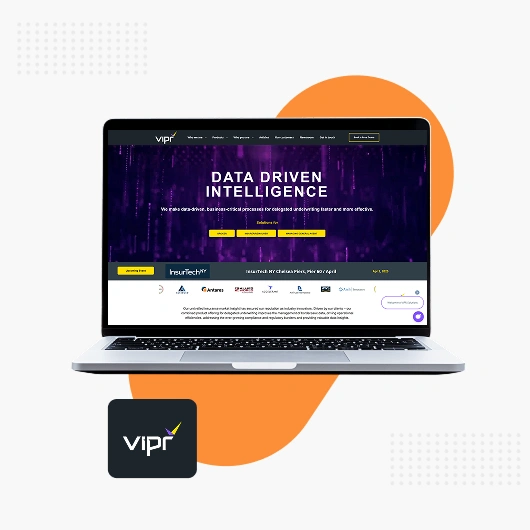
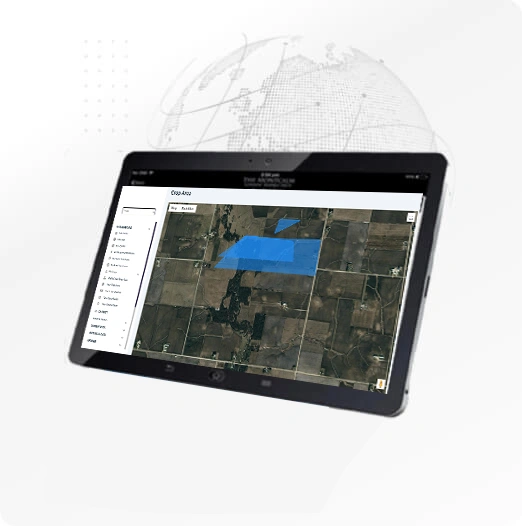
AI solutions
Document Identifier/Analyser
 Challenges
Developing an Identity Document Analyzer faces complexities due to the diverse formats of passports, Aadhar cards, PAN cards, and driving licenses, necessitating precise text extraction amid varying document quality and privacy concerns.
 Solution
By leveraging advanced AI algorithms for pattern recognition, OCR, and NLP, coupled with robust encryption and scalable cloud infrastructure, Dotsquares ensures accurate and secure document analysis, meeting regulatory compliance and enhancing user experience seamlessly.
- TECHNOLOGY Python
Developers Who’ve Earned Their Credentials
Certifications don’t tell the whole story, but they’re a meaningful signal. Our LLM developers are formally certified across the AI, cloud, and machine learning platforms that underpin modern LLM development — so you know the people building your systems have been rigorously assessed on what they’re doing.




The AI Models We Know Inside and Out
From predictive analytics to personalized recommendations, our advanced models harness the latest in machine learning and data science to drive innovation and efficiency in your business operations.
Machine Learning Models
These models learn from data and make predictions or decisions without being explicitly programmed. Examples include linear regression, decision trees, support vector machines, and random forests.

Deep Learning Models
Inspired by the human brain, these models allow us to handle large data for tasks like image/speech recognition, NLP, and autonomous driving. Examples: CNNs and RNNs.

Natural Language Processing (NLP) Models
These models understand and generate human language, performing tasks like sentiment analysis, translation, summarization, and chatbot interactions. Examples: BERT and GPT.
Computer Vision Models
These models analyze visual data for tasks like object detection, image classification, facial recognition, and autonomous navigation. Examples: YOLO and ResNet.

Reinforcement Learning Models
These models learn through trial and error by interacting with an environment and receiving feedback in the form of rewards or penalties. They are used in scenarios where decisions are sequential and cumulative, such as game playing and robotics.

Generative Models
Generative models create new data samples that mimic the distribution of training data. They are used for tasks like generating images, text, and music. Examples include generative adversarial networks (GANs) and variational autoencoders (VAEs).

Why Businesses Choose Dotsquares for LLM Development
Harness the power of our advanced technologies to elevate user interaction and drive engagement.







































Here are six key reasons why agencies choose to partner with us
Partnering with DotSquares ensures you receive innovative, reliable, and tailored cloud solutions that drive your business forward.

Clear Communication
We believe in total transparency. You'll get regular updates on your project's progress, and your feedback is always welcome. Plus, you'll always own all the code and creative elements we create for you.

On-Time Delivery
We use cutting-edge project management tools and agile development practices to keep your project on track. This means you'll get a high-qualitdeliveryed exactly when you expect it.

Solutions Built for Your Needs
Whether you need a custom-built or strategic optimisation of an existing one, we prioritise your unique goals. We'll ensure your development perfectly aligns with your digital strategy.

Direct Collaboration
Consider our team an extension of yours! You'll have direct access to the talented developers and designers working on your project during agreed-upon hours, ensuring smooth collaboration.

Elevated User Experience
Our creative and skilled UI/UX designers and developers leverage the latest technologies to deliver user-friendly, scalable, and secure development that drive results and meet your evolving business needs.

Flexible Engagement Models
We understand that your needs can change. That's why we offer flexible engagement options. Choose the model that works best for you now, and switch seamlessly if your needs evolve. We're committed to building a long-term, reliable partnership with you.
Get LLM Development Support That Fits the Way You Work
Different projects need different levels of support. We give you the options to access our LLM developer expertise in the way that actually fits your project — without locking you into more than you need or leaving you short when it matters.

 Bucket Hours
Buy a block of hours upfront and use them when you need them. Your hours stay valid for six months, so you have the flexibility to pull in LLM development expertise on your schedule rather than ours.
- Hours are valid for 6 months from purchase — use them at whatever pace your project demands
- A good fit when your LLM development needs are project-based or hard to predict in advance
- Note: bucket hour developers may work across other projects; choose dedicated hiring if you need exclusive focus



 Dedicated / Regular Hiring
Reserve a developer exclusively for your project — working only on your priorities, fully focused, for as long as your build needs. No distractions, no split attention.
- Your developer works only on your project for the full engagement — no other clients, no competing priorities
- Hire by the week or the month depending on what your project requires
- The right model when your LLM application needs consistent, focused development effort over time
How We Actually Work With You
LLM development has a way of revealing things you didn’t expect — a use case that evolves once you see it working, data that turns out to be messier than anyone knew, an integration that’s more complex than it looked. We build our process to handle that honestly — working outputs at every stage, clear checkpoints, and the flexibility to adapt when reality differs from the plan.
Discovery & Consultation
Our journey begins with understanding where language AI fits into your business. Based on your goals, we map out the right LLM use cases, define your data requirements, and align your team on a clear path forward.
Discuss your business objectives to identify where language models can automate, enhance, or accelerate your workflows.
Review your existing data sources, APIs, and systems to understand what is available for model training and integration.
Outline the key language tasks, input-output expectations, and compliance or privacy requirements the LLM must meet.
Allocate team roles, timelines, and tooling to ensure a structured and on-track LLM delivery plan.
Model Strategy
Our AI architects evaluate and select the most suitable foundation model for your needs. We design the full solution blueprint including retrieval pipelines, prompt frameworks, and fine-tuning approach before a single line of code is written.
Assess and recommend the right base model, whether GPT-4, LLaMA, Mistral, or a custom model, based on your domain and budget.
Design the end-to-end LLM architecture including RAG pipelines, vector databases, and memory management.
Define prompt structures, templates, and guardrails that ensure consistent, accurate, and safe model outputs.
Plan the data preparation, embedding approach, and alignment techniques needed to tailor the model to your specific domain.
Development
Our LLM engineers build and integrate your solution into your existing platforms and workflows. We keep you informed throughout with regular sprint updates, demos, and milestone deliverables so you always know where the project stands.
Train and fine-tune the selected model on your proprietary datasets so it understands your industry's language, tone, and context.
Connect the LLM to your existing applications, databases, and third-party tools via robust, low-latency API layers.
Build the user-facing interfaces, chatbot flows, document pipelines, or automation triggers powered by the language model.
Provide regular milestone deliverables and demos to keep you informed and in control throughout the build.
Testing
Our dedicated QA and AI safety specialists thoroughly test every aspect of your LLM solution before launch. We identify and resolve accuracy issues, unsafe outputs, and integration failures to guarantee a reliable and trustworthy user experience.
Evaluate all model outputs for factual correctness, consistency, and relevance across a wide range of real-world prompts.
Test the model for harmful, biased, or non-compliant outputs and apply guardrails to ensure safe and responsible behaviour.
Identify vulnerabilities in prompt handling and API inputs to protect the system from adversarial misuse.
Validate all connected systems, user flows, and edge cases to ensure the full solution works seamlessly in your environment.
Deployment
We deploy your LLM solution to production with full MLOps pipelines in place. Whether hosted on Azure, AWS, or your own infrastructure, we ensure a smooth, secure go-live with zero disruption to your existing operations.
Launch your LLM solution on the infrastructure that best fits your security, compliance, and scalability requirements.
Implement automated deployment pipelines to enable fast, reliable updates and continuous model delivery going forward.
Configure token caching, response streaming, and load balancing to ensure fast and cost-efficient model responses at scale.
Provide dedicated support during the launch period and fully hand over documentation, credentials, and system access to your team.
Still not sure what you are looking for?
Talk to Our Experts
Built Relationships with 15,000+ Happy Clients!
Companies employ software developers from us because we have a proven track record of delivering high-quality projects on time.

5+ Years of Average Experience

Integrity & Transparency

FREE No Obligation Quote

ISO 27001 Information Security

Outcome-Focused Approach

Transparency is Guaranteed

Focus on Security

4.8/5 Rating on Clutch

Hire a Team of Your Choice

Costs Lower Than Your Local Guy
Leading Technology Partners and Achievements
With a history of excellence and innovation, we've been honored with several significant awards and partnered with leading technologies.























Questions We Hear Most Often
LLM development services cover everything involved in taking a large language model capability from an idea to a production system — model selection, fine-tuning, RAG architecture, application development, integration, testing, and deployment. At Dotsquares, the scope of our LLM development solutions is defined by what your use case actually requires. We don’t have a fixed package that we fit your problem into — we scope each engagement around what you’re trying to achieve.
Using an off-the-shelf API gets you access to a capable general model. What it doesn’t give you is a model that understands your domain, your terminology, or your specific tasks. Custom LLM development closes that gap — through fine-tuning on your data, retrieval systems built around your content, and applications designed for your workflows. The practical difference is a system that performs reliably and consistently on what you need, rather than averaging across everything.
The right answer depends on your specific use case, your data, and how much you can tolerate different types of failure. RAG is usually faster to get into production, easier to update as your content changes, and well-suited to knowledge-intensive tasks where you need the model grounded in specific facts or documents. Fine-tuning is the better choice when you need consistent style, domain-specific formatting, or behaviour that goes beyond what prompting can reliably produce. In a lot of enterprise LLM applications, both approaches are used together. We make the call based on a proper feasibility assessment, not a house preference.
Both, and the choice depends on what you actually need. Commercial APIs are fast to deploy, well-supported, and often the right call for prototypes or use cases where volume is moderate. Open-source models give you more control, lower costs at scale, and the ability to run inference on your own infrastructure — which matters a great deal when data privacy, latency, or long-term cost management is a priority. We’re completely model-agnostic and will always recommend the approach that fits your requirements.
It genuinely depends on what you’re building. A focused LLM application with a clear brief, built on an existing foundation model, can be delivered in four to eight weeks. A full custom LLM development project — fine-tuning, RAG, enterprise integration, production deployment — typically takes twelve to twenty weeks. We give you an honest timeline at the start of every engagement and we don’t compress it to win the work.
Use the form on this page or get in touch with our team directly. We’ll set up a short discovery call to understand your use case, your data situation, and what you’re trying to achieve. From there we’ll recommend the right engagement — a focused feasibility sprint, a full LLM development project, or a hire LLM developers arrangement if you want expertise embedded in your own team. You’ll have a clear picture of scope, timeline, and cost before you commit to anything.

