Tech
Revolutionizing Dental Lab Operations with AI Automation
 6 min read
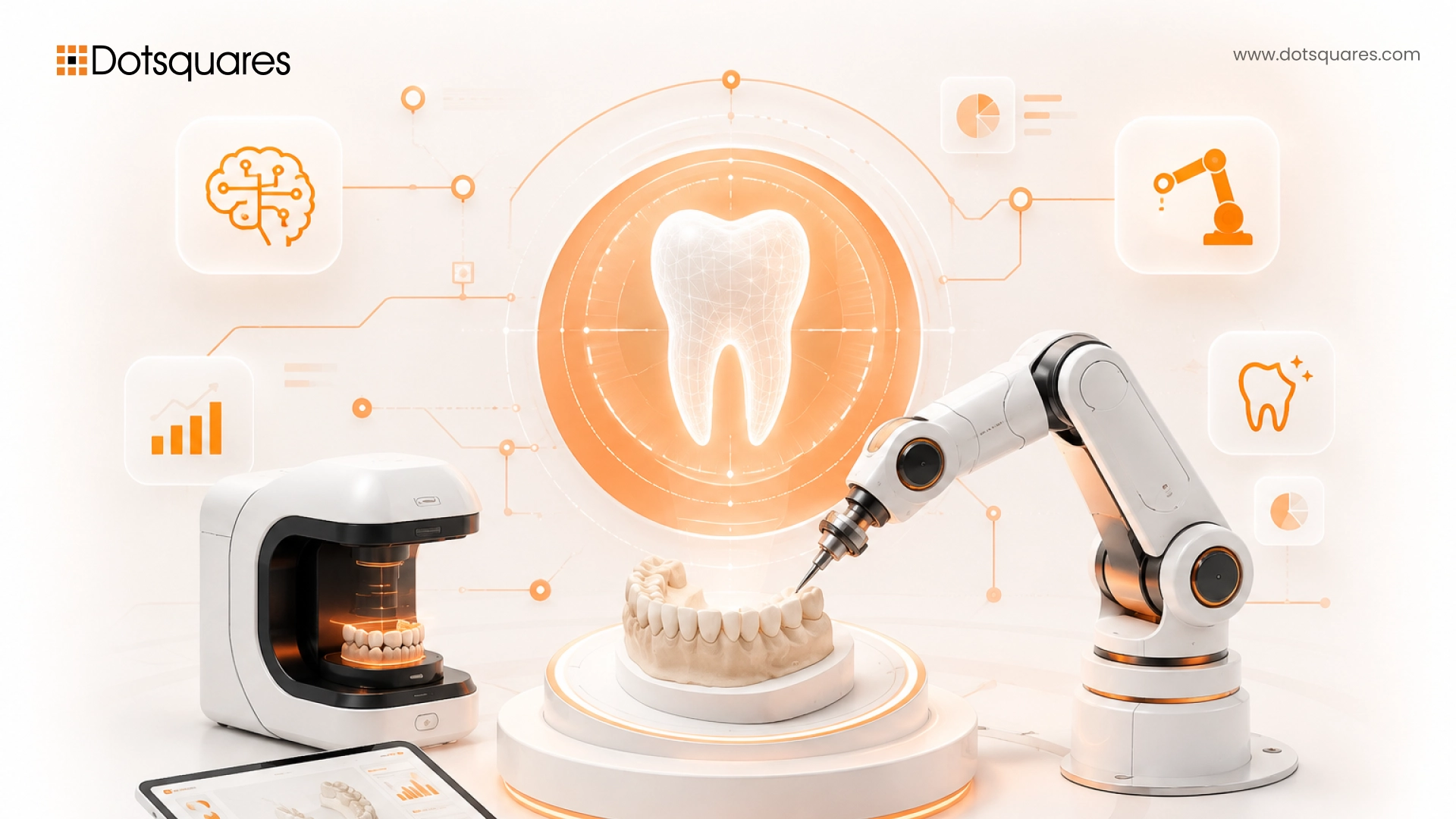
Growth is supposed to be the good problem. But for a fast-scaling dental laboratory network, growth had quietly turned into a communication mess. Case updates lived in one system, prescription details got typed in by hand, client queries piled up outside business hours, and a distributed, multilingual team was left stitching information together manually just to answer a simple question about a case status.
We were brought in to fix that, not with another dashboard nobody would check, but with an AI ecosystem that actually meets people where they already are, on the website, over SMS, and on the phone. Here's what that looked like.
A Growing Dental Lab, A Shrinking Margin for Manual Work
This organisation serves dentists and clinics across regions, which means every query, about a case, a prescription, a procedure, needs a fast, accurate answer regardless of time zone or language. As the client base scaled, the manual processes that used to just barely work stopped holding up, and it started showing in slower response times, inconsistent information, and a support team stretched thinner than it should have been.
The Cracks That Were Slowing Everything Down
A few specific problems kept surfacing, each one adding friction to what should have been simple, everyday interactions.
Information Scattered Across Too Many Places
Staff and clients had no single place to go for internal knowledge or case data. Everything lived across different systems or depended on someone manually tracking it down, which made consistency genuinely hard to maintain as the organisation kept growing. Bringing these sources together through AI & ML development solutions could make information easier to access while reducing the manual effort required to find and verify case details.
Case Tracking That Took Too Long
Pulling insight from document records or support data required real manual effort every time, which meant decisions that should have taken minutes were instead getting delayed, sometimes significantly.
Manual Data Entry Was Quietly Costing Accuracy
Prescription and case details were still being typed in by hand, which is exactly the kind of repetitive task that invites human error. Staff time that should have gone toward actual lab work was instead going toward retyping information that already existed somewhere else.
No Support Outside Business Hours
Dentists and clinics don't only have questions during office hours, but the existing infrastructure had no real-time way to answer them outside that window, so anything urgent that came in after hours simply had to wait.
A Global, Multilingual Team Without Equal Access to Information
With a distributed workforce and clients across regions, knowledge access wasn't consistent from one location or language to the next, which meant some parts of the organisation were working with a real information disadvantage compared to others.
Prescription Continuity Was a Manual Guessing Game
Tracking whether a doctor's consecutive prescription slips lined up correctly had no automated system behind it, which left real room for account mismatches and made auditing far more complicated than it needed to be.
Building an AI Ecosystem That Actually Talks Back
The fix wasn't a single tool; it was a connected set of AI-driven systems designed to unify communication and remove the manual bottlenecks slowing everything down. This approach is particularly useful when working with a custom AI development company to connect conversational AI, OCR, voice assistants, and existing business systems into one ecosystem.
A Chatbot That Understands Dental Context, Not Just FAQs
A responsive chatbot was embedded directly into the organisation's website, built on natural language processing and large language models, OpenAI's GPT among them, trained specifically on the client's own documents, FAQs, and policy information. For dentists, it doesn't just answer generically; it asks smart follow-up questions, clinic name, case number, then pulls real case data straight from the backend CRM to give an actual answer, not a placeholder response.
SMS Support That Recognises Who's Asking
Using the Twilio API, the platform handles queries over SMS directly, with a validation process that recognises returning users by their mobile number or walks new users through a quick registration. It meant support didn't require opening an app or a browser, just a text message.
A Voice Assistant That Handles Real Case Questions Over the Phone
An AI-driven voice assistant now handles incoming calls through the organisation's telephony setup, using speech-to-text and text-to-speech to hold a clear, structured conversation and pull accurate, case-specific data from the backend in real time, the same reliability as talking to a trained staff member, without the wait.
OCR That Reads Prescriptions So Staff Don't Have To
An OCR pipeline extracts receipt numbers, doctor names, and prescription details directly from uploaded images, then auto-populates that data into form fields for quick human review instead of manual entry from scratch. It didn't remove the human check, it just removed the tedious, error-prone part of the job.
Infrastructure Built to Scale Globally, Securely
Underneath all of it, a strong authentication framework protects sensitive organisational data and keeps AI-driven outputs properly governed, while the architecture itself was built to support multilingual interactions from day one. This kind of architecture planning is important when addressing common AI development challenges around security, scalability, and reliability, so teams and clients across regions get the same consistent access to information.
What Changed Once It Was All Running
The shift wasn't incremental; it changed how the entire organisation interacts with its own information and its clients.
- Instant visibility, around the clock. Case information is now available 24/7 without needing a human on the other end, closing the after-hours gap that used to leave urgent queries waiting.
- A lighter administrative load. Automated prescription data extraction through OCR cut down significantly on manual form filling, freeing staff time for actual lab work instead of retyping information.
- Noticeably better data accuracy. Built-in validation and warning mechanisms keep case records consistent and genuinely audit-ready, closing the gaps that manual tracking used to leave open.
- A foundation built for what's next. The modular technology stack behind all of this gives the organisation real room to expand further without needing to rebuild the core system from scratch.
The Bigger Lesson Behind This Build
What this project really shows is that intelligent automation in a dental lab setting isn't about chasing new technology for its own sake. It's about rethinking how dental professionals and lab teams actually access case knowledge, collaborate on patient information, and make faster, better-informed decisions day to day. For any dental enterprise wrestling with scattered information and clunky case workflows, this is a genuinely practical blueprint for building a smarter, more connected digital workplace.
If your organisation is dealing with the same scattered systems, manual entry, and after-hours gaps, this is exactly the kind of challenge our team enjoys solving. Get in touch with Dotsquares to talk through what an AI-driven support ecosystem could look like for your business.


Related Post

 October 15, 2026
Low-Code Integration: What It Is, How It Works and When Businesses Should Use It
Learn how low-code integration connects business apps and APIs, its key benefits, common use cases, limitations, and when to choose custom integration.
Keep Reading October 15, 2026
SAP BW to Cloud Migration: Benefits, Challenges and Planning Steps
Learn about SAP BW to cloud migration, including benefits, challenges, AWS options, cost factors and planning steps for a successful migration.
Keep Reading October 12, 2026
Mobile App Development with React Native and What You Need to Know
Learn how React Native works, where it saves time and cost, which industries use it, and whether it's still a good choice in 2026.
Keep Reading