 4 min read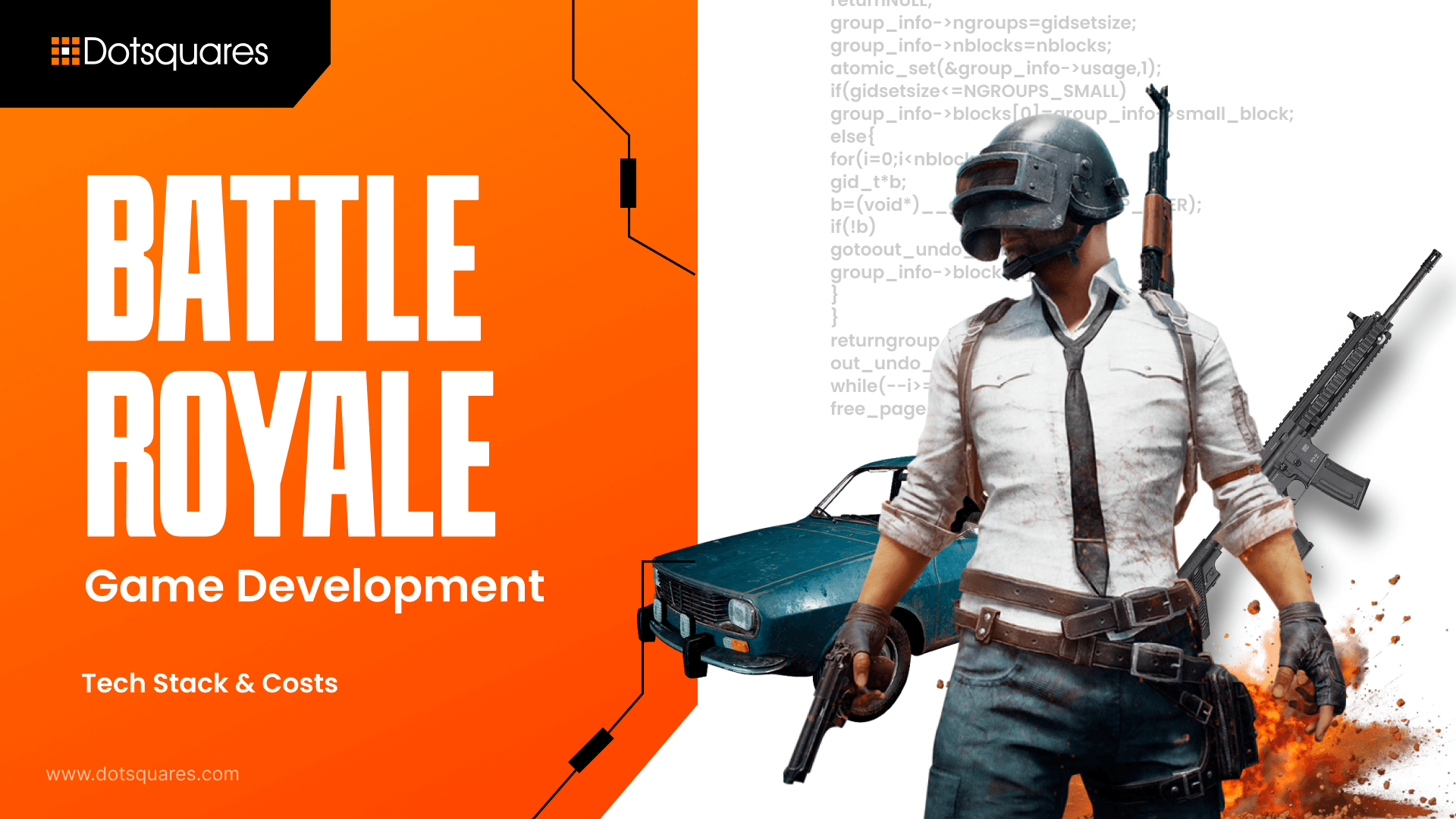
Building a Battle Royale isn't just a creative challenge; it is a massive engineering undertaking. When you move from a standard four-player co-op to a 100-player survival map, the technical requirements don't just grow, they mutate. The primary hurdle isn't just the graphics; it’s the synchronisation of 100 simultaneous actors in a single persistent world where every millisecond of lag can result in an immediate loss for the player.
For a studio, the operational shift is significant. You are no longer just building a game; you are building a high-traffic network environment that must remain stable under extreme pressure.
Selecting the Foundation: The Engine Tier
The first line item in your tech stack is the engine. This choice dictates your hiring strategy and your hardware compatibility.
1. The Unity Game Engine Software
Unity remains a dominant force for developers targeting a battle royale game for android. Its primary strength lies in its "Scriptable Render Pipeline," which allows a development team to manually optimise how the phone handles shadows and textures. This is critical for keeping mobile devices from overheating during long matches. When you work with top mobile game development companies, Unity is often the preferred choice for cross-platform play because it handles the fragmentation of Android hardware with significant efficiency.
2. Unreal Engine 5 Games
If the goal is to set a new benchmark for visual fidelity on PC and Next-Gen consoles, unreal engine 5 games are the current standard. With its "World Partition" system, Unreal automates the loading and unloading of massive map chunks. This reduces the manual workload for artists but increases the "base" hardware requirements for the player. It is a decision to prioritise cinematic depth over broad accessibility.
The Invisible Stack: Networking and Backend Infrastructure
If you ask an action game development company where the "secret sauce" is, they won't point to the character models; they’ll point to the netcode.
To keep 100 players in sync, the tech stack must include:
- Dedicated Game Servers (DGS): Unlike peer-to-peer gaming, Battle Royales require powerful dedicated servers to act as the "source of truth."
- Spatial Partitioning: This logic ensures that the server only sends data to a player about things they can actually see or interact with. Without this, the network traffic would crash the game instantly.
- Lag Compensation: This is the proprietary logic that ensures a player with 20ms ping and a player with 100ms ping can compete fairly.
Breaking Down the Development Costs
The cost of an online battle royale games project is often split into three main buckets: Initial Dev, Infrastructure, and Live-Ops.
1. Talent Acquisition
To build a stable environment, you need to hire action game app developer talent who understand high-concurrency networking. You aren't just hiring "coders"; you are hiring network engineers and systems architects. A typical team includes:
- Backend Engineers (Server-side authority and databases).
- Gameplay Programmers (Combat mechanics and movement).
- Technical Artists (Optimisation of massive maps).
2. Server Hosting and Maintenance
Unlike PC Game Development for single-player titles, your costs don't end at launch. High-tick-rate servers (running at 30Hz or 60Hz) are expensive. As your player count grows, your server bill grows with it. This is a "working adjustment" that most startups must plan for in their seed funding.
3. Anti-Cheat and Security
In an online battle royale games environment, one cheater can ruin the experience for 99 other people. Licensing or building a robust anti-cheat system (like Easy Anti-Cheat or BattlEye) is a non-negotiable expense that can cost thousands per month.
The Android vs. PC Development
There is a significant cost difference between building for a single platform and going cross-platform.
- Battle royale game for android: The cost is driven by "Optimisation Passes." Developers spend hundreds of hours ensuring the game doesn't drain the battery or throttle the CPU on budget devices.
- High-End PC Development: The cost is driven by "Asset Density." Creating 4K textures and high-poly models for a 4km x 4km map requires a massive art department.
The Strategy: Unity vs. Unreal for Budgeting
When evaluating Unity vs Unreal Engine, you have to look at the long-term royalties.
- Unity offers a predictable subscription fee, which is better for high-revenue titles that want to keep their profits.
- Unreal offers a $0 upfront cost but takes a 5% royalty after your first $1M in revenue. For a breakout hit, that 5% can eventually become much more expensive than a subscription.
Final Perspective: Why the Team Matters
Technology is only half the battle. You can have the best unity game engine software setup in the world, but if the combat doesn't feel "snappy," the game will fail. This is why choosing an experienced action game development company is vital. You need a partner who understands where to spend the money, whether it's on better servers or more polished animations.
Dotsquares has spent over two decades helping founders navigate these technical and financial shifts. We understand that the "win" isn't just launching the game; it's building a technical stack that is sustainable, scalable, and above all, profitable.
Speak with a Game Architect about Costs


Related Post

 October 15, 2026
Low-Code Integration: What It Is, How It Works and When Businesses Should Use It
Learn how low-code integration connects business apps and APIs, its key benefits, common use cases, limitations, and when to choose custom integration.
Keep Reading October 15, 2026
SAP BW to Cloud Migration: Benefits, Challenges and Planning Steps
Learn about SAP BW to cloud migration, including benefits, challenges, AWS options, cost factors and planning steps for a successful migration.
Keep Reading October 12, 2026
Mobile App Development with React Native and What You Need to Know
Learn how React Native works, where it saves time and cost, which industries use it, and whether it's still a good choice in 2026.
Keep Reading