Tech
Implementing a Real-Time Traffic Control Tower for Supply Chain Fleet Logistics
 4 min read
In large-scale distribution operations, monitoring shipments across transit networks involves significant logistical friction. Many traditional supply chain systems rely on delayed updates, where vehicle status, location data, and maintenance issues are compiled and reviewed only after a trip is completed or a delay has already occurred.
When a fleet lacks instantaneous visibility, dispatch teams cannot respond to active disruptions, such as unexpected traffic congestion or sudden equipment drops. This results in missed delivery windows and increased operational overhead.
This use case explores how an organisation implemented a centralised Supply Chain Traffic Control Tower using real-time Internet of Things services (IoT) data streaming and predictive data processing to monitor and manage transit fleets actively.
The Operational Challenge: Delayed Data and Reactive Logistics
Before deploying a live monitoring infrastructure, the distribution network faced several specific operational visibility limits:
- Lagging Status Updates: Vehicle coordinates and regional traffic updates were processed in batches rather than continuously. This delay meant dispatch teams only learned about route bottlenecks after a delivery window was breached.
- Unmonitored Component Wear: Critical mechanical indicators, such as tire pressure and engine temperature profiles, were checked manually during scheduled service intervals. Sudden mechanical failures on the road led to unscheduled downtime and towing costs.
- Decentralised Oversight: Plant managers, distribution handlers, and maintenance engineers operated out of separate tracking logs. The absence of a single view made it difficult to coordinate quick route changes or maintenance swaps.
The Solution: A Real-Time Data Streaming and Predictive Platform
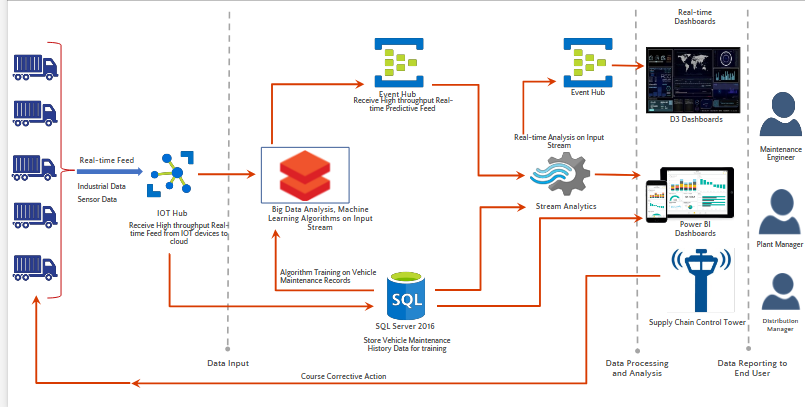
To provide immediate operational visibility, the data architecture was structured to process continuous telemetry feeds directly from transit trucks into a central cloud processing environment.
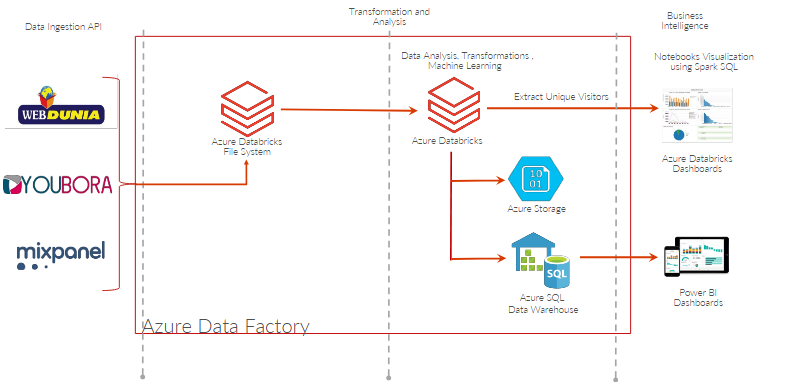
The platform operates through a continuous three-stage data pipeline:
1. High-Throughput IoT Data Ingestion
Every truck in the fleet is equipped with sensor arrays that transmit telemetry data over cellular networks.
- Continuous Feed Processing: The system uses ingestion services (such as IoT Hub and Event Hub) to capture high-velocity streams containing real-time latitude, longitude, speed, tire pressure, and local traffic conditions.
- Parallel Processing Streams: The ingestion layer splits incoming data into two distinct paths: a fast path for immediate operational alerts and a standard storage path for historical training.
2. Stream Analysis and Predictive Modeling
Once the raw telemetry lands in the cloud ecosystem, it is processed dynamically before hitting the storage servers.
- On-the-Fly Analysis: Stream analytics tools evaluate the incoming vehicle metrics against predefined operational boundaries (such as a sudden drop in tire pressure or an extended stationary status on a major highway).
- Machine Learning Integration: Historical vehicle maintenance logs stored in a central database are used to train predictive algorithms. The incoming live sensor streams are cross-referenced against these models to flag vehicles displaying high-risk wear patterns before a breakdown occurs.
3. Central Control Tower Dashboards
The processed streams feed directly into a unified user interface tailored to different organisational roles.
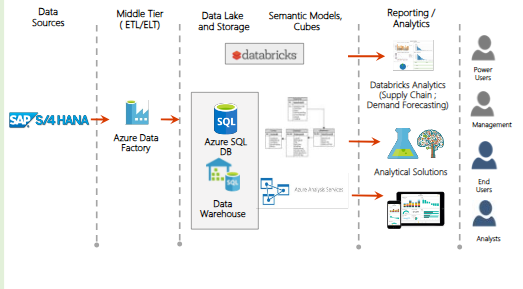
- Role-Specific Interfaces: Plant managers monitor overall shipment arrival timelines, distribution managers review active route congestions, and maintenance engineers receive automated alerts regarding specific vehicle component flags.
Measurable Project Outcomes
Deploying the real-time control tower framework updated the logistics workflow from a reactive model to an active oversight model:
- Immediate Corrective Actions: Dispatchers can send automated route adjustments or maintenance warnings directly to drivers while they are on the road, preventing delivery delays caused by traffic or minor mechanical issues.
- Consolidated Operational View: Plant managers and distribution coordinators manage all active tier-one shipments from a single desktop interface, removing the need to check multiple vendor tracking links.
- Predictive Maintenance Scheduling: Flagging abnormal sensor readings early allows fleet managers to pull specific trucks in for targeted service before terminal road failures occur, reducing overall emergency repair costs.
- Optimised Fleet Performance Reporting: Connecting the live stream feeds directly to reporting environments (like Power BI or custom D3 dashboards) provides executive teams with completely accurate metrics regarding average transit speeds, idle times, and route efficiencies.
Conclusion
Managing a high-volume transit fleet using historical logs or delayed status checks creates ongoing vulnerability to transit delays and mechanical failure. Transitioning to a real-time supply chain control tower setup allows sensor data to be captured, analysed, and flagged completely automatically in the background. With continuous stream processing and predictive checks in place, logistics teams can transition away from morning spreadsheet updates and focus entirely on making immediate, data-backed routing decisions.


Related Post
 October 16, 2026
E-commerce Security: Protect Your Store From Cyber Threats
Learn how E-commerce security protects your online store from fraud, data breaches, and bots. Explore threats, PCI DSS, and best practices.
Keep Reading October 15, 2026
Low-Code Integration: What It Is, How It Works and When Businesses Should Use It
Learn how low-code integration connects business apps and APIs, its key benefits, common use cases, limitations, and when to choose custom integration.
Keep Reading October 15, 2026
SAP BW to Cloud Migration: Benefits, Challenges and Planning Steps
Learn about SAP BW to cloud migration, including benefits, challenges, AWS options, cost factors and planning steps for a successful migration.
Keep Reading