Tech
Why Digital Experience Is Becoming a Key Factor in Patient Retention
 5 min read
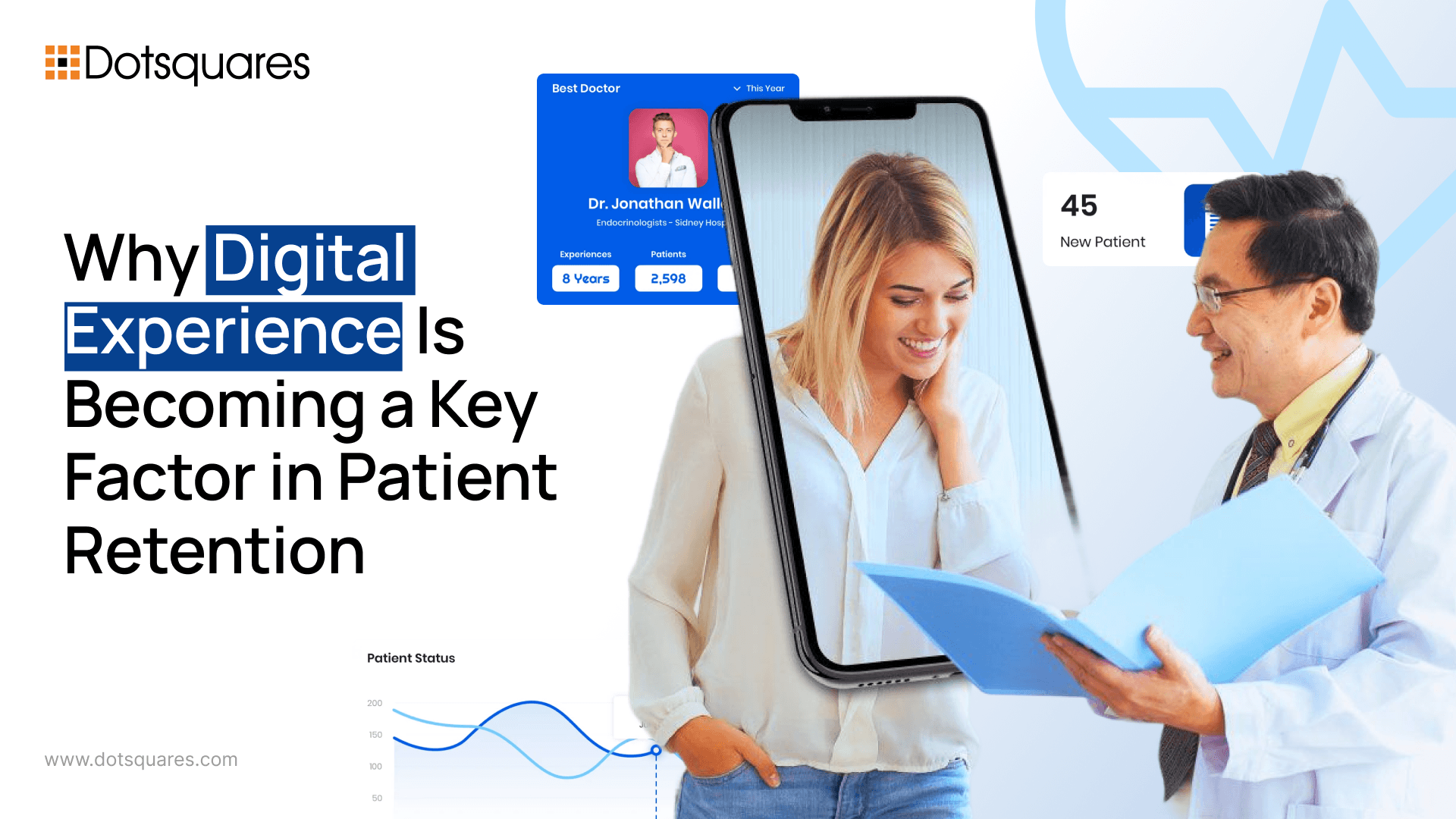
Patients leave for reasons providers never hear about.
Not because the care was bad. Not because of wait times or cost, though those matter too. More often, it is something quieter. The portal didn’t load right on their phone. They couldn’t figure out how to reschedule online and didn’t want to call. The follow-up message they got after their visit felt copy-pasted. None of these things feels dramatic. But they add up, and at some point a patient just doesn’t come back.
That’s the retention problem healthcare organisations are increasingly facing, and clinical quality alone can’t fix it.
What Patients Expect Now Is Different
Ten years ago, patients largely accepted that healthcare was administratively clunky. You filled out the same form multiple times. You called to get results. You waited for a letter. That tolerance is gone. Not because patients became impatient, but because every other industry quietly raised the bar. Banking, travel, retail, people now move through these digitally with almost no friction. When they hit a healthcare system that still runs like it is 2012, the contrast is jarring.
The expectation now is simple: patients want to access their care the way they access everything else. On their phone. Quickly. Without needing to explain themselves to three different people first.
A significant portion of patients, some surveys put it close to half, say they’d switch to a different provider if the digital experience was meaningfully better, even if the clinical care was similar. That’s not a small number. That’s a retention crisis hiding inside patient satisfaction scores.
The Gap Between What Providers Build and What Patients Use
Here’s where things get interesting. Most healthcare organisations do have digital tools. Patient portals. Online booking. Maybe an app. The problem isn’t usually the absence of technology; it’s that the technology was built for the organisation’s workflow rather than the patient’s.
A portal that works beautifully on a desktop in a GP’s office may be nearly unusable on a patient’s phone at 11 pm when they are trying to find out if their prescription was sent. Custom Healthcare Software built around how patients actually move through a care journey, not just how administrators process them, closes that gap in a way generic platforms never quite manage.
This is also where EHR Software Solutions matter more than they are often given credit for. When clinical records connect directly to what patients see on their end, people stop getting contradictory information. They stop calling the front desk to confirm things the system already knows. That alone reduces friction in a way patients notice even if they can't articulate why.
Mobile Isn’t Optional
Over 60% of healthcare web traffic comes from mobile devices. And yet a lot of patient-facing healthcare tools still treat mobile as an afterthought, a shrunken version of the desktop experience rather than something designed for how phones are actually used.
Good healthcare mobile app development isn’t about moving features to a smaller screen. It’s about understanding that someone checking their test results on a phone is in a fundamentally different headspace than someone sitting at a computer. They want the answer fast. They want the layout to make sense in portrait mode. They don’t want to zoom in to read a table that was formatted for a 27-inch monitor.
Healthcare mobile app development services that get this right build tools patients use repeatedly, not just once when they first download the app and then forget about. Repeat usage is what creates the habitual connection that keeps patients in your ecosystem rather than wandering.
When Clinical and Digital Systems Don’t Talk
One of the more frustrating patient experiences is when a healthcare organisation’s digital tools and clinical systems clearly don’t share information. The patient gets a reminder for an appointment that was already rescheduled. They ask a question through the patient portal and get an answer that contradicts what their doctor told them during their last visit. The referral was made two weeks ago, but there’s no trace of it anywhere they can see.
IT solutions for the healthcare industry that address this, properly integrated, built on interoperability standards like HL7 and FHIR, make the difference between a digital experience that feels joined-up and one that feels like four separate systems pretending to be one.
Healthcare IT Solutions designed with this integration in mind don’t just improve the patient experience. They reduce the administrative load on staff who are currently fielding calls from patients asking about things a better-connected system would have communicated automatically.
Personalisation Is Where Retention Gets Real
There’s a version of digital engagement that's technically functional but emotionally hollow. Generic appointment reminders. One-size-fits-all health tips. Notifications with no apparent awareness of what the patient is actually going through.
Patients notice this not consciously, but it registers that the provider’s digital touchpoints don’t seem to know them. Custom AI-Powered Healthcare Solutions are changing what's possible here. When a system can surface relevant information based on a patient’s actual diagnosis, send check-in messages timed to their specific treatment plan, or flag that someone is overdue for a follow-up before it becomes a missed appointment, that’s when the digital experience starts to feel like part of the care, not separate from it.
Healthtech Software Development that builds this kind of intelligence into patient-facing tools shifts the dynamic from transactional to relational. And relational is what retention is built on.
The Real Question for Healthcare Organisations
The question isn’t whether digital experience affects patient retention. At this point, the evidence is fairly clear that it does. The real question is whether the digital tools your patients interact with were built to serve them or built to serve internal processes with patients as an afterthought.
Healthcare app development done well starts from the patient’s perspective and works backwards into the system. Healthcare app development services that skip that step tend to produce tools that look polished in a demo and confuse patients in practice.
Customised Healthcare Apps built around real workflows, clinical, administrative, and patient-facing, don’t just improve retention metrics. They change how patients feel about their provider between visits, which is when loyalty is either built or quietly lost.
If your digital experience isn’t doing that work, it’s worth asking what it’s actually doing.
Talk to the Dotsquares team about building Healthcare software development solutions that patients actually want to use and come back to.


Related Post
 October 15, 2026
Low-Code Integration: What It Is, How It Works and When Businesses Should Use It
Learn how low-code integration connects business apps and APIs, its key benefits, common use cases, limitations, and when to choose custom integration.
Keep Reading October 15, 2026
SAP BW to Cloud Migration: Benefits, Challenges and Planning Steps
Learn about SAP BW to cloud migration, including benefits, challenges, AWS options, cost factors and planning steps for a successful migration.
Keep Reading October 12, 2026
Mobile App Development with React Native and What You Need to Know
Learn how React Native works, where it saves time and cost, which industries use it, and whether it's still a good choice in 2026.
Keep Reading