Tech
Real-Time Data for AI Agents: Why Streaming Data Matters for Automation
 4 min read
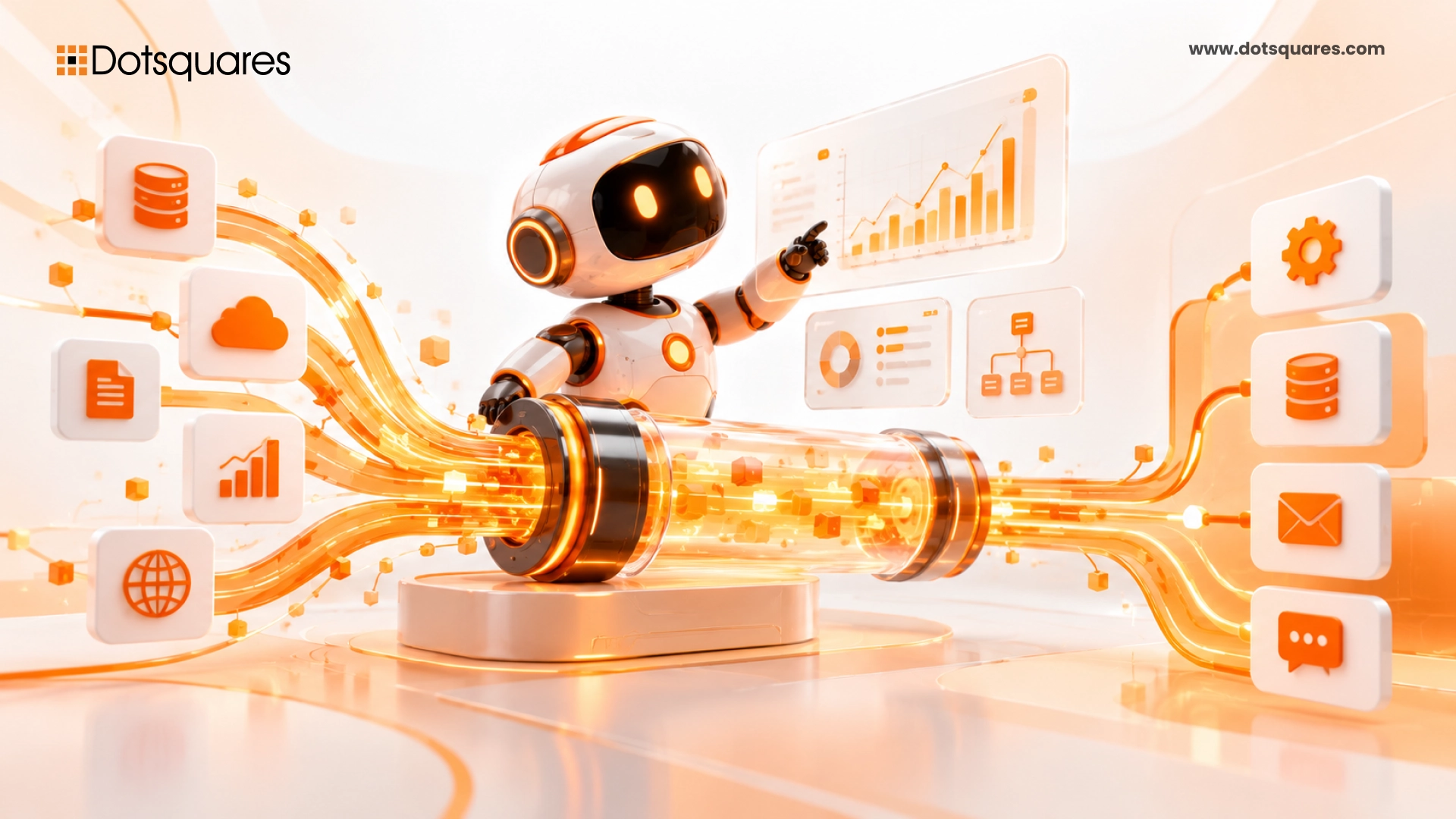
AI agents are now capable of doing more than just answering questions; they can keep an eye on systems, analyse information, make decisions and take action with only a small amount of human involvement. But an AI agent can only make effective decisions if it has access to accurate and up-to-date information, which is why real-time data for AI agents is important.
The systems used earlier mainly worked on batch processing, where the data was collected and processed at regular intervals. Streaming data works differently: the system continuously provides regular updates, allowing AI systems to work with the latest data and provide a more accurate picture.
What does real-time data mean for AI agents?
Real-time data is information which becomes available to an AI system almost immediately after it has been generated; it may be obtained from websites, applications, IoT devices, customer interactions, financial transactions, sensors, databases and other digital systems.
For AI agents this data supplies the context necessary for them to understand what is happening at the present time; rather than depending on a snapshot of an old database, they can receive the new events as they take place and make use of them as they decide.
For instance, an AI-powered customer service agent could get a real-time update that an order was delayed and could then use that information to reply to the customer, propose alternatives or start the relevant workflow.
Why Streaming Data Matters
The main benefit of streaming data is that it is fresh. Since AI agents are intended to observe, reason and take action, the decisions they make could become outdated if the information they observe is outdated.
Let's look at an inventory management system. If an AI agent is given inventory information only once every few hours, it might recommend a product that has already sold out. However, with streaming data, an inventory change can reach the agent almost instantly, enabling it to make a more appropriate decision.
Streaming data also makes it possible to have automation that is event-driven. Rather than continually checking whether any change has taken place, an AI system can act whenever a particular event happens. With event-driven data architectures, applications and agents are able to respond asynchronously to changes while keeping the various components only loosely connected.
Real-Time Data and Autonomous Automation
Streaming data has the ability to turn AI agents from reactive assistants into proactive systems.
For instance, take the case of a manufacturing environment in which sensors constantly monitor the equipment. A streaming pipeline is able to detect unusual patterns in the sensor data and causes an AI agent to be activated when a possible problem is identified. The agent can then examine the equipment's history, the maintenance records and the current readings before suggesting or carrying out an action.
This method has the effect of decreasing the time interval between identifying a problem and taking action. AWS also gives examples of similar architectures in which streaming pipelines detect patterns, build up the relevant context and then automatically call agentic workflows.
This idea can also be applied to fraud detection, logistics, customer support, cybersecurity, financial monitoring and personalised recommendations.
From Batch Processing to Continuous Intelligence
Batch processing is still useful for carrying out historical analysis, preparing reports and for a great many traditional business workloads. It is not always appropriate, however, for automation which relies on immediate changes.
Streaming results in a constant stream of information; rather than having to answer the question 'What happened in the most recent update?', the AI agent can use information about what is currently happening.
It is especially important when businesses apply AI agents to a number of different processes, since recent industry research has identified data quality, trust and infrastructure as the major challenges facing organisations that are trying to get agentic AI into production.
Challenges to Consider
Real-time AI is not just about sending more data to an AI model. Organisations need solid data engineering, proper event processing, data governance, security, and monitoring.
Data quality is particularly important since an agent which receives wrong or incomplete information may make rapid but incorrect decisions; it follows that real-time systems must have mechanisms for validating data, for managing failures, for controlling access and for maintaining reliable context.
Attention should also be paid to latency and cost. Since every event does not need an immediate reply from an AI, businesses should work out which processes actually gain from real-time processing and then select suitable response times.
The Future of AI Automation
The more autonomous AI agents become, the more real-time data will become part of the infrastructure that supports them. Because data streams enable the agents to constantly observe changing conditions, acquire up-to-date context and then react when particular events take place.
The future of automation will therefore involve combining AI reasoning with event-driven data infrastructure, AI supplying the intelligence needed to interpret information and select actions while streaming supplies the continuously updated view of the world which makes those decisions useful.
When businesses want to develop reliable AI automation, putting money into real-time data capabilities could be just as crucial as choosing the AI model. If the data is up-to-date, reliable and constantly available, it will enable AI agents to progress from just producing responses to carrying out meaningful actions at the right time.


Related Post
 October 12, 2026
Mobile App Development with React Native and What You Need to Know
Learn how React Native works, where it saves time and cost, which industries use it, and whether it's still a good choice in 2026.
Keep Reading October 12, 2026Real-Time Data for AI Agents: Why Streaming Data Matters for Automation
Learn why real-time data matters for AI agents, how streaming data supports faster decisions and automation, and the key challenges businesses should consider.
Keep Reading October 09, 2026
ERC‑20 vs ERC‑721 vs ERC‑1155: Which Token Standard Should You Choose?
Compare ERC-20, ERC-721 and ERC-1155 token standards, their key differences, use cases, benefits and how to choose the right standard for your blockchain project
Keep Reading