Tech
Choosing the Right Data Architecture for Your Business: A Complete Guide
 4 min read
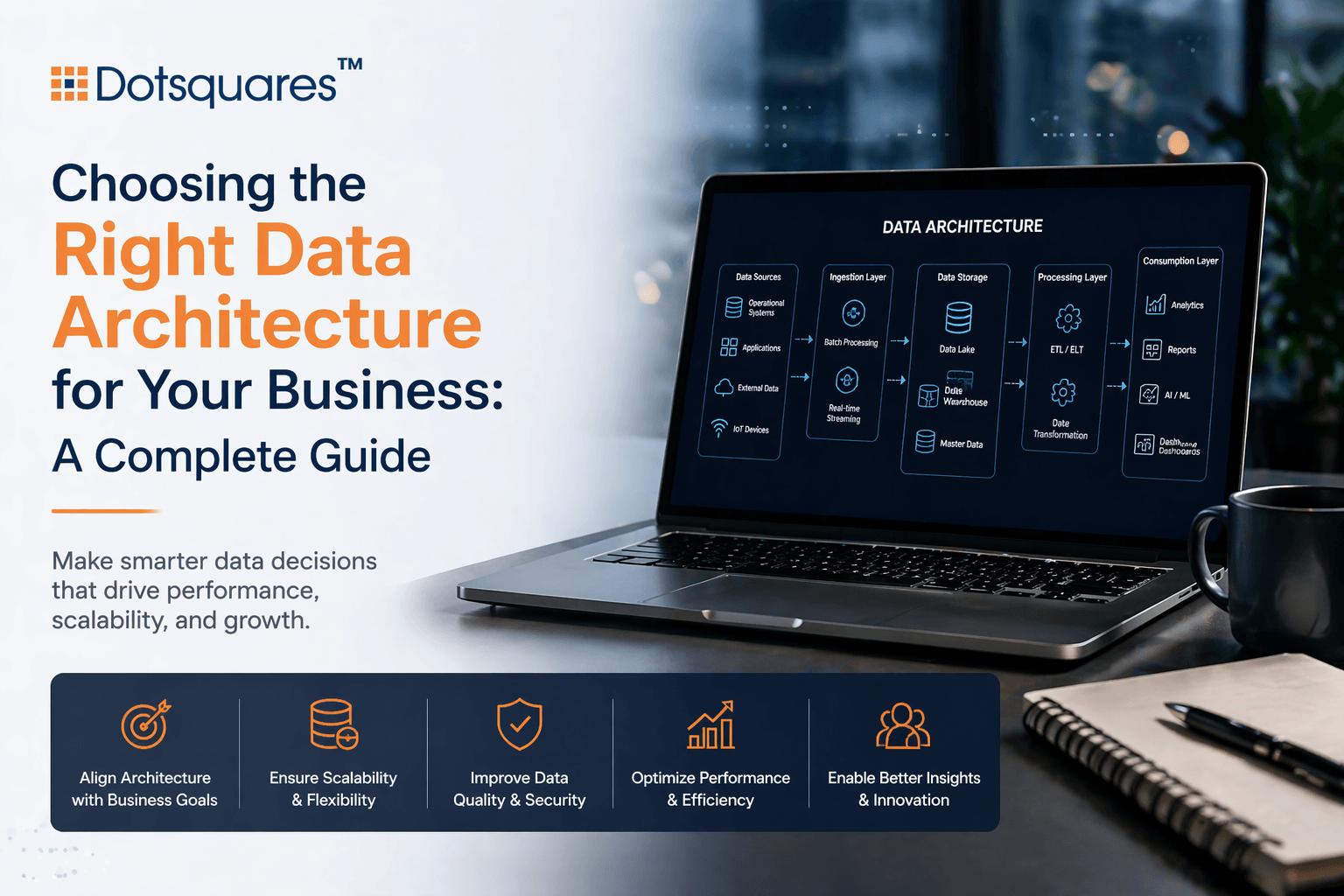
In today’s digital economy, data plays a vital role for businesses to reach some concrete decisions. This, however, requires an appropriate data architecture that could be easily extracted. In its absence, even the most valuable data can become difficult to manage, analyse, and utilise. Choosing the right architecture of data is a strategic decision that impacts the scalability, efficiency and ability of your organisation to make decisions by using it.
What is Data Architecture?
It is the process of defining how the data will be collected, stored, processed and accessed within an organisation. A properly defined framework ensures its smooth flow across all the systems while maintaining quality, security, and accessibility.
A well-designed process helps businesses improve the smooth flow of data, its quality and helps in making quick decisions by providing real-time information to all departments.
Reasons for Choosing the Right Architecture
Selecting the right architecture is not just a technical requirement, it directly affects the decision-making process of a business. The presence of the right system can:
- Improve analytics performance
- Enable real-time insights
- Reduce operational costs
- Enhance scalability and flexibility
With the increasing quantity of structured and unstructured data in businesses, modern systems are designed to maintain a balance between performance, cost, and adaptability.
Types of Data Architecture
1. Data Warehouse – Structured and Reliable
A data warehouse, as the name suggests, is a main location where an organisation stores its structured data collected from various sources. This is done by using methods like ETL (Extract, Transform, Load) to ensure consistency and accuracy in data. Such a data architecture is best suited for business intelligence, reporting and analysis of historical datasets.
Advantages:
- Excellent data quality
- Reliable reports (single source of truth)
Disadvantages:
- Too expensive and less scalable
- Limited support for unstructured data
2. Data Lake – Scalable & Flexible
This system helps in storing the information in its original form, whether structured, semi-structured and/or unstructured. It is useful in analysing large volumes of information as well as machine learning & artificial intelligence.
Advantages:
- Very scalable
- Allows real-time analysis
Disadvantages:
- Complicated data management
- Possible low data quality
3. Data Lakehouse - The Hybrid Solution
The notable feature of this framework is that it offers a combination of both data warehousing and data lakes. This approach enables both analytics and storage of huge amounts of data in a single system. It is often preferred by organisations that need both flexibility and performance.
Advantages
- Single platform for all kinds of data
- Governance is better compared to data lakes
Disadvantages
- Difficult to implement
- Needs specialised skills
Things to Consider
While choosing the right data architecture, there are certain things to consider, including:
- Business Objective: Analytics, AI, efficiency?
- Type of Data: Structured/Unstructured data requirements
- Scalability and future growth
- Budget for infrastructure and other expenses
- Need for real-time data processing
- Availability of experts in your team
It is important that whatever system you opt for aligns with your organisation's skills and strategies.
Trends in Modern System
Some of the latest trends in modern data architectures are:
- Cloud-based data solutions
- Hybrid data systems
- Real-time data pipeline solutions
- Data mesh and fabric architectures
These are some of the current trends in data architecture solutions.
How to Make the Right Choice
None of the data architectures is suitable for all organisations. When an organisation is searching for structured reporting, they need to focus more on a data warehouse. When a company has to deal with large and varied datasets, then a data lake will serve its needs, and if there is a requirement for data architecture that can manage structured reporting from large datasets, then it is better to opt for a data lakehouse.
There could be situations where companies would gain from a combination of two or more types of data architectures.
Final thoughts
It is highly imperative to choose the correct data architecture to achieve seamless digital transformation. It will help organisations to extract the full power of their data and make decisions accordingly. By designing a data architecture as per organisational requirements and future plans, they can create a scalable data environment.
For those who are willing to design a strong data architecture as per their needs, getting in touch with our data architect experts today.


Related Post
 October 12, 2026
Mobile App Development with React Native and What You Need to Know
Learn how React Native works, where it saves time and cost, which industries use it, and whether it's still a good choice in 2026.
Keep Reading October 12, 2026
Real-Time Data for AI Agents: Why Streaming Data Matters for Automation
Learn why real-time data matters for AI agents, how streaming data supports faster decisions and automation, and the key challenges businesses should consider.
Keep Reading October 09, 2026
ERC‑20 vs ERC‑721 vs ERC‑1155: Which Token Standard Should You Choose?
Compare ERC-20, ERC-721 and ERC-1155 token standards, their key differences, use cases, benefits and how to choose the right standard for your blockchain project
Keep Reading