 8 min read
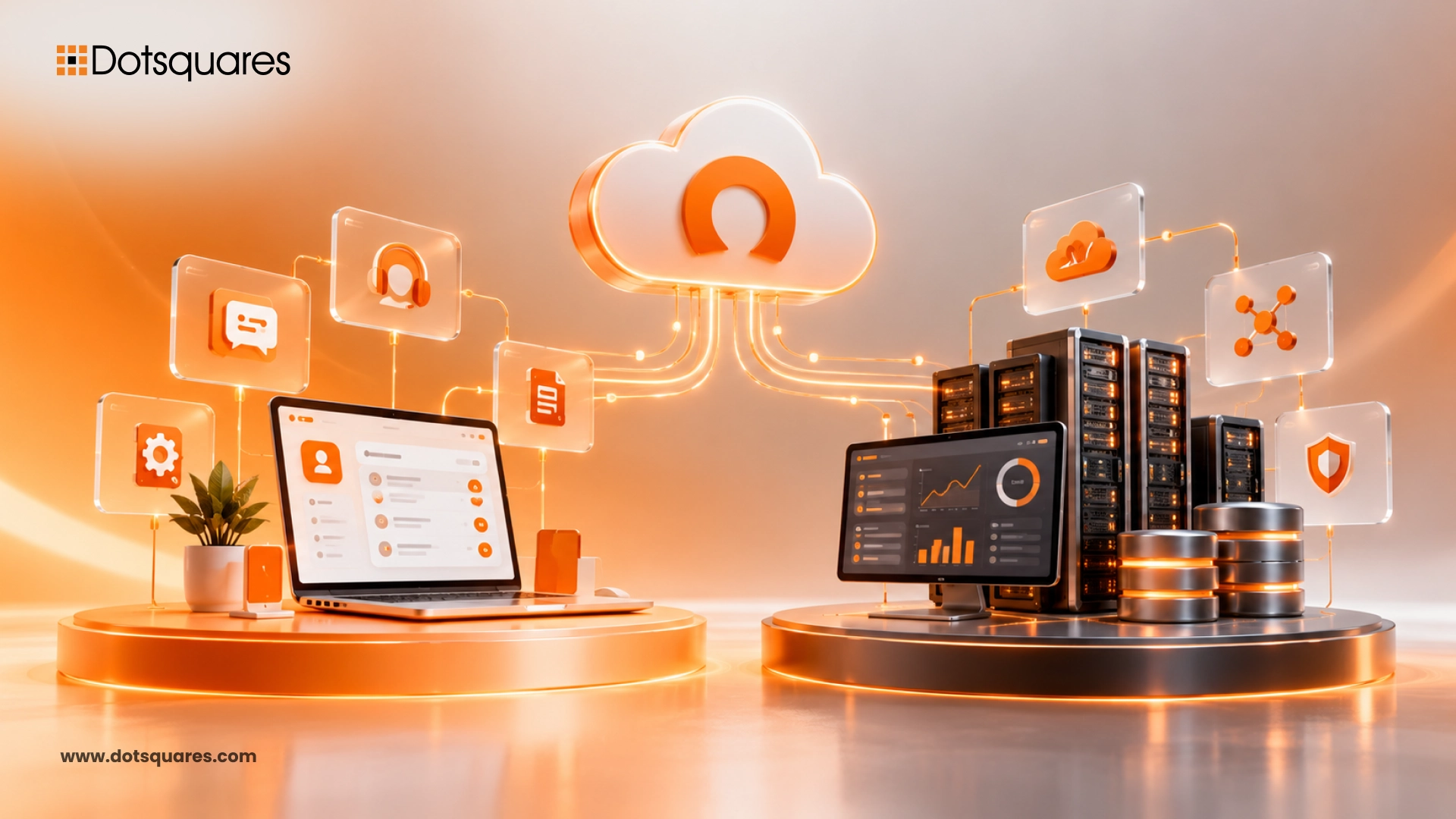
Here is a question IT leads deal with more often than they probably should: "Do we need ITSM, ITOM, or both?" It comes up in budget conversations, it comes up when something breaks at 2am, and it comes up when a CTO is trying to justify a ServiceNow expansion to the board.
It makes perfect sense to be confused. They both work within the ServiceNow platform, they both are about ensuring smooth operation of IT, and their names sound similar enough for people to get them mixed up all the time. However, they have completely different functions, and using either of them without the other one results in visibility holes and repetitive incidents your organisation can’t seem to handle.
This guide lays out exactly what each module does, where the differences lie, and how to decide what your business actually needs.
ServiceNow ITSM vs ITOM: What Is the Difference?
The shortest way to put it: ITSM is about the people using IT. ITOM is about the infrastructure IT runs on.
ITSM (IT Service Management) handles the service layer, incidents, requests, changes, approvals, SLA tracking. When someone logs a ticket because their laptop won't connect to the VPN, that is ITSM territory. When the monitoring system flags unusual CPU behaviour across a cluster of servers before anyone even notices a problem, that is ITOM (IT Operations Management) doing its job.
|
ServiceNow ITSM |
ServiceNow ITOM |
|
|
Primary focus |
IT services and users |
IT infrastructure and operations |
|
Main goal |
Improve service delivery |
Improve operational visibility |
|
Typical users |
Service desk and support teams |
IT operations teams |
|
Key areas |
Incidents, requests, changes, SLAs |
Discovery, monitoring, events, service mapping |
What Does ServiceNow ITSM Do?
ITSM is the engine behind your IT service desk. This provides your team with an organised framework for dealing with any requests from users and for ensuring that such requests are actually completed within agreed upon timeframes.
The key ITSM processes available in ServiceNow include:
- Incident management – logging, classification, assignment and resolution of problems related to IT services
- Request management – processing routine user requests including installations, new accounts, etc.
- Change management – planning, approving and documenting changes to the IT system with adequate risk assessment before deployment
- Problem management – determining root causes of repeated incidents and correcting the underlying problem instead of closing tickets
- Service level agreement/performance tracking – defining service level agreements and tracking whether the IT system is fulfilling them
For businesses where IT primarily plays a support role, keeping users productive and handling service requests, ITSM is the foundation. ServiceNow's ServiceNow ITSM optimization capabilities have also made it the platform of choice for mid-to-large enterprises: ServiceNow currently holds around 44% of the global ITSM market (Apps Run The World, 2025), and the overall ITSM market is growing at roughly 14–16% annually.
What Does ServiceNow ITOM Do?
Where IT Service Management (ITSM) concentrates on service delivery, IT Operations Management (ITOM) focuses on the actual activities of the infrastructure. The task of ITOM is to provide visibility of all elements of the infrastructure, servers, cloud services, containers, applications, network devices, and then use this visibility to prevent issues instead of addressing them reactively.
There are four key capabilities of ServiceNow ITOM:
- Discovery – scanning of all assets in the IT environment and automatic maintenance of the CMDB (Configuration Management Database) without any need for manual input
- Service Mapping – associating infrastructure elements with the corresponding business services so that it would be clear which services are impacted by an event
- Event Management – gathering information about issues in monitoring tools, correlating information with the help of artificial intelligence and removing false alerts
- AIOps – application of machine learning algorithms to predict future incidents, detect anomalies in the work of systems and trigger automation processes
If your environment is complex, multi-cloud, hybrid, or scaling fast, ITOM is what keeps the infrastructure from becoming unmanageable. For a deeper look at how this works with predictive intelligence, Dotsquares' coverage of ServiceNow ITOM and AIOps covers the specifics.
ITSM vs ITOM: Which One Does Your Business Need?
The honest answer is that most organisations need both, but they do not necessarily need both at the same time, and the starting point depends on where the pain is.
Start with ITSM if:
- Your service desk is overwhelmed and tickets are falling through the gaps
- You have no consistent process for handling change requests or approvals
- Users are frustrated because requests take too long or get lost entirely
- You want to meet ITIL standards and improve IT governance
Start with ITOM if:
- You are running a complex or multi-cloud infrastructure with limited visibility
- Incidents keep recurring and your team cannot get to the root cause
- Your CMDB is outdated or incomplete, you don't know what you actually have
- You want to move from reactive fire-fighting to proactive operations
Another way to think of it: ITSM makes the issue right once the incident has been logged. ITOM attempts to prevent it from occurring in the first place or, failing that, catches it before the end-user even knows there’s an issue.
How Do ITSM and ITOM Work Together in ServiceNow?
The true value of the two modules becomes evident when you run them together on the ServiceNow platform. It is a system of sharing data between the two modules, which means tasks that were traditionally manual are now done automatically.
Let's take, for instance, event management within ITOM. It detects some anomaly in your cloud infrastructure. It will automatically generate an incident in ITSM and assign it to the corresponding team depending on the service that is affected and link the incident with the corresponding CI in CMDB. The operations team gets the technical view, the service desk team gets the view on how this incident affects the users. And both teams will operate using the same record.
Other ways the integration plays out:
- Change management with infrastructure context - before any change is approved in ITSM, ITOM can check the current state of the infrastructure and flag potential conflicts
- Automatic CMDB updates - ITOM's discovery continuously refreshes the asset data that ITSM's change and incident processes depend on
- Faster root cause analysis - when incidents recur, ITOM's service mapping shows exactly which infrastructure component is the common thread across multiple tickets
Businesses that implement ITSM separately often find themselves in situations where service desk staff members close tickets but do not know why incidents are happening. The ITOM platform brings to light the infrastructure story behind each ticket.
How Can Businesses Get More Value From ITSM and ITOM?
Having both modules licensed is not the same as getting full value from them. A few things that make a material difference:
- Keep the CMDB clean. Properly configured CMDB is needed by both ITSM and ITOM. Inaccurate CMDB will result in misrouted incidents and unreliable service maps. Automated discovery of ITOM is the most efficient way of keeping CMDB up-to-date, but the process requires scoping.
- Fine-tune event management. By default, there will be lots of noise in your ITOM tool. However, spending some time fine-tuning threshold values and learning AIOps gives quick returns as staff reports about reduced alert fatigue already in one month after initial setup.
- Connect ITOM's service maps to ITSM's impact fields. When an ITSM incident record automatically reflects the downstream services affected, prioritisation decisions become much faster and more accurate.
- Use a partner who knows the platform. ServiceNow implementations that involve both modules benefit from working with ServiceNow managed teams who have configured ITSM-ITOM integrations before, there are a lot of configuration decisions that look minor but have significant downstream effects.
Right now, companies that benefit most from ServiceNow are not those which have the biggest list of modules, but rather the ones that have their data cleaned, their processes fine-tuned and ServiceNow specialists who understand how to merge operation and service layers into an integrated solution.
FAQs
What is the difference between ServiceNow ITSM and ITOM?
While ITSM covers all the matters related to delivery of IT services, incident, request, changes and SLA management from the user perspective, ITOM covers the infrastructure layer, including monitoring, discovery and event correlation. These two modules cover different needs and solve different problems, but they are best when used complementarily.
Is ServiceNow ITSM or ITOM better for my business?
It depends on what exactly causes the greatest pains for your business. If the problem is with the ticketing and changes management, it's better to start from ITSM. But if the problem is a complex infrastructure and its poor visibility with recurring incidents that cannot be tracked down, it's a question of ITOM. In any case, in the future most mid to large organizations will require both of these.
Can ServiceNow ITSM and ITOM work together?
Absolutely, and this integration becomes one of the key factors in favor of ServiceNow compared to running tools separately since when both modules share the same CMDB and platform, ITOM can automatically start an incident in ITSM, pass context information to ticket, and provide operation details for every issue raised by users.
Is ITOM part of ITSM?
Not at all, these are two separate product modules available in the ServiceNow platform. ITSM is dedicated to service management processes, whereas ITOM addresses infrastructure operations. These are complementary modules, however, they can be deployed separately.
What does ServiceNow ITOM manage?
ITOM takes care of the entire IT infrastructure layer – discovers and maps all assets regardless of whether they are cloud, on-premises or hybrid, monitors their health and events, correlates alerts by using AIOps approach and creates service maps connecting infrastructure to business services dependent on it.
Do I need both ServiceNow ITSM and ITOM?
In most cases, for most companies operating complex environment, yes, eventually. If you have only ITSM, you service desk deals with symptoms, not infrastructure. If you have only ITOM, your operations team has perfect visibility but no workflow to handle it.


Related Post
 October 27, 2026
ServiceNow ITSM vs ITOM: Key Differences and Use Cases
Compare ServiceNow ITSM vs ITOM to understand their key differences, core features, use cases and how businesses can use both to improve IT operations.
Keep Reading October 27, 2026
How Zoho ERP Solves Inventory and Supply Chain Challenges for Retail Businesses
See how Zoho ERP helps Australian retailers fix stock errors, streamline supply chains and cut costs. Talk to Dotsquares, a Zoho Premium Partner.
Keep Reading October 26, 2026
Foldable Phones and Agentic AI: The Future of Adaptive Mobile App Development
Explore how foldable phones and agentic AI are shaping mobile app development, with insights into adaptive design, automation, use cases and modernisation.
Keep Reading