
Is Your Business AI-Ready?

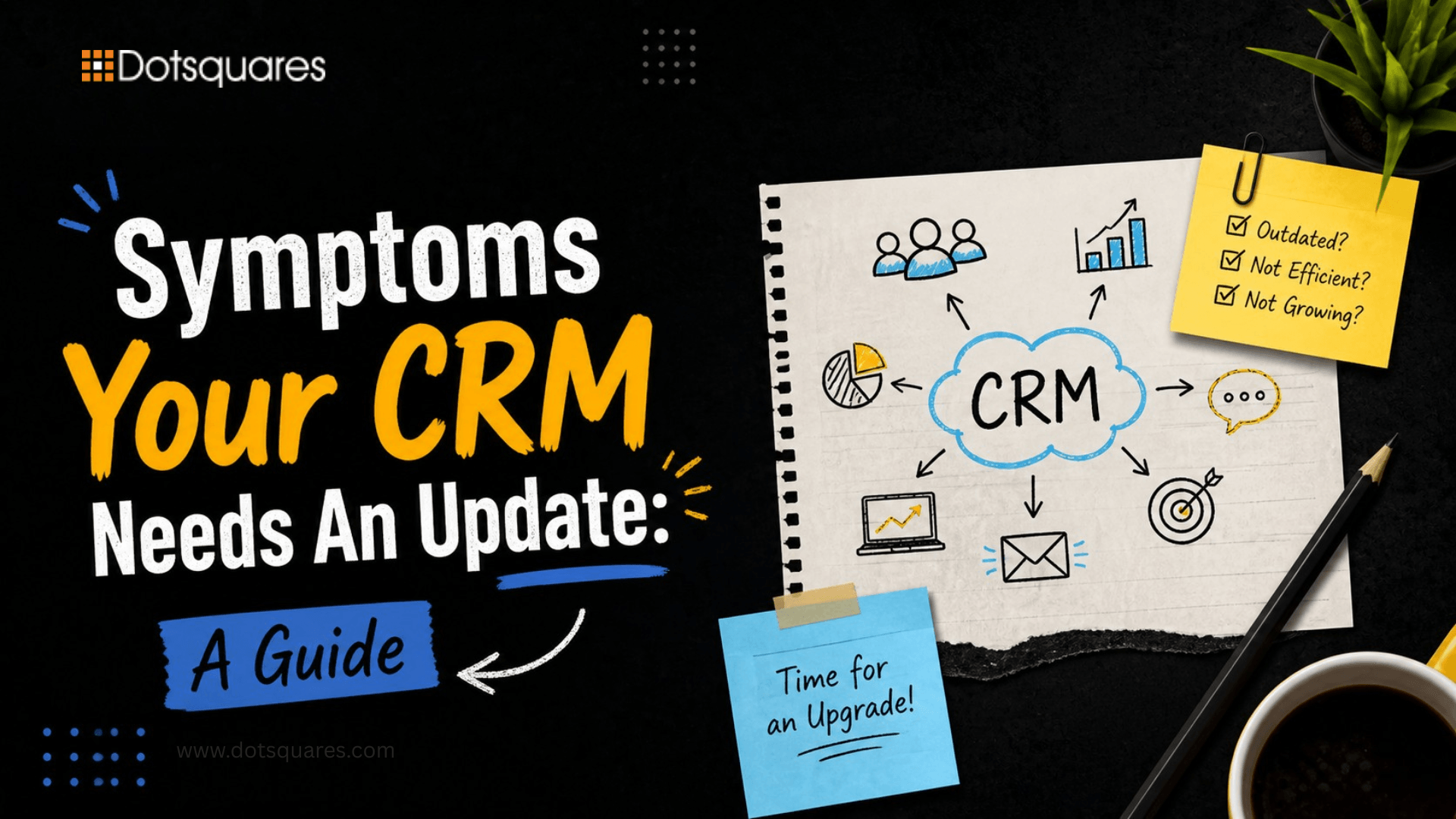
Customer Relationship Management (CRM) systems are the corner pillar of businesses in today’s scenario, regardless of their size. CRM helps businesses in managing their interactions with customers, optimize their operations, and enhancing profitability. However, as your business expands, the efficiency of your existing CRM is not sufficient to manage the increasing volume of customer data. The CRM, which worked seamlessly till a few months back, may soon become a bottleneck, not only affecting your productivity but also your growth and customer experience.Many businesses turn to partner with a reliable CRM development company to scale their systems effectively. If you’re unsure whether it’s time for an upgrade, this guide highlights the key symptoms that indicate your CRM needs an update.
It is a universal truth that the expansion of business results in an increase in the size of the customer database. If you notice that your CRM is not able to store the huge data volume, lags in processing data or suffers from the problem of data overload, then it’s a clear indication that it has become obsolete. An effective CRM is easy to scale according to your changing business needs and allows you to manage increasing volumes without performance issues.
Do you notice the problem of dashboards loading slowly, your system crashing, and some technical issues occurring regularly in your CRM? If yes, then this is not good for your businesses. These issues not only consume time in resolving them but also affects the efficiency of your team. A CRM that requires regular checks and monitoring will impact your productivity and efficiency.
If, your employees regularly complain about the slow performance of CRM, then it is an indication that your existing CRM is not working properly. This may be due to the absence of features, such as automation, analytics, or integrations. Businesses often address these gaps by adopting custom AI development solutions, which enhance efficiency, streamline operations, and support smarter decision-making.
A poor CRM can deprive your team from using its features effectively. If your employees need extensive training even for common tasks or face problems in using the CRM, then it’s time to consider a more user-friendly solution that enhances productivity.
An effective CRM is a reliable source of your data. However, if you’re dealing with duplicate records, missing data, or constant data cleanup, then in all these situations, your CRM will not be able to deliver accurate insights. Remember that using the data of poor quality or data which is inaccurate will affect your decision-making process.
CRMs which are outdated lag behind contemporary security features like encryption, multi-factor authentication, and regular updates. If your system is prone to breaches or has undergone various security issues, in that scenario upgrading the system becomes imperative to save your data.
The experience of your customers directly reveals the effectiveness of your CRM. If you receive complains from about delays, poor service, or lack of personalization, then there are chances that your CRM is not supporting your team effectively.
Despite being a beneficial tool for organizations, it important to ensure your CRM is compliant with features like GDPR and other data protection laws. If your CRM does not have features like consent management, audit trails, or data protection capabilities, then your business may face legal issues, and this may also affect its goodwill.
Automation of repetitive tasks and use of AI have become a necessity of time in today’s businesses. If your CRM is not able to automate routine tasks, provide detailed information about your business, or doesn't support advanced analytics, then you will not be able to use the opportunities. As highlighted in the Future of CRM with AI, adopting intelligent systems is critical to improving sales performance and enhancing customer engagement.
A CRM is designed to connect all teams in your organization and not separate them from each other. If your system is not able to integrate with your existing applications and tools or fails to support remote work, then it can create gaps in your operations.
Upgrading your CRM is not just about adding new features; it is about making your business compatible with future needs. A modern CRM can improve efficiency, provide exclusive information about your customers, enhance security, and enable scalability. It also empowers your team to deliver better customer experiences and make appropriate decisions from your data.
Final Thoughts
Ignoring the symptoms of an outdated CRM can cost your business time, revenue, and customer trust. If you notice any of the above-mentioned symptoms in your CRM, it’s time to evaluate your current system and consider an upgrade.
A well-optimized CRM doesn’t just manage relationships; it brings growth, innovation, and long-term success. If you are also facing any of these problems, then it is better to consult an expert agency with exclusive knowledge in providing CRM development services.



 October 12, 2026
Learn how React Native works, where it saves time and cost, which industries use it, and whether it's still a good choice in 2026.
Keep Reading October 12, 2026
Learn why real-time data matters for AI agents, how streaming data supports faster decisions and automation, and the key challenges businesses should consider.
Keep Reading October 09, 2026
Compare ERC-20, ERC-721 and ERC-1155 token standards, their key differences, use cases, benefits and how to choose the right standard for your blockchain project
Keep Reading 4 min read