Tech
Why Ski Resort Shuttles Were Losing Seats Nobody Could See, And How We Fixed It
 5 min read
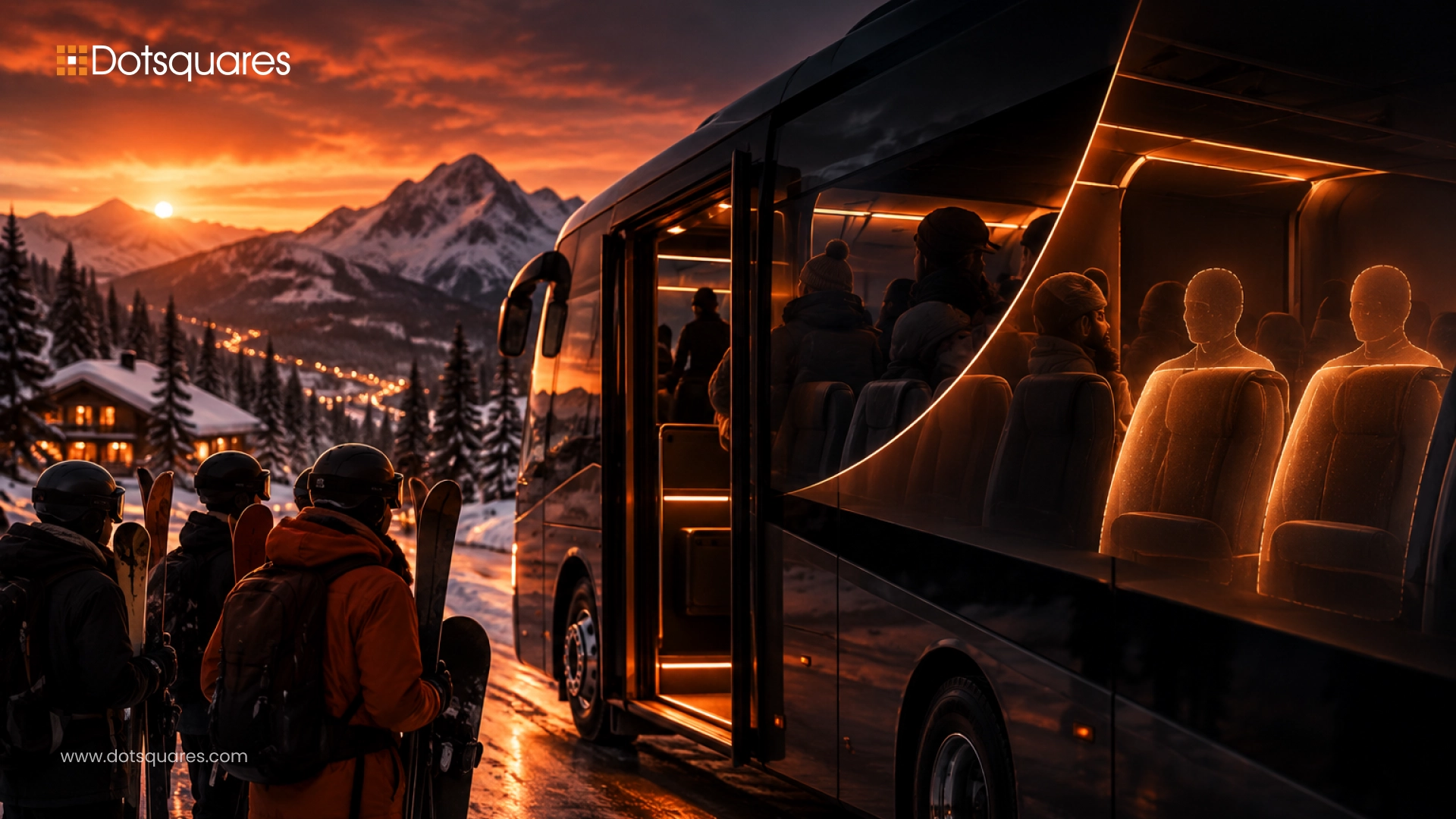
Picture a ski resort on a packed Saturday, shuttles running back and forth, bags piling up, dispatchers juggling last-minute changes on a system that wasn't built to bend. Now picture half those shuttles running with empty seats while others are overloaded, not because of bad luck, but because nothing in the booking process was actually deciding who goes where. That was the real problem sitting underneath what looked, on paper, like a working shuttle operation.
We were brought in to rebuild that process from the ground up, a centralised, web-based platform that could handle booking, dispatch, and everything in between without the guesswork that had been quietly costing the operation efficiency and money. Here's what that build looked like.
A Resort Transport System Running on Manual Habits
Ski resort shuttle operations move a lot of people and a lot of gear across tight schedules and unpredictable conditions, weather shifts, last-minute bookings, and groups arriving with more luggage than expected. The existing process wasn't built to absorb that kind of variability; it relied on manual judgment calls at nearly every step, which meant efficiency depended entirely on how good a given dispatcher's instincts were on any particular day. An off-the-shelf booking tool was never going to solve this properly; the operational quirks here needed genuinely bespoke software development built around how this specific resort actually runs, not a generic scheduling template retrofitted to fit.
Where the Old System Was Quietly Breaking Down
A handful of specific gaps kept showing up, each one chipping away at how smoothly the operation actually ran.
No Real Logic Behind Which Vehicle Got Picked
There was no defined mechanism for prioritising vehicle selection during booking allocation, which meant vehicle usage ended up uneven almost by default, some shuttles underused, others stretched thin, with no system actually balancing the load.
Baggage Was Basically a Guessing Game
Without a standardised way to calculate or manage baggage allocation, overloading a vehicle was a real, recurring risk, and there was no consistent method keeping bag volume in check against what a given shuttle could actually handle.
Dispatch Was Boxed In by Rigid Zones
Dispatch operations were restricted to predefined zones, which sounds sensible until a real-time situation calls for flexibility the system simply didn't allow. That rigidity made it genuinely difficult for dispatchers to respond quickly when conditions on the ground changed.
Discounts Were a Constant Source of Errors
Vouchers and season pass discounts were handled inconsistently across different booking scenarios, which meant pricing errors and operational headaches kept surfacing in situations that should have been straightforward.
Building a Platform That Actually Thinks Through the Logistics
The fix wasn't just a booking form; it was a system designed to make the smart operational calls automatically the ones that used to depend entirely on manual judgment. As a web application development company, this is exactly the kind of project where the interface has to do more than look clean; it has to genuinely support a dispatcher making split-second decisions during a busy shift.
Letting the System Decide the Smartest Vehicle Fit
A new process dynamically assigns vehicles based on seating optimisation the moment a booking is created, ensuring occupancy stays maximised without dispatchers having to manually work out the math on every single booking.
Matching Baggage Capacity to the Vehicle, Automatically
Bag capacity is now managed directly against overall vehicle capacity, which keeps passenger count and luggage load properly balanced, improving both safety and day-to-day operational efficiency.
Giving Dispatchers Real Control, Not Just Rules
Zone dependency was removed entirely, giving dispatchers the ability to override assignments through simple drag-and-drop functionality, regardless of location constraints. That flexibility means faster, more practical decisions when real-time situations actually call for it.
Making Discounts Predictable Instead of Inconsistent
Discount logic was rebuilt around ticket item types, so vouchers and season pass benefits apply in a standardised, controlled way across every booking scenario, which cut out the pricing errors that used to slip through the old process.
Running a platform like this reliably through peak season, when booking volume and dispatch activity spike hard, meant leaning on proper cloud development services from the start, not bolting on extra server capacity after the system started buckling under real demand.
What Changed Once the New System Was Running
The shift from manual guesswork to an automated, logic-driven platform showed up clearly in how the operation actually performed.
- Vehicles stopped running half-empty. Efficient, automatic allocation kept occupancy maximised across the fleet, cutting down on the wasted capacity that used to go unnoticed.
- Safety and load management genuinely improved. Balanced handling of passengers and baggage together meant overloading stopped being a recurring risk, making shuttle operations more consistently safe and reliable.
- Dispatch became noticeably more flexible. Removing zone restrictions and adding real override controls meant dispatchers could actually respond to changing conditions in the moment, instead of working around a system that fought them.
- Customers felt the difference too. Smoother operations and easier booking modifications translated directly into a more convenient, less frustrating experience for the people actually riding the shuttles.
The Bigger Takeaway From This Build
This project is a good example of how a transportation operation doesn't need an entirely new business model to run better, it needs the manual guesswork replaced with systems that actually make smart calls in real time. Optimised vehicle allocation, standardised baggage handling, flexible dispatch, and reliable discount logic together turned a manually run shuttle operation into something structured, scalable, and genuinely dependable during peak demand.
If your business is dealing with the same kind of operational friction, scheduling, dispatch, resource allocation, that's outgrown manual processes, this is exactly the kind of problem our team enjoys solving. Get in touch with Dotsquares to talk through what a smarter operations platform could look like for you.


Related Post
 October 16, 2026
E-commerce Security: Protect Your Store From Cyber Threats
Learn how E-commerce security protects your online store from fraud, data breaches, and bots. Explore threats, PCI DSS, and best practices.
Keep Reading October 15, 2026
Low-Code Integration: What It Is, How It Works and When Businesses Should Use It
Learn how low-code integration connects business apps and APIs, its key benefits, common use cases, limitations, and when to choose custom integration.
Keep Reading October 15, 2026
SAP BW to Cloud Migration: Benefits, Challenges and Planning Steps
Learn about SAP BW to cloud migration, including benefits, challenges, AWS options, cost factors and planning steps for a successful migration.
Keep Reading