Tech
Data Observability Explained: Monitoring Modern Data Pipelines
 4 min read
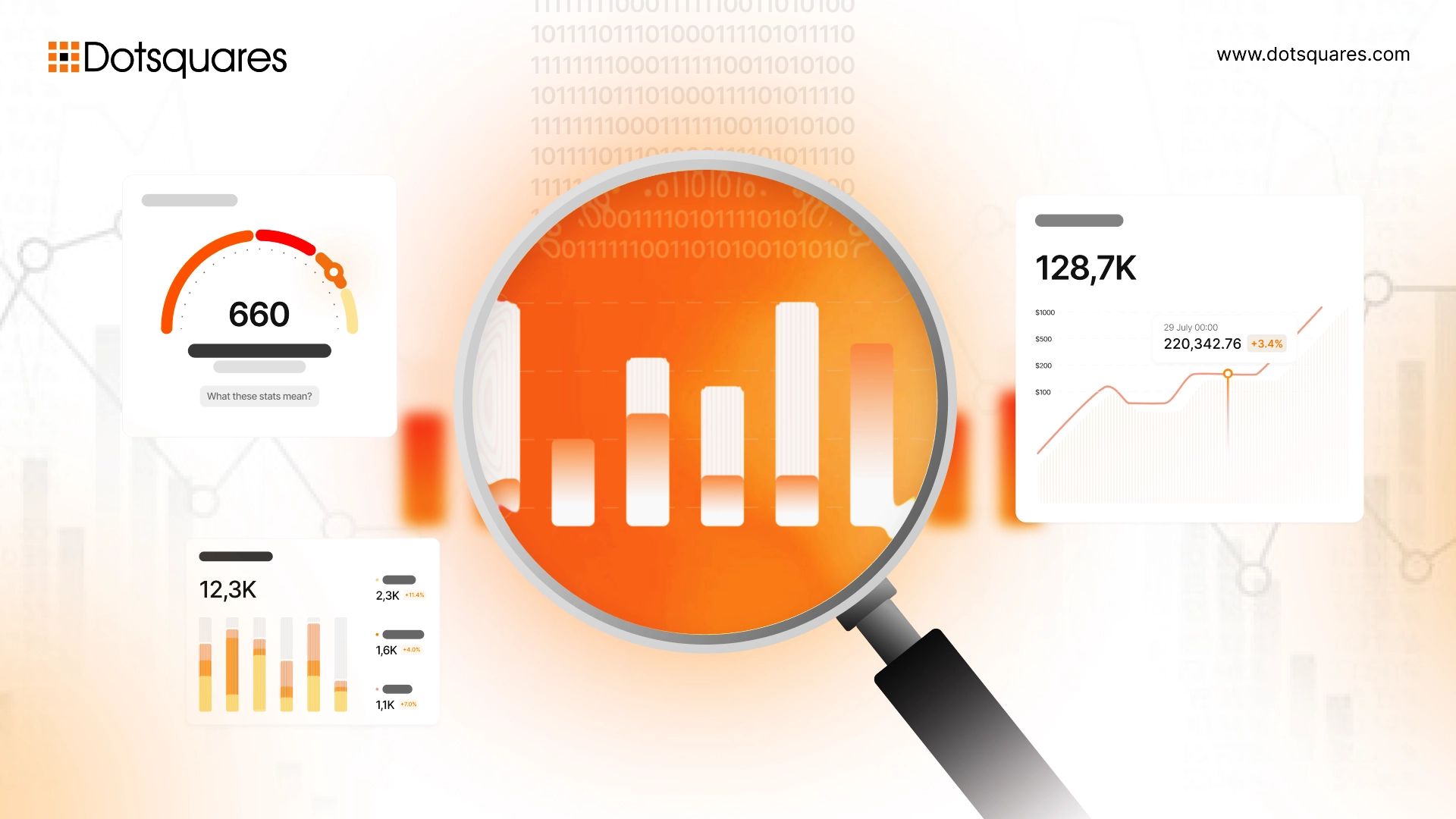
In today's scenario, data plays a crucial role in making any concrete decision. Considering the importance of data in business decision-making, businesses now rely heavily on data pipelines for acquiring, transforming, and delivering data for analytics purposes, artificial intelligence (AI), and business intelligence (BI). However, due to the increasing complexities of data pipelines, it has become increasingly difficult to ensure the quality and reliability of data. To address this problem, businesses adopt the practice of data observability, which enables them to monitor the condition of their data pipelines.
What is Data Observability?
Data observability can be described as the process of monitoring, analysing, and comprehending the condition of data during its entire lifespan. Over time, the concept of data observability has changed completely from focusing on uptime or infrastructure to analysing data from multiple points.
The process of modern data observability involves analysing data sets, metadata, logs, and other events happening at the stage of a pipeline.
Why Data Pipelines Need Observability
Businesses today don’t collect data only from on-premise resources but also from other external sources, such as cloud apps, IoT devices, CRM, ERP, and third-party API services. The data is then processed through elaborate ETL or ELT pipelines before arriving at a data warehouse or any analytics service.
Some of the problems that businesses can face due to a lack of observability include: • Missing data or incomplete data • Schema change • Data freshness delays • Duplicate data entries • Failure in pipelines • Low-quality data that impacts reports and AI models
Main Components of Data Observability
An effective data observability system normally checks a variety of important elements in the data pipeline
Freshness Checks: To make sure that the datasets are regularly updated. Alerting occurs if the data is missing or delayed
Data Quality Checks: It helps to confirm whether the data is of a certain predefined quality by checking for nulls, duplicates, invalid values, etc
Schema Changes: The system will monitor schema changes in the database or the datasets. It may affect other applications connected to the pipeline
Volume Monitoring: Checking whether the volume of the incoming data matches the historical data volume. It might mean some problems in the pipeline
Lineage: Helps to understand where the data came from, how it was transformed and what systems were using the data
Benefits of Data Observability
Data observability offers multiple benefits for your business and operations
Fast Issue Detection: Issues are detected in real time before they affect dashboards, reporting, and ML model outputs.
Increased Data Integrity: Data validation makes sure that stakeholders have faith in the data they are making decisions from.
Reduced Downtime: Using automated alerts, engineering teams get a chance to fix issues immediately.
Regulatory Compliance: Data observability ensures accurate and trackable data that helps comply with regulatory bodies like GDPR and HIPAA
Boosted Team Productivity: Without wasting any time on investigating pipeline failures, these challenges can be automatically spotted and solved.
Best Practices for Efficient Data Observability
Organisations may ensure efficient data observability with the help of these best practices: • Monitor the quality of data at each stage of a pipeline • Clearly formulate an SLA regarding data freshness and availability • Use anomaly detection through artificial intelligence services.
- Keep a record of data lineage and metadata.
- Connect data observability with incident management solutions.
- Always make sure you have updated your monitoring rules according to business requirements.
Data Observability in the Future
As more companies adopt cloud infrastructure, real-time analytics, and generative AI solutions, the importance of data observability will only grow in the future. Nowadays, modern observability solutions use machine learning to predict failures, detect anomalies, and provide suggestions for remediation.
Considering the increasing data volume and pipeline complexity, organisations willing to invest in data observability will benefit greatly from doing so.
Conclusion
Modern data engineering solutions have moved beyond being just a technology-based improvement to become a requirement in today’s world. Through the constant checking of data quality, freshness, lineage, volume, and changes to the schema, companies can make sure that their contemporary data pipelines are dependable, scalable, and robust. In the age where more and more companies rely on data for innovation and decision-making, the adoption of data observability becomes necessary
Frequently Asked Questions
1. What is data observability?
Data observability is the continuous tracking of the health, quality, and reliability of data throughout its entire lifecycle in order to ensure the accuracy and reliability of data.
- How is data observability different from conventional monitoring?
While conventional monitoring is concerned more with the performance of infrastructure and applications, data observability is concerned with the monitoring of the data itself.
- What is the importance of data observability?
This is because data observability helps detect issues with data, improve its quality, prevent pipeline failure, and ensure compliance.
- What are the pillars of data observability?
Some of the main pillars of data observability are data freshness, data quality, schema monitoring, volume monitoring, and data lineage
- In what industries do companies need data observability?
These are industries like finance, healthcare, retail, manufacturing, telecommunications, e-commerce, and others
- Can AI help in data observability?
Of course, because the use of AI allows finding anomalies and predicting failures, as well as determining the root cause of the problem.


Related Post
 October 15, 2026
Low-Code Integration: What It Is, How It Works and When Businesses Should Use It
Learn how low-code integration connects business apps and APIs, its key benefits, common use cases, limitations, and when to choose custom integration.
Keep Reading October 15, 2026
SAP BW to Cloud Migration: Benefits, Challenges and Planning Steps
Learn about SAP BW to cloud migration, including benefits, challenges, AWS options, cost factors and planning steps for a successful migration.
Keep Reading October 12, 2026
Mobile App Development with React Native and What You Need to Know
Learn how React Native works, where it saves time and cost, which industries use it, and whether it's still a good choice in 2026.
Keep Reading