Tech
Why Real Estate Platforms Fail Without a Unified System, And How One Got It Right
 5 min read
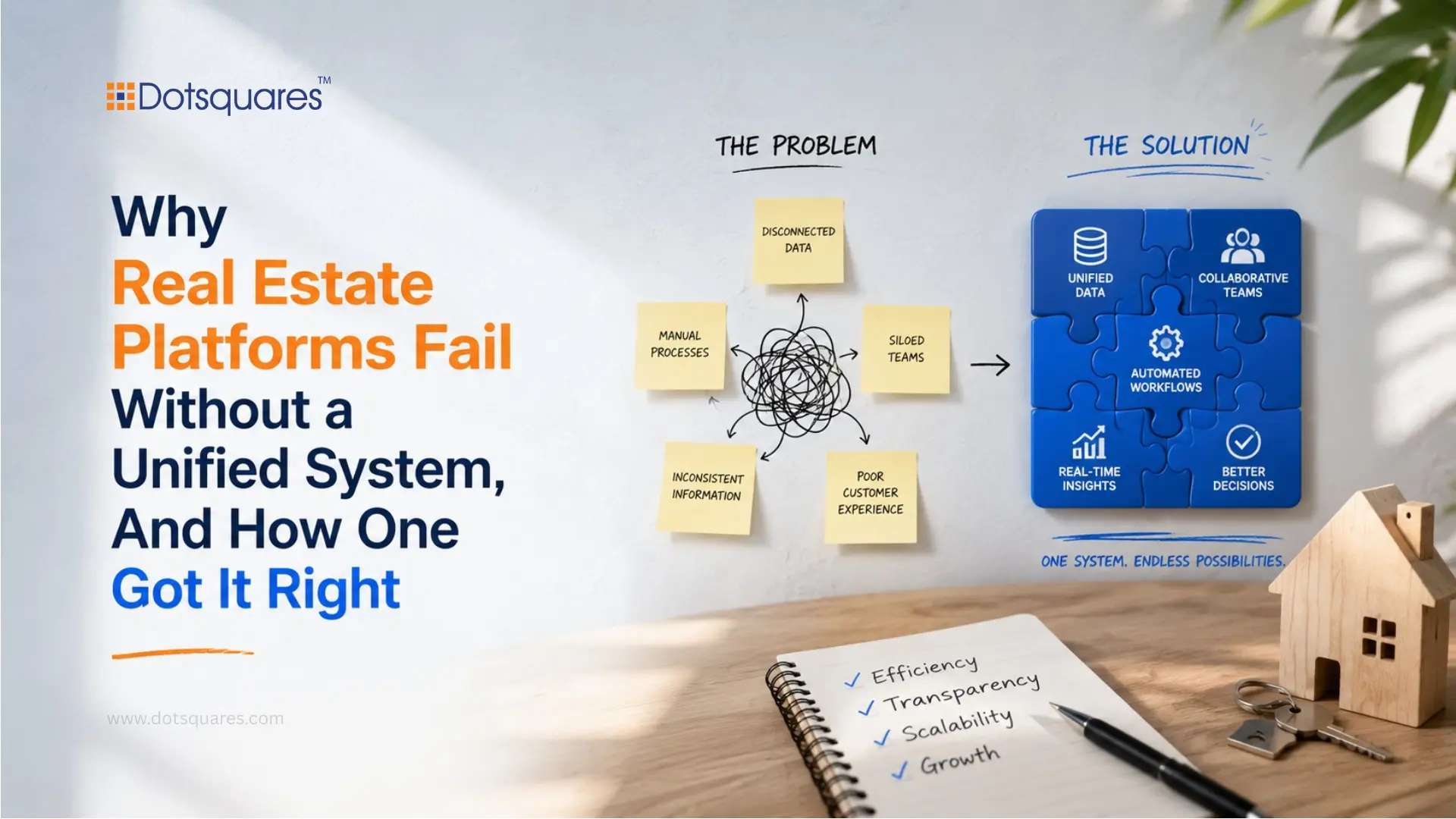
Managing property listings across multiple stakeholders, landlords, agencies, and administrators, sounds straightforward until you are actually doing it. The reality is fragmented tools, manual verification, missed communications, and a search experience that frustrates everyone involved.
This is how one real estate organisation replaced that fragmented setup with a platform that actually works for everyone using it.
The Problem With How Property Listings Were Being Managed
The organisation expanded its operations by acquiring new landlords and new agencies which brought in new property listings. The existing infrastructure which supported all operations was unable to manage the increased workload. Landlords, agencies, and administrators operated their respective functions through separate systems which lacked any system to connect their activities.
As volumes increased, the cracks became impossible to ignore:
- Landlords and agencies and admins worked across different tools because there was no system that allowed them to see all listings and their current status and all communication.
- The process of verifying property details and user identity required manual checks at each stage which created delays and produced inconsistent results.
- The property search process proved inefficient because users needed to examine all results without any effective location or property feature search options.
- The agencies lacked an established method to show their interest and submit proposals to landlords who had no effective method to evaluate and respond to offers.
- The operating system created communication problems because platform users used external channels to manage inquiries and viewing requests and status updates which resulted in delays and lost opportunities for replies.
The operation became more complex as its size grew because all operational elements required more time to manage which created difficulties in sustaining quality standards for property listings.
What Needed to Be Built
The organisation needed more than a listing directory. They needed a platform that could handle the full workflow, from a landlord uploading a property to an agency finding it, expressing interest, and closing a deal, within one connected system.
Four specific technical challenges shaped how the platform was designed:
- Distance and location search - property search based on radius and geo-coordinates across large datasets, without sacrificing query speed or accuracy
- Advanced filtering - combining multiple conditions simultaneously (postcode, amenities, property features, radius) in a single optimised query that does not slow down under load
- Social login - secure OAuth 2.0 integration across Google, Facebook, and Apple, each with different token validation mechanisms and compliance requirements
- Agency bidding - a structured proposal system where agencies can submit bids with pricing and service details, and landlords can review, compare, and approve, with full history and status tracking throughout
Each of these was a meaningful technical problem on its own. The challenge was solving all of them within a single coherent platform.
How the Platform Was Built
The development approach was focused on one outcome: a unified system where every stakeholder, landlord, agency, and administrator could do their job without leaving the platform or relying on external tools.
Here is how the core technical challenges were addressed:
- Geo mapping - Google Location API converts addresses into precise latitude and longitude coordinates, stored in PostgreSQL using PostGIS for geospatial processing; geo-indexing keeps radius-based search fast even across large datasets
- Dynamic filtering - a backend filtering engine handles multiple conditions in a single optimised query; PostgreSQL indexing ensures performance does not degrade as filter combinations increase
- OAuth integration - secure OAuth 2.0 authentication for Google, Facebook, and Apple login; tokens are validated per provider before access is granted, with a unified authentication layer managing sessions consistently
- Bidding module - agencies submit structured proposals with pricing and service details through their dashboard; landlords review and compare bids, with full bid history, status tracking, and notifications maintained throughout
On top of the core functionality, the platform included:
- Admin-driven approval workflow to verify all listings before publication
- Real-time in-app and email notifications for approvals, bids, inquiries, and updates
- Portfolio management and subscription features for agencies
- Property boosting for improved listing visibility
- Compliance tracking and secure transaction monitoring
What the Platform Delivered
The results were visible across every part of the operation, for landlords, agencies, and administrators alike:
- Faster property discovery - radius-based search, advanced filters, and map-based navigation significantly reduced the time agencies spent finding relevant properties
- Streamlined workflows - property submission, approval, bidding, and communication now happen within a single system, replacing the fragmented back-and-forth that previously defined the process
- Better collaboration - structured bidding and in-platform messaging between landlords and agencies improved transparency and accelerated deal closures
- Higher listing quality - admin verification ensured all properties and users on the platform are authenticated, raising the overall standard of listings
- Real-time visibility - notifications kept every stakeholder informed at every stage, reducing delays caused by missed updates or unanswered inquiries
- Improved portfolio management - agencies gained proper tools for organising and tracking properties, with approval workflows giving administrators better operational control
The Bigger Picture
Property management platforms often get built as digital versions of paper-based processes — listings move online, but the underlying workflow stays fragmented. What this platform demonstrates is that the real value comes from connecting those workflows, not just digitising them.
When a landlord can upload a property, track its approval, receive agency bids, manage viewings, and respond to inquiries all in one place — and when an agency can search by location, filter by features, submit a proposal, and track its status without leaving the platform — the entire ecosystem moves faster and with far less friction.
That is not just a better user experience. It is a fundamentally more efficient way to run a real estate operation at scale.


Related Post

 October 15, 2026
Low-Code Integration: What It Is, How It Works and When Businesses Should Use It
Learn how low-code integration connects business apps and APIs, its key benefits, common use cases, limitations, and when to choose custom integration.
Keep Reading October 15, 2026
SAP BW to Cloud Migration: Benefits, Challenges and Planning Steps
Learn about SAP BW to cloud migration, including benefits, challenges, AWS options, cost factors and planning steps for a successful migration.
Keep Reading October 12, 2026
Mobile App Development with React Native and What You Need to Know
Learn how React Native works, where it saves time and cost, which industries use it, and whether it's still a good choice in 2026.
Keep Reading