
Is Your Business AI-Ready?

Tech
 7 min read
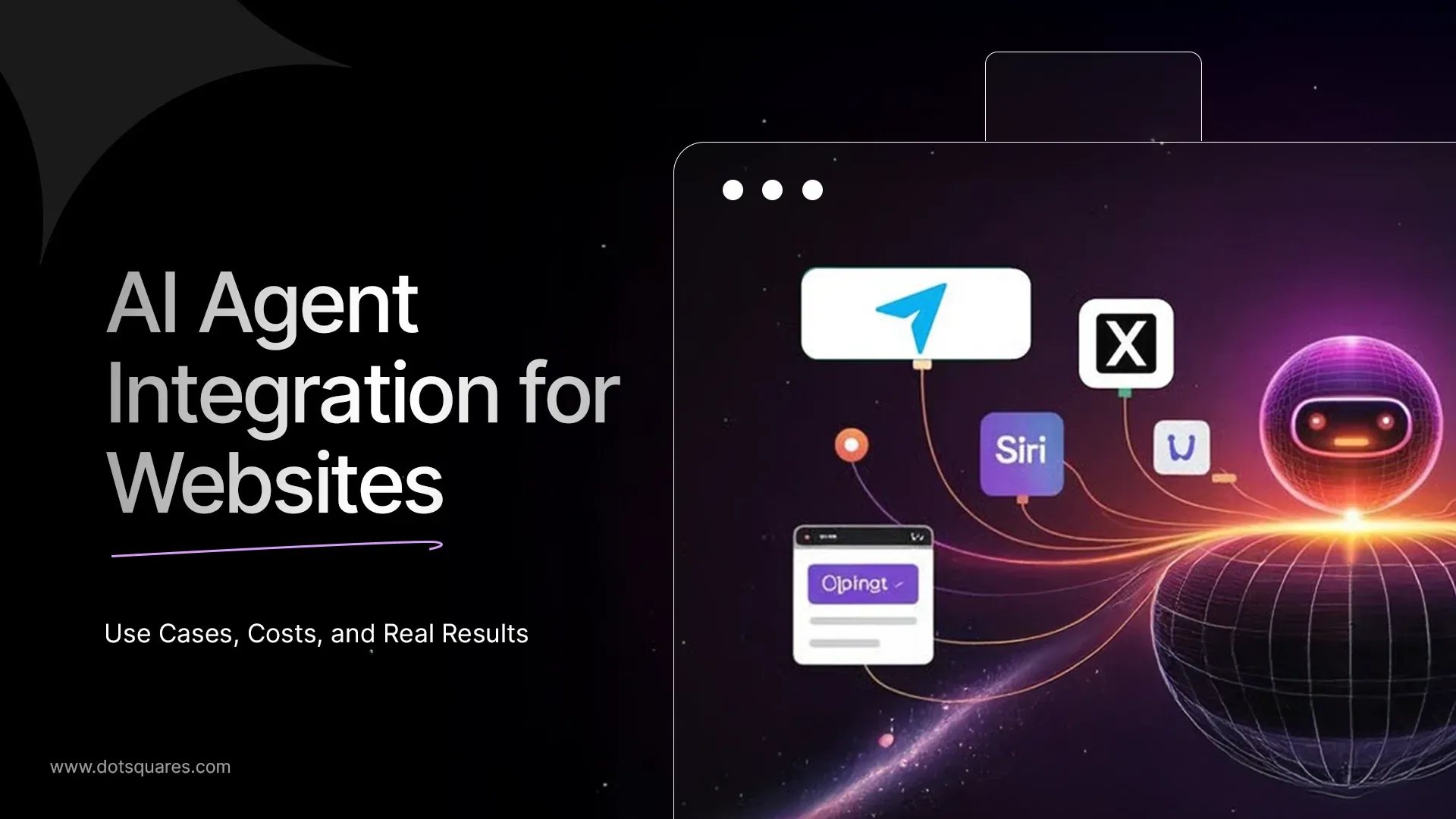
In the past, when you visited a website's chatbot, you would have been met with a glorified FAQ search bar that could only provide answers to standard questions if you used specific keywords. Whenever someone strayed from those keywords or attempted to ask their question differently, the system would simply break down, resulting in no response.
AI Agents are what we now find ourselves facing; the technology was never intended just to exist to help people with customer service questions. Today, AI Agents represent a new generation of digital employees with intelligence, reasoning, planning, and the ability to perform tasks through integration into websites. Furthermore, many companies are beginning to view AI Agents as an extension of the traditional method of providing customer support by alternative means, thereby keeping costs down. As more companies turn towards using AI Agents in conjunction with their web presence, it will be commonplace for these types of employees to assist with the provision of customer service 24/7, while keeping the cost associated with having an extensive support team at a minimum.
The role of an Intelligent Agent is similar to that of an employee who is given access to your company’s internal handbook and complete knowledge on only one area of work. Unlike other types of robots that rely on step-by-step instructions to follow over and over again, modern Intelligent Agents rely on Large Language Model (LLM) solutions to identify context as well.
When an individual asks an Intelligent Agent a question, it doesn’t simply look for the keyword in its search. It examines the individual’s intent when asking the question, looks for the individual’s connected data (e.g., user’s product documentation or customer relationship management software) and combines all of this information to create a response that is relatively human-like in nature and feels like something that a real person would say. What’s more, an Intelligent Agent can “do” things. If an individual wants to change their reservation within your company, the Intelligent Agent will not just be able to tell them how to do it; it will also log into the user’s account and make the changes on their behalf.
If your website is the digital front door of your business, the AI agent is the concierge. AI Agent Integration solves three massive problems:
This level of responsiveness directly contributes to an AI-driven personalized customer experience, where users feel understood, supported, and guided rather than pushed through static workflows.
Depending on your business needs, you might choose different levels of sophistication for your custom AI agents.
These are the simplest forms. They wait for a user to ask a question and provide a response based on the data they have. They don't store "memory" of previous interactions but are incredibly efficient for quick support.
These agents don't just wait; they watch. If a user has been staring at a pricing page for three minutes without clicking anything, a proactive agent might pop up and say, "I noticed you’re looking at our Pro plan. Would you like to see a quick comparison of the features?"
These are built for high-level engagement. They excel at natural language processing, making the user feel like they are talking to a human. They are perfect for consultative selling or personalised coaching.
The "gold standard" of AI Agents in Custom Web Apps. These agents can be given a goal (e.g., "Summarise these 500 customer reviews and email a report to the marketing team") and they will figure out the steps to complete it without human intervention.
How does the agent actually "live" on your site? It requires four core components to function properly:
The API is the bridge. It allows your AI agent to talk to the "brain" (the LLM like GPT-4 or Claude) and your other software (like Shopify, HubSpot, or a custom SQL database). This is where AI-powered software development becomes critical, as seamless integrations determine whether an agent can simply answer questions or actively perform business tasks.
For an agent to be useful, it needs your data. Data connectors feed your PDFs, website text, and product databases into the agent’s knowledge base so it doesn't hallucinate or give generic answers.
A trigger is an event (like a user clicking a button), and an action is the result (the agent sending a calendar invite). Setting these up correctly is what turns a "chatbot" into a "worker."
The agent needs to look good. Whether it’s a floating bubble, a full-screen dashboard, or an embedded search bar, the UI must be intuitive and responsive on both mobile and desktop.
We are seeing AI Agent Integration transform various industries with measurable results. Here are a few standout examples:
Klarna recently integrated an AI assistant that handled 2/3 of all customer service chats in its first month. That’s roughly the work of 700 full-time agents. The result? A 25% drop in repeat inquiries and an estimated $40 million USD increase in annual profit. The agent doesn't just answer questions; it handles refunds, cancellations, and payment disputes directly.
Duolingo uses custom AI agents to allow students to practice conversation. Instead of rigid multiple-choice questions, students chat with an AI "character" about their day or a specific topic. The agent provides real-time feedback on grammar and suggests better ways to phrase sentences, making the learning process feel incredibly personal.
Octopus Energy integrated AI agents to handle complex customer emails. They found that the AI was able to resolve issues as effectively as their top-performing human agents, achieving a customer satisfaction rate of 80%. The AI agent can look into meter readings, billing history, and tariff details to give precise, helpful answers in seconds.
Sephora uses AI agents on their platform to help users find the right products. By asking a few questions about skin type or preferred style, the agent acts as a digital beauty consultant. It can even use the phone’s camera to "try on" products virtually, moving the user from "just browsing" to a confident purchase.
Costs don't have a "fixed price" as they vary by the complexity of the case, but here is a general idea of the costs:
Beyond the setup, you also need to account for "tokens" (the cost paid to the LLM provider based on usage).
Integrating AI Agents is becoming the primary way companies compete on customer experience. By offloading repetitive tasks and basic inquiries to an agent, you free up your human team to focus on the high-value, creative work that truly grows a business.
If you’re still waiting to see how this technology develops, the "real results" are already in: businesses with integrated AI agents are seeing higher conversion rates, lower support costs, and significantly happier customers. The question is no longer if you should integrate an agent, but which job you’re going to give it first.


 October 15, 2026
Learn how low-code integration connects business apps and APIs, its key benefits, common use cases, limitations, and when to choose custom integration.
Keep Reading October 15, 2026
Learn about SAP BW to cloud migration, including benefits, challenges, AWS options, cost factors and planning steps for a successful migration.
Keep Reading October 12, 2026
Learn how React Native works, where it saves time and cost, which industries use it, and whether it's still a good choice in 2026.
Keep Reading