
Is Your Business AI-Ready?

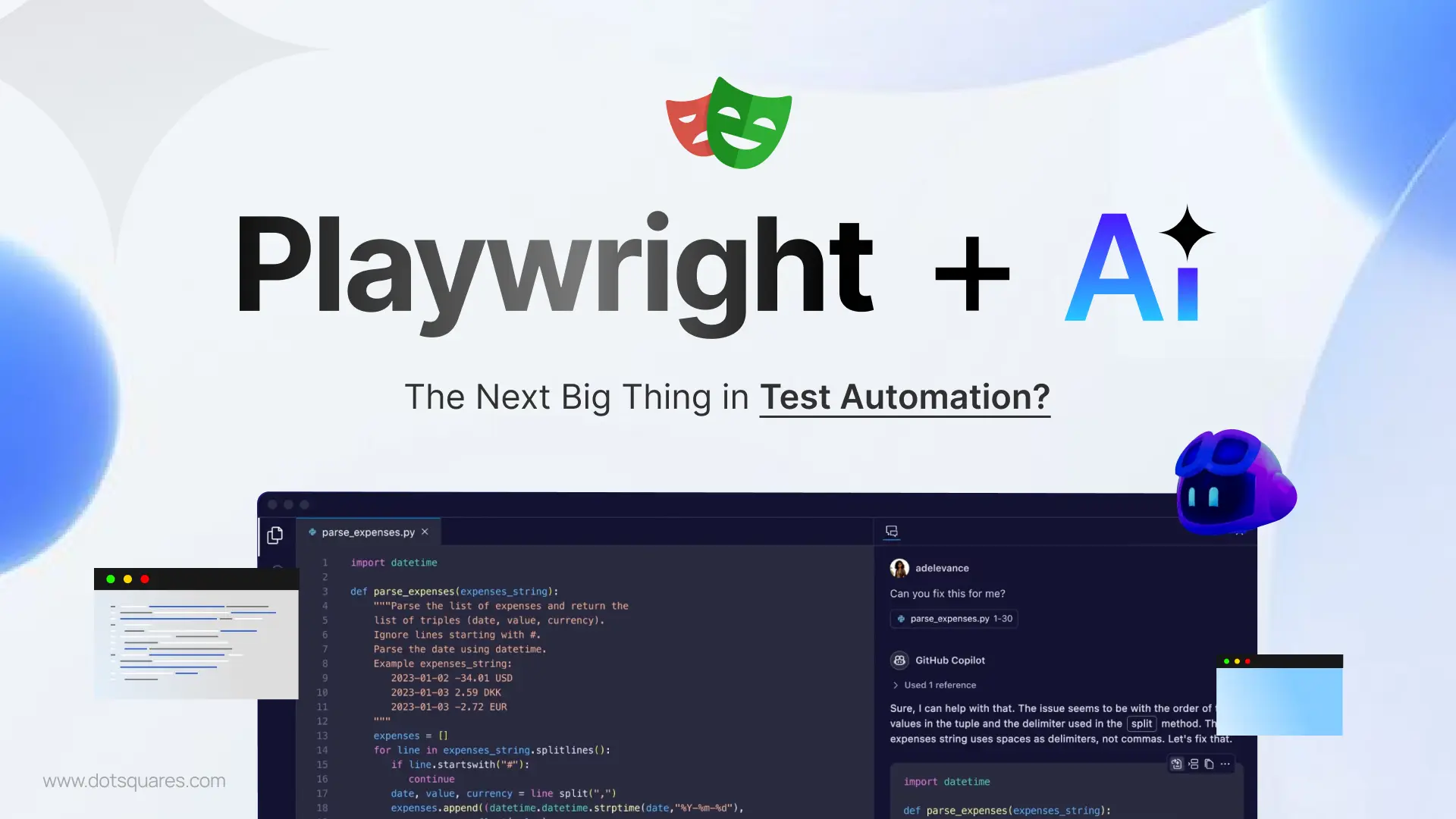
Let’s face it, software never slows down. Users expect smooth, polished experiences, and companies are under pressure to push updates out the door faster than ever. Testing used to be treated like a final checkpoint, but now it’s basically a core part of shipping quality software.
That’s why Playwright has gotten so much attention. It’s Microsoft’s end-to-end testing framework, and people actually like using it. It’s fast, it’s reliable, and it doesn’t feel like a fight every time you write a test.
But here’s the kicker: when you mix in AI, testing stops being this fragile, manual chore and starts looking a lot more like a system that can take care of itself.
There are plenty of tools out there — and if you’ve ever compared Cypress vs Playwright vs Selenium testing tools, you know each has its strengths. Cypress is great for simplicity, Selenium is battle-tested and flexible, but Playwright hits that balance between speed, power, and ease of use.
Here’s why developers love it:
Of course, apps today are messy—buttons move, layouts shift, content changes daily. That’s the kind of stuff that usually breaks tests. And this is where AI can really shine.
AI doesn’t replace testers, it enhances them. Think of it as adding Custom AI Development capabilities to your testing process, an intelligent assistant that adapts, learns, and evolves with your product.
Here’s how AI transforms test automation:
AI makes Playwright smarter and testers far more efficient.
Say your online store redesigns the checkout button overnight. Normally, that breaks your tests and slows everyone down. With AI + Playwright, the test notices the change, adapts itself, and maybe even sends your team a heads-up.
Or imagine working on a SaaS app where the UI changes every quarter. Without AI, you’d be rewriting scripts all the time. With it, most of that heavy lifting just disappears in the background.
This isn’t just about making testers happy—it has a ripple effect for the whole team:
Teams adopting AI within Playwright’s end-to-end testing framework experience noticeable efficiency gains, fewer regression bugs, and faster delivery timelines.
This is not about speed, it's about wiser automation. Legacy testing is brittle and reactive. AI makes it resilient. It stays in sync with change, and sometimes even ahead of it.
By integrating Custom AI Development into your QA workflow, you can build smarter systems that anticipate issues, self-heal, and reduce human workload. That equates to fewer bugs getting through, more assurance in releases, and ultimately, happier users.
So yeah the future of test automation isn't just stable anymore. It's smart. And Playwright + AI? That may be the combination that gets us there.


 October 12, 2026
Learn how React Native works, where it saves time and cost, which industries use it, and whether it's still a good choice in 2026.
Keep Reading October 12, 2026
Learn why real-time data matters for AI agents, how streaming data supports faster decisions and automation, and the key challenges businesses should consider.
Keep Reading October 09, 2026
Compare ERC-20, ERC-721 and ERC-1155 token standards, their key differences, use cases, benefits and how to choose the right standard for your blockchain project
Keep Reading 3 min read