Tech
AI and ServiceNow ITOM: From Monitoring to Proactive Operations
 7 min read
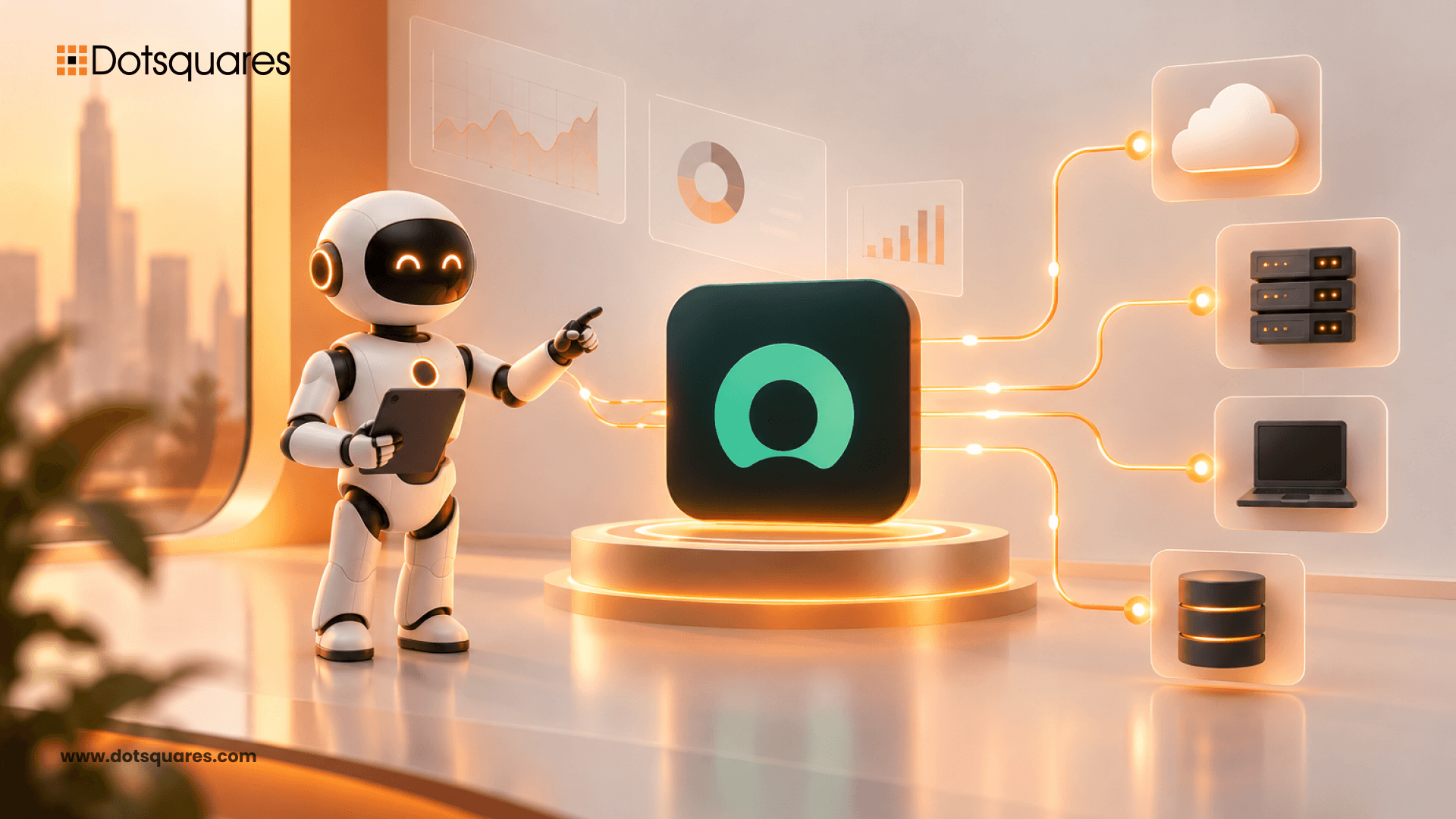
Modern IT environments are becoming increasingly complex.
Organizations today rely on cloud services, applications, APIs, databases, networks, virtual infrastructure, and third-party platforms to keep their business running. With so many interconnected components, simply monitoring individual systems is no longer enough.
IT teams need to understand what is happening across the environment, identify the impact of issues, and respond before they become major business disruptions.
This is where Artificial Intelligence and ServiceNow IT Operations Management (ITOM) can play an important role.
By combining operational data with AI-assisted capabilities, organizations can move from simply reacting to alerts toward a more proactive approach to IT operations.
The Challenge with Traditional IT Monitoring
Traditional monitoring tools can generate a large number of alerts when something goes wrong.
While alerts are important, a high volume of notifications can create another challenge: alert overload.
For example, a single infrastructure issue could generate multiple alerts across different monitoring tools.
An IT operations team may see alerts related to:
- Server performance
- Application availability
- Database connectivity
- Network latency
- CPU or memory utilization
- Service availability
- Infrastructure dependencies
Without the right context, it can be difficult to determine which alerts are related to the same underlying problem.
Teams may spend significant time reviewing individual alerts instead of focusing on the actual business impact.
How AI Can Change IT Operations
AI introduces the possibility of analyzing large volumes of operational information and identifying relationships that may not be immediately obvious. With servicenow consulting services, organizations can also align these AI capabilities with their existing IT operations and workflows.
Instead of looking at every alert independently, AI-assisted capabilities can help teams understand patterns, prioritize information, and provide additional context for investigation.
The objective is not simply to generate more insights.
It is to help IT teams answer important questions faster:
What happened?
Why did it happen?
Which services are affected?
What could be the potential impact?
What should the team investigate next?
This shift can help organizations move toward a more proactive operating model.
AI and Event Management
Event Management is an important part of ITOM.
Monitoring systems continuously generate events from different sources. These events can represent anything from performance degradation to service failures.
AI can help teams analyze these events and identify meaningful patterns.
For example, several seemingly unrelated alerts may actually be connected to a common infrastructure or application issue.
By adding context and correlation, AI-assisted operations can help reduce unnecessary noise and make it easier for teams to focus on the events that require attention.
From Alerts to Meaningful Insights
One of the biggest challenges in IT operations is turning raw monitoring data into useful information.
An alert by itself may tell a team that something is wrong.
It may not explain why the issue occurred or what business service is affected.
ServiceNow ITOM provides organizations with a platform for connecting operational information with services and configuration data.
When AI is applied to this information, teams can potentially gain a more contextual view of operational issues.
For example, instead of seeing:
Database CPU utilization is high.
An operations team may want to understand:
Which applications depend on this database, and is there a potential impact on a critical business service?
This context can make incident investigation much more effective.
Supporting Root Cause Analysis
Finding the root cause of an incident can be one of the most time-consuming activities for IT operations teams.
A production issue may involve multiple infrastructure components and dependencies.
AI-assisted analysis can help teams review available information, identify relationships, and narrow down potential causes.
This does not mean that AI should make the final decision about the root cause.
Instead, it can help engineers reach the right information faster and provide a structured starting point for investigation.
Human expertise remains essential for validating the findings and deciding on the appropriate action.
Predictive and Proactive Operations
One of the longer-term opportunities with AI and ITOM is moving from reactive to proactive operations.
Traditional operations often follow a pattern:
Issue → Alert → Investigation → Resolution
A more proactive approach aims to identify potential problems earlier:
Data → Pattern → Risk → Preventive Action
For example, historical operational data may help teams identify patterns associated with recurring performance issues.
When these patterns can be recognized early, teams may have an opportunity to investigate or take preventive action before users experience a significant disruption.
AI and ServiceNow CMDB
The Configuration Management Database (CMDB) is another important component of the ITOM ecosystem.
A CMDB provides information about configuration items and their relationships.
This relationship information can provide valuable context during incident investigation.
For example, understanding that an application depends on a particular database or infrastructure component can help teams determine the potential impact of an operational issue.
AI can help make this information easier to interpret and use during troubleshooting. Custom AI development services can also support organisations that need AI capabilities tailored to their specific ITOM requirements.
However, the quality of the insights depends heavily on the quality of the underlying data. A well-maintained CMDB and accurate service relationships remain important foundations for effective ITOM.
Reducing Manual Work for IT Operations Teams
IT operations teams often perform repetitive tasks during incident investigation.
These may include:
- Reviewing alerts
- Searching logs
- Checking configuration information
- Looking for related incidents
- Reviewing historical problems
- Identifying affected services
- Searching knowledge articles
- Communicating status updates
AI-assisted capabilities can help reduce some of this manual effort by bringing relevant information together and supporting faster analysis.
This allows engineers to spend more time solving complex problems rather than repeatedly searching across different sources.
The Human Element Still Matters
AI can improve the way IT teams work, but it does not eliminate the need for experienced IT professionals.
Operational environments involve business priorities, technical constraints, security considerations, and organizational context.
An AI-generated recommendation may be useful, but engineers still need to evaluate whether the recommendation makes sense for their environment.
A successful AI strategy therefore combines:
AI capabilities + quality operational data + ServiceNow expertise + human decision-making
This combination is more valuable than relying on AI alone.
What Organizations Should Consider Before Adopting AI in ITOM
Organizations planning to introduce AI into IT operations should consider several factors.
Data Quality
AI depends on the quality of the information it receives.
Accurate configuration data, service relationships, event information, and historical records can significantly improve the usefulness of AI-assisted analysis.
Governance
Organizations should establish appropriate policies around how AI is used, particularly when dealing with sensitive operational or business information.
Human Validation
AI-generated recommendations should be reviewed before critical operational changes are made.
Integration
AI capabilities become more valuable when they can work with the existing monitoring, service management, and operational ecosystem.
Continuous Improvement
AI adoption should be treated as an ongoing journey.
Organizations should measure outcomes and continuously refine processes based on operational experience.
The Future of IT Operations
The role of IT operations is changing.
Teams are moving beyond simply keeping systems available. They are increasingly expected to understand business services, identify risks, improve resilience, and prevent disruptions.
AI can support this transformation by helping IT teams process information faster, identify patterns, and gain better operational context. For a deeper look at how AI and predictive capabilities are shaping this shift, explore AI-powered predictive IT operations.
ServiceNow ITOM provides the foundation for connecting infrastructure, applications, services, events, and operational processes.
When combined with AI-assisted capabilities, this foundation can help organizations move toward a more intelligent and proactive operating model.
Final Thoughts
The future of IT operations is not about choosing between humans and AI.
It is about helping IT professionals work more effectively with the increasing volume and complexity of operational information.
ServiceNow ITOM, combined with AI, provides an opportunity to move from monitoring what has already happened toward understanding what is happening and identifying what may happen next.
For organizations looking to improve operational efficiency, reduce alert noise, and strengthen service reliability, AI-assisted ITOM can be an important part of the journey toward proactive operations.
The key is to start with clear business and operational goals, build on reliable data, and use AI as an assistant that strengthens—not replaces—human expertise.


Related Post

 October 15, 2026
Low-Code Integration: What It Is, How It Works and When Businesses Should Use It
Learn how low-code integration connects business apps and APIs, its key benefits, common use cases, limitations, and when to choose custom integration.
Keep Reading October 15, 2026
SAP BW to Cloud Migration: Benefits, Challenges and Planning Steps
Learn about SAP BW to cloud migration, including benefits, challenges, AWS options, cost factors and planning steps for a successful migration.
Keep Reading October 12, 2026
Mobile App Development with React Native and What You Need to Know
Learn how React Native works, where it saves time and cost, which industries use it, and whether it's still a good choice in 2026.
Keep Reading