
Is Your Business AI-Ready?

Tech
 6 min read
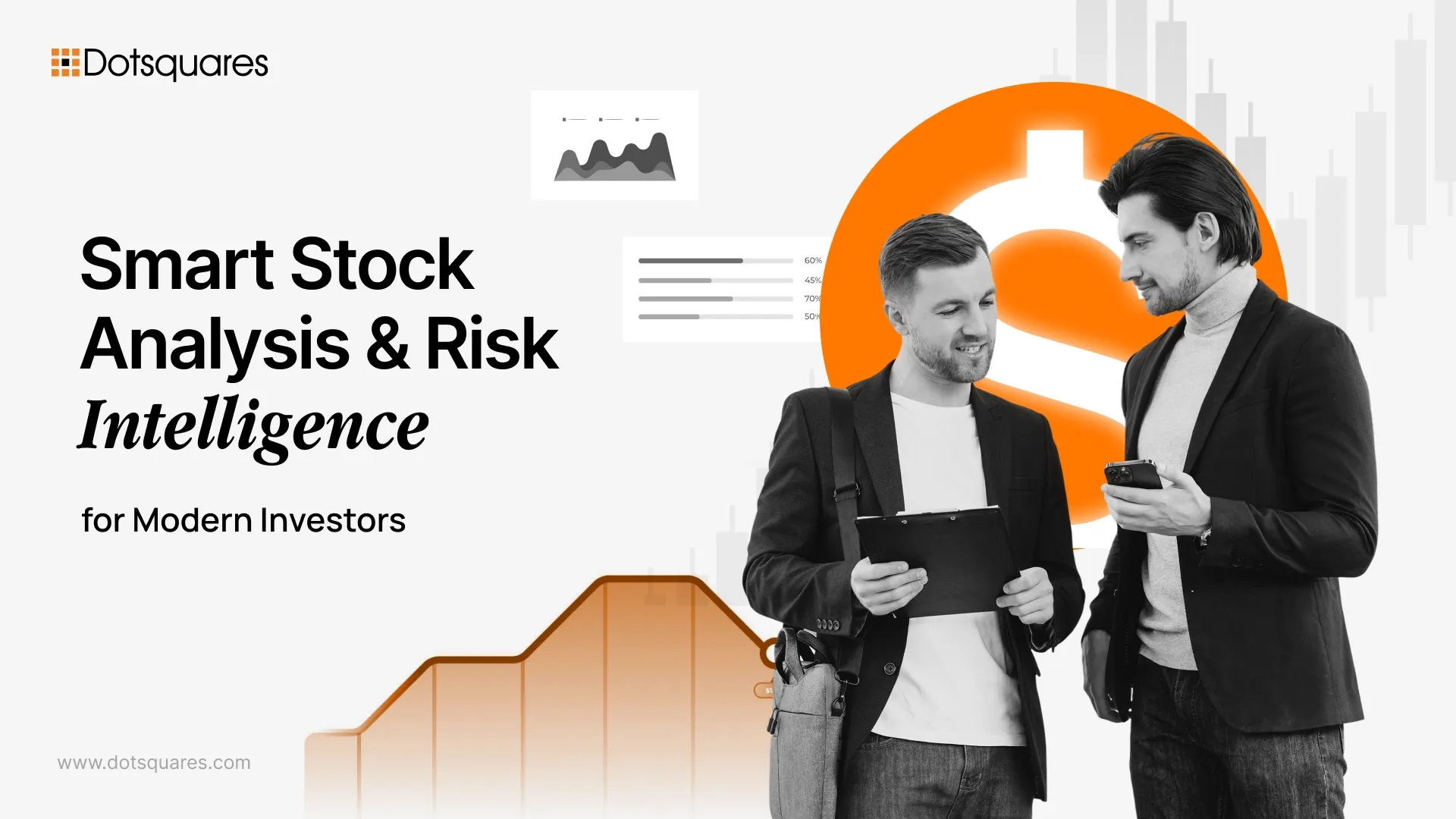
Investing has never been more accessible. But accessible doesn't mean easy.
Anyone who's spent time trying to make sense of stock data, track portfolio risk, and stay on top of market movements at the same time knows exactly how quickly it becomes overwhelming. There's too much noise, too many variables, and never quite enough clarity when you actually need to make a decision.
That's the gap Trading Master was built to close.
The AI-powered platform Trading Master uses its stock analysis and risk intelligence capabilities to serve modern investors who require more than basic charting and numerical data. The system is designed to handle extensive market data processing while employing advanced analytical methods to deliver investment insights that can be understood by people who lack financial expertise.
The system functions as the fundamental trading platform that all serious trading platforms should follow through its combination of fast operation and intelligent features which developers built to match actual investor behavior.
Before getting into what the platform does, it's worth being honest about the problem it's solving. Because the challenges facing investors and analysts today aren't small.
Financial data comes from stock exchanges and APIs together with third-party providers and news feeds. The process of consolidating all data into a single location while maintaining complete usable information without any missing elements or conflicting details proves to be extremely challenging.
Real-time market movements show current market activity. Your analysis work will begin with damaged information because your data contains delays and missing parts plus it undergoes irregular updates.
Serious custom stock analysis software needs to handle complex financial formulas accurately. A small error in how a formula is mapped can cascade into significantly wrong outputs, and in investment contexts, wrong outputs have real consequences.
Historical data, real-time feeds, multiple asset classes, multiple timeframes. The volume of data involved in thorough stock analysis is enormous, and most traditional tools start to buckle under that weight.
Not all signals carry equal weight in every market condition. Static models that treat everything the same miss the nuance that separates useful analysis from noise. Most off-the-shelf tools don't handle this well.
Automation is powerful, but only when it can be controlled. Investors need to be able to set parameters, override decisions, and maintain visibility over what the system is doing and why. Black-box automation just creates a different kind of risk.
Building Trading Master meant solving each of these challenges properly, not just working around them.
The platform pulls from multiple data sources and normalises everything into a consistent, reliable feed. Clean data in, clean analysis out. This is the foundation that everything else depends on, and it's where a lot of platforms cut corners.
Every financial formula within the platform has been rigorously mapped and validated. Whether it's calculating relative strength, volatility metrics, or risk-adjusted returns, the maths is right, and the outputs can be trusted. That's non-negotiable for a credible real-time trading analytics platform.
Through smart architecture and optimised data pipelines, Trading Master handles large datasets without the lag or instability that plagues lesser-built systems. Speed matters in trading. Reliability matters more.
One of the more technically sophisticated elements of the platform is its ability to adjust signal weighting dynamically based on prevailing market conditions. This is what separates intelligent analysis from a static dashboard, and it's what makes the AI-driven risk management capabilities genuinely useful rather than just decorative.
Automation within Trading Master is transparent and configurable. Users define the rules, monitor the logic, and retain control. The system handles the heavy lifting; the investor retains the decision-making authority. That balance is deliberate.
Taken together, these foundations enable a set of capabilities that go well beyond what most stock analysis platforms offer.
The artificial intelligence system analyzes stock data to identify hidden patterns which human analysts require multiple days to identify. The portfolio risk assessment tools enable investors to monitor their current risk exposure throughout the entire trading day. The scenario modelling system enables users to perform stress tests on their positions by using actual historical market data. The system provides users with customizable alerts that detect important changes in the data which disappears after minor fluctuations in the data.
People who want to understand the complete development of AI-based financial tools should study the current evolution of Crypto Trading bots and platforms together with equity analysis systems because both systems share common AI technology.
A trading intelligence platform that works beautifully until market volatility spikes isn't a platform you can rely on. Trading Master is built with performance under pressure as a core requirement, not an afterthought.
The architecture handles high-frequency data ingestion without degradation, scales as user demand grows, and maintains reliability during the market conditions where accurate data matters most, which is precisely when most systems struggle.
This is the kind of engineering that proper FinTech Development Services brings to the table. Getting FinTech software development right means thinking about edge cases, failure modes, and real-world usage patterns from day one.
The practical impact of a well-built AI-powered stock analysis platform shows up in how investors actually work day to day.
Decisions that previously required hours of manual data gathering and analysis can now be made in minutes, with greater confidence, because the underlying analysis is more thorough and more accurate than anything a single person could produce manually. Risk exposure that was previously difficult to quantify becomes visible and manageable. And the cognitive load of tracking multiple positions, markets, and timeframes simultaneously drops significantly.
That's not a small quality-of-life improvement. For active investors and portfolio managers, it's a genuine performance advantage.
The direction of travel in investment technology is clear. Manual analysis, static models, and reactive risk management are giving way to platforms that learn, adapt, and surface intelligence continuously.
AI-driven risk management systems are becoming standard expectations rather than premium features. Real-time analytics, adaptive weighting, and intelligent alerting are the baseline that serious investors increasingly demand.
The platforms that will define the next decade of trading aren't just faster versions of what exists today; they're fundamentally smarter. And building them requires deep expertise across both AI & Machine Learning Services and financial domain knowledge. That combination is rarer than it sounds.
Markets are complex. Risk is real. And the difference between an investor who's guessing and one who's genuinely informed often comes down to the quality of the tools they're using.
Trading Master was built on the belief that intelligent trading systems should do more than display data; they should help investors understand it, act on it, and stay ahead of it.
If you're building in the FinTech space and need a development partner who understands both the technology and the domain, that's exactly the kind of challenge Dotsquares is built for.


 October 15, 2026
Learn how low-code integration connects business apps and APIs, its key benefits, common use cases, limitations, and when to choose custom integration.
Keep Reading October 15, 2026
Learn about SAP BW to cloud migration, including benefits, challenges, AWS options, cost factors and planning steps for a successful migration.
Keep Reading October 12, 2026
Learn how React Native works, where it saves time and cost, which industries use it, and whether it's still a good choice in 2026.
Keep Reading