Tech
Data Lake vs Data Warehouse vs Lakehouse: Key Differences
 4 min read
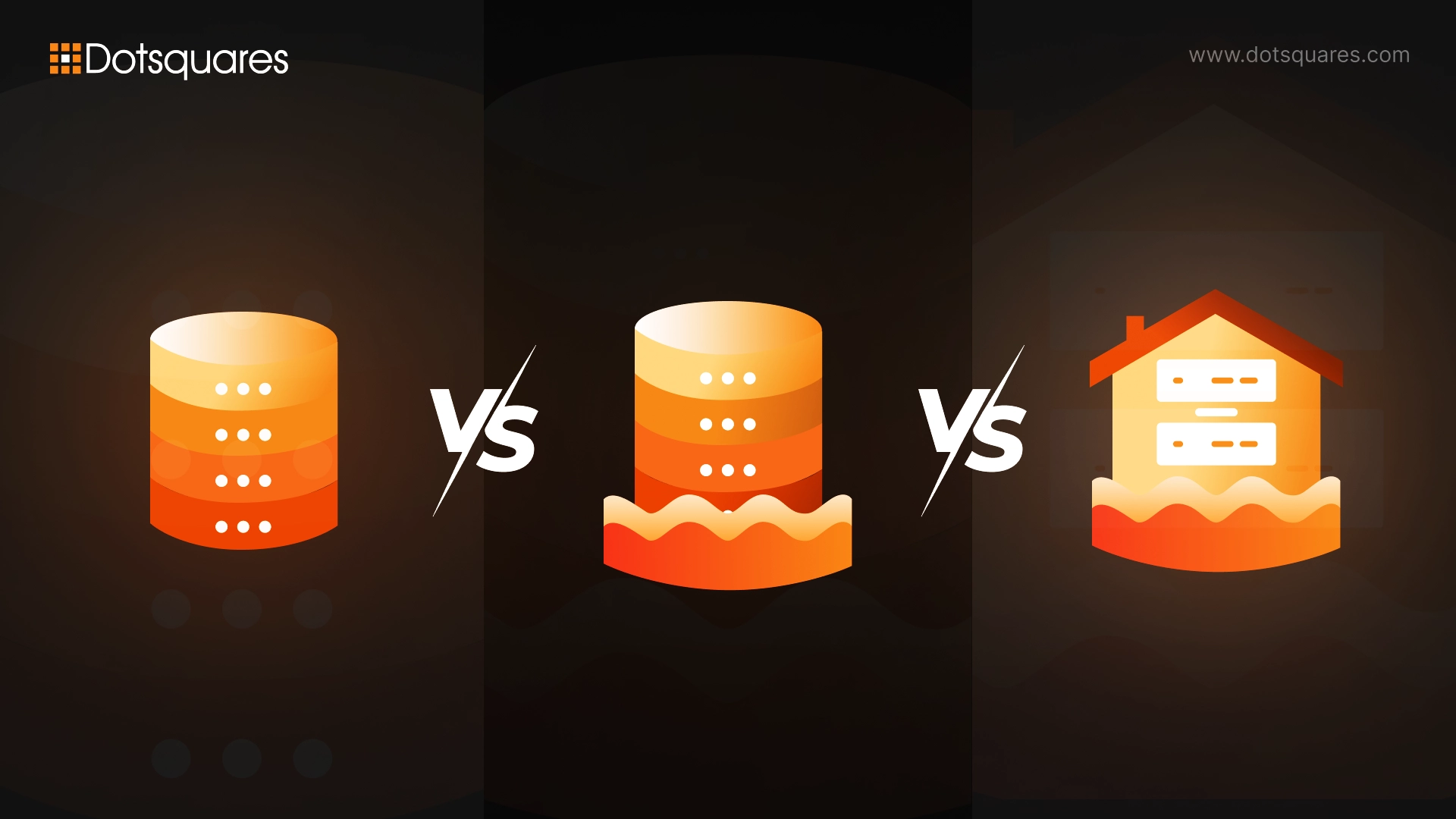
Businesses today collect a huge amount of data from different sources, including applications, websites, customer purchases, social media, IoT devices, enterprise software and other digital platforms. This data is further used for making future decisions. It therefore becomes imperative for businesses to store and manage this data properly with full accuracy to avoid any mistakes in decision-making. For this, businesses are blessed with three power-packed options, namely Data Lakes, Data Warehouses and Data Lakehouses.
All three systems support storing data and running analytics. They differ in how they store, process, govern, and access data. Knowing these differences can help organisations pick the solution for their needs.
What Is a Data Lake?
A Data Lake is a central storage system. It stores data exactly as it comes in—raw and unprocessed. This includes data like databases, semi-structured data like JSON files and unstructured data like images, videos, logs and documents.
Data lakes usually follow a "schema-on-read" method. That means the data structure is not set before storing. Instead, the structure is decided when someone wants to use the data. This gives flexibility. It works well when business needs change often.
Data lakes are often used for data tasks. They support data science, artificial intelligence, machine learning and exploratory analysis. They need strong governance. Metadata, security and data quality rules are important. Without them, raw data can become hard to find, understand or use.
What Is a Data Warehouse?
A data warehouse is a data repository. It’s built for reporting, business intelligence and analytical workloads. Data comes from operational systems. Before it goes into the warehouse, it is cleaned, transformed and organised.
Unlike a data lake, a data warehouse uses a "schema-on-write" approach. The data structure is defined before storing. This ensures consistency. Makes it easier for business users to run queries and analyses.
Data warehouses work well for reports, sales reviews, dashboards, performance tracking and historical business studies. They offer trusted data that decision-makers rely on. However, they are less flexible than data lakes. They struggle with volumes of unstructured or constantly changing data.
What Is a Data Lakehouse?
A Data Lakehouse combines features from both data lakes and data warehouses. It brings together the scalability and flexibility of a data lake with the reliability and governance of a data warehouse.
A lakehouse can manage structured, semi-structured, and unstructured data. It supports various types of workloads. Including business intelligence, data engineering, data science, AI and machine learning.
By combining tasks in one place, a lakehouse reduces the need for separate modern data environments. This cuts down on data and simplifies management. Modern lakehouse systems also support transaction handling, schema enforcement, data versioning, security and governance.
Data Lake vs Data Warehouse
The main difference between a data lake and a data warehouse lies in how they treat data. A data lake stores raw data without processing. A data warehouse stores data that has been cleaned, transformed and structured for analysis.
A data lake offers freedom. Organisations don’t have to plan the data structure over time. A data warehouse provides consistency. It’s easier for business users to run reports and build dashboards.
Because of this, data lakes are often used by data scientists, engineers and AI teams. Data warehouses are commonly used by business analysts and companies that depend on reports.
Data Warehouse vs Data Lakehouse
A data warehouse focuses on data and business intelligence. A data lakehouse supports a range of jobs.
In a warehouse, data is usually transformed before being stored. A lakehouse can keep both processed data in the same environment. This makes it more adaptable for organisations needing both BI and advanced analytics like AI and machine learning.
A lakehouse helps avoid having copies of the same data. The complexity, power and cost of a lakehouse depend on the tools and architecture used.
Data Lake vs Data Lakehouse
A data lake is mainly about flexible storage. A data lakehouse adds stronger data management and analytics features on top of that.
In a data lake, extra tools and processes are needed to ensure reliable transactions, good governance, proper data quality and structured analytics. A lakehouse is built to include all these features. This makes the data better suited for both business and advanced analytics.
Which Data Architecture Should Businesses Choose?
The best choice depends on what the organisation wants to do.
A Data Lake might be the fit if the goal is flexible storage for large and varied datasets. This especially applies when working with AI, machine learning or data science projects.
A Data Warehouse could be better if the main need is structured data for business intelligence, reporting and dashboards.
A Data Lakehouse is appealing for companies wanting to support both business intelligence and advanced analytics like AI, machine learning and data science. All under one system.
Conclusion
Data Lakes, Data Warehouses and Data Lakehouses each bring benefits. Data Lakes give flexibility and scale. Data Warehouses provide reliable data for analysis. Data Lakehouses aim to mix flexibility with analytics and governance.
As more organisations adopt AI, machine learning and advanced analytics, along with business intelligence, the Data Lakehouse model can offer a solid base. It handles data and supports many types of workloads.
Businesses should think carefully. They need to consider their data size, workload types, governance needs, budget and current technology before picking a data architecture.


Related Post
 October 16, 2026
E-commerce Security: Protect Your Store From Cyber Threats
Learn how E-commerce security protects your online store from fraud, data breaches, and bots. Explore threats, PCI DSS, and best practices.
Keep Reading October 15, 2026
Low-Code Integration: What It Is, How It Works and When Businesses Should Use It
Learn how low-code integration connects business apps and APIs, its key benefits, common use cases, limitations, and when to choose custom integration.
Keep Reading October 15, 2026
SAP BW to Cloud Migration: Benefits, Challenges and Planning Steps
Learn about SAP BW to cloud migration, including benefits, challenges, AWS options, cost factors and planning steps for a successful migration.
Keep Reading