 4 min read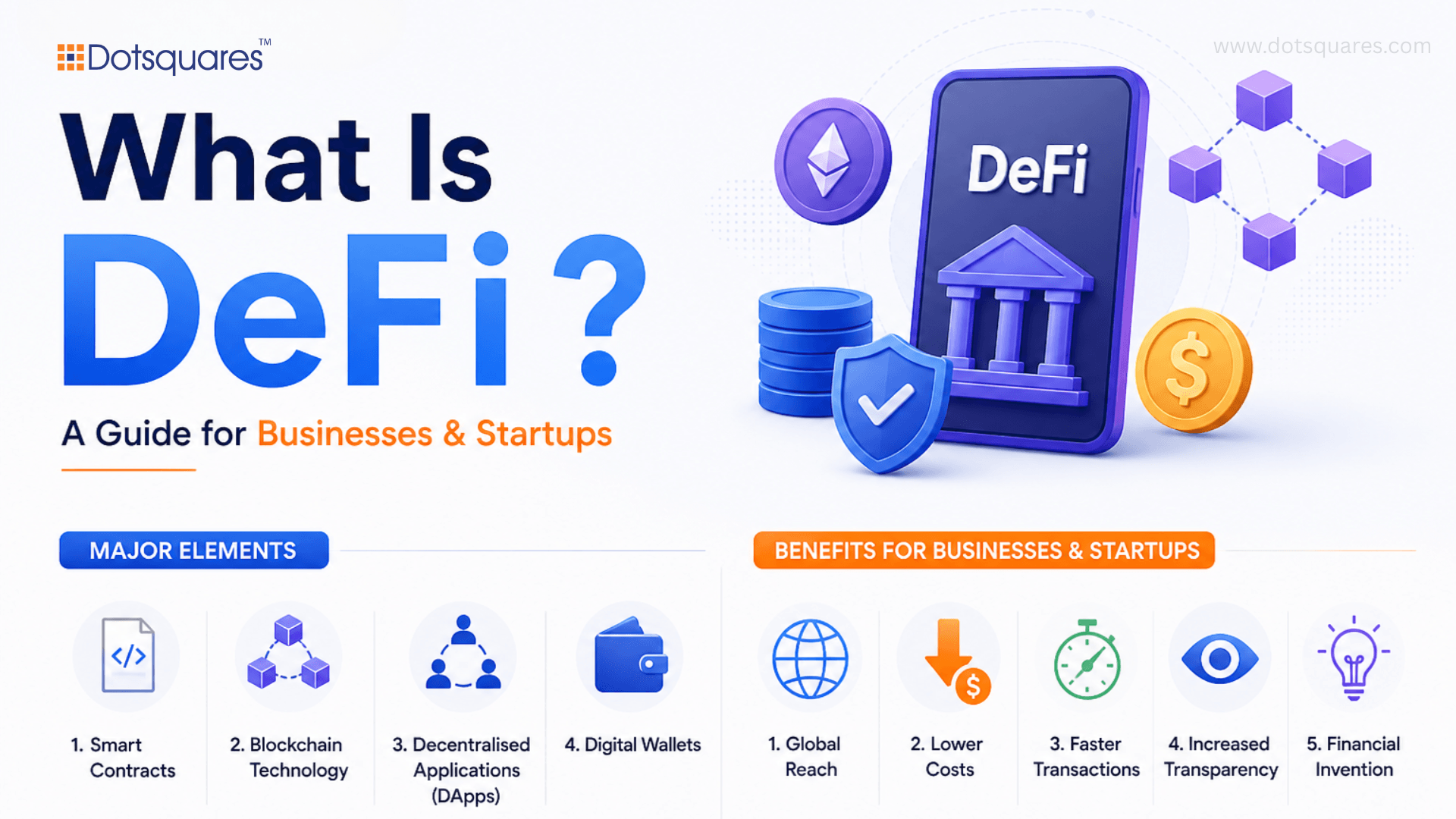
Decentralised Finance, also known as DeFi, is changing the process of operating financial services in today’s era of digitisation. The transactions in this system are performed differently from traditional finance systems and eliminate the need for banks and middlemen. It is based on blockchain technology and offers financial services in a decentralised, transparent, and secure manner. For businesses and startups, understanding how it works is crucial, as its implementation can lead to new innovations in financial activities, enhance efficiency, and expand business into other regions.
Understanding DeFi
It can be described as a collection of financial applications developed on blockchain networks, with the help of smart contracts. These smart contracts function automatically, when all financial activities are performed according to the instructions mentioned in their program. This reduces the need for human support and eliminates the dependency on traditional institutions such as banks, brokers, or payment processors. As the ecosystem evolves, DeFi is increasingly being enhanced by advancements like AI and blockchain integration, which improve automation and enable more intelligent decision-making across financial processes. In simple words, It allows users to lend, borrow, trade, invest, and earn interest on digital assets without depending on centralised authorities.
DeFi can be described as a collection of financial applications developed on blockchain Major Elements
1. Smart Contracts
Smart contracts can be said to be the backbone. In simple words, these contracts are simple programs that operate automatically when they find any command matching to the conditions determined in their program. This makes financial transactions free from mistakes made by humans in performing these transactions and ensures every activity is performed with full transparency.
2. Blockchain Technology
Most services offered on systems are built on blockchain networks. The use of blockchain technology makes every transaction secure, immutable and transparent. Every transaction performed on DeFi is recorded on a public ledger, which makes it easy to verify and provides them protection from cyber attacks.
3. Decentralised Applications (DApps)
Services are accessed through DApps, which are not controlled by any central authority. The use of DApps makes it easier for investors to interact directly with financial institutions.
4. Digital Wallets
These wallets allow users to store and manage their crypto assets independently. Wallets also act as a gateway to access DeFi services, and are often developed as part of broader Fintech Software Development Services to ensure security, usability, and seamless integration with blockchain platforms.
How Does it Work?
These platforms use cryptocurrencies and tokens to conduct financial activities. For example, a user can deposit crypto assets into a framework to earn interest, in the same way as is offered by traditional banks to a savings account holder. Similarly, businesses can borrow funds to perform their operations by submitting their digital assets as security, without following the lengthy process followed by banks. All transactions are performed through smart contracts, which not only ensure speed and efficiency but also reduces the service cost paid to intermediaries.
Benefits for Businesses & Startups
- Global Reach: It is one of the notable features of DeFi platforms. The transactions performed through the system can be easily accessed by anyone with an internet connection across the world. This enables startups to reach a global audience without geographical restrictions.
- Lower Costs: As there are no intermediaries involved in financial transactions, the time in performing transactions is less.
- Faster Transactions: Transactions on such platforms are performed quickly, sometimes in few minutes, compared to traditional banking systems.
- Increased Transparency: All transactions are recorded on the blockchain network, which is a decentralised platform. This ensures not only transparency but also develops trust among users and stakeholders.
- Financial Invention: The trend of encourages startups to create new decentralised investment platforms, such as tokenised assets and automated investment tools.
Adoption Challenges
Despite several benefits offered, it also comes with certain risks:
- Regulatory Uncertainty: The adoption is still in its infant stage, and regulatory measures are different in each region.
- Security Risks: Smart contract vulnerabilities can lead to hacks or loss of funds.
- Market Volatility: The prices of cryptocurrency keep on fluctuating.
- Complexity: As every activity performed in the system is technical, there is a need for technical expertise.
Use Cases for Businesses
Businesses and startups can use it in many ways:
- They can lend and borrow funds through a decentralized systems
- Cross-border Payments
- Tokenise their physical Assets
- Liquidity Provision
- Crowdfunding via DeFi platforms
The Future of DeFi
It is still in its early stages but is expanding dynamically. As more technical developments take place and government rules become clearer, it is speculated that more businesses will shift towards DeFi solutions. For startups, it presents an opportunity to move beyond traditional finance and build innovative, scalable financial products.
Conclusion
It is reshaping the way financial transactions are performed. It offers decentralised, transparent, and efficient alternatives to traditional financial systems. For businesses and startups, a shift to DeFi can provide them with new opportunities to expand their business, reduce costs, and expand their business to other countries. However, for its successful implementation, it is essential to shift after understanding its potential and risks properly through an established blockchain development service provider.


Related Post
 October 15, 2026
Low-Code Integration: What It Is, How It Works and When Businesses Should Use It
Learn how low-code integration connects business apps and APIs, its key benefits, common use cases, limitations, and when to choose custom integration.
Keep Reading October 15, 2026
SAP BW to Cloud Migration: Benefits, Challenges and Planning Steps
Learn about SAP BW to cloud migration, including benefits, challenges, AWS options, cost factors and planning steps for a successful migration.
Keep Reading October 12, 2026
Mobile App Development with React Native and What You Need to Know
Learn how React Native works, where it saves time and cost, which industries use it, and whether it's still a good choice in 2026.
Keep Reading