 4 min read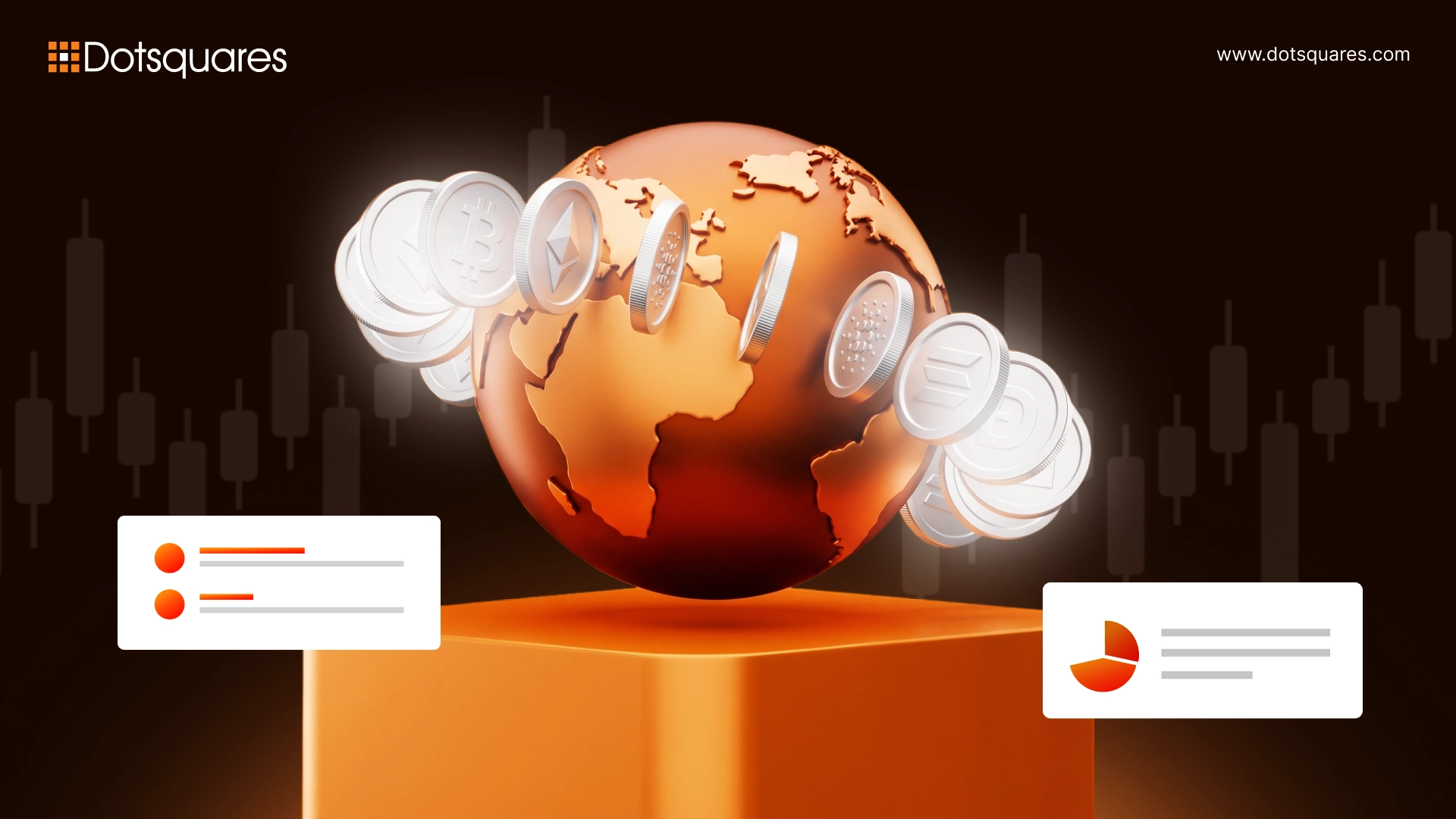
Enterprise tokenisation is one of the most revolutionary applications of blockchain technologies. Although Bitcoin and Ethereum were the first to use digital tokens to create cryptocurrency, nowadays tokenisation is implemented by enterprises for far more practical uses than creating money. Understanding the benefits of tokenisation, today more and more businesses are adopting blockchain development solutions to securely tokenise assets, streamline operations, and improve transparency across industries.
What Is Enterprise Tokenisation?
Enterprise tokenisation is the method of turning a physical or virtual asset, rights, and any sensitive data into a safe digital token that is placed on the blockchain network or ledger. Digital tokens do not provide any data about the original asset but allow its owner to prove their ownership or control over the asset.
As opposed to cryptocurrencies, enterprise tokens are used in order to facilitate business processes. They might be connected to any type of asset like finances, intellectual property, consumer data, invoices, real estate, supply chain products, loyalty points, digital identities, and other types of information.
Why Are Companies Adopting Tokenisation?
There are various reasons why companies today find tokenisation to be advantageous from a business perspective. Typically, legacy systems involve many intermediaries, paperwork, and manual verification that lead to higher costs and longer transaction times. Tokenization is able to simplify all of these processes through the creation of digital tokens representing the value.The key benefits include the following:• Greater data protection with encryption of digital tokens.• Fast transactions due to the elimination of the need for intermediaries.• Higher transparency in business networks.• Lower operational costs.• Stronger compliance through immutable blockchain records.• Liquidity for traditionally non-liquid assets.
Applications of Tokenisation in the Real World
Tokenisation of Property
A further application of tokenisation is the conversion of physical assets into tokens. Commercial buildings, machines, artwork, merchandise, and even stock can be tokenised by organisations for the purpose of breaking down ownership into smaller parts and attracting more investors. This approach is particularly transforming the real estate sector, where blockchain is making property ownership more accessible, transparent, and liquid, as explored in our article on the use cases of blockchain in property investment.
Traceability of Items in the Supply Chain
The organisations involved in manufacturing and logistics are tokenising items so that they can trace the lifecycle of products through tokenisation.
Tokenisation of Financial Instruments
Tokenisation of bonds, securities, invoices, and payment methods can be done by banks and financial institutions. This will help in increasing the speed of settlement, eliminating paperwork, and improving efficiency in international transactions.
Tokenised Digital Identities
Businesses may tokenise conventional identity verification methods by introducing tokenised digital identities. This will ensure that enterprises achieve increased security and privacy in their applications.
Healthcare
Tokenisation allows healthcare organisations to tokenise sensitive patient data while allowing authorised personnel to view it without disclosing any private information.
Enterprise Tokenisation Benefits Besides Cryptocurrency
Apart from cryptocurrencies, there are additional benefits of enterprise tokenisation. Business owners get better control of their processes along with enhanced collaboration between departments, partners, and clients.Among the major benefits are the following:• faster processing of transactions;• minimal risk of fraud due to tamper-proof documentation;• visibility and audibility of the process;• better customer trust due to safe data handling;• automation of the process with smart contracts;• more efficient regulation reports.
Through the combination of blockchain and automation, enterprises will be able to cut down on manual processes and minimise risks in operations.
Challenges Ahead
Although enterprise asset tokenisation has numerous benefits, it requires careful preparation. Companies should prepare for addressing regulatory needs, blockchain platforms' compatibility, cybersecurity, governance, and integration with existing enterprise systems.Also, organisations require professionals who understand the architecture of blockchain and smart contracts. It is necessary to create a governance model to ensure compliance of tokenised assets.
Enterprise Tokenisation - The Future of Digital Businesses
Enterprise tokenisation will play a crucial part in future generations of digital business. With improvements in blockchain and regulation, enterprises will tokenise not only financial assets but also supply chains, intellectual property, customer identity data, and their business processes.Due to advancements in emergent technologies such as artificial intelligence, Internet of Things, and DeFi, the potential of enterprise tokenisation will be further enhanced, thus making automation and management of assets in real-time possible.
Conclusion
Thus, enterprise tokenisation is no longer associated with initial applications concerning cryptocurrency but has become a technology that offers new chances for businesses to operate effectively and efficiently. This is due to the conversion of assets and important information into secure tokens.


Related Post
 October 15, 2026
Low-Code Integration: What It Is, How It Works and When Businesses Should Use It
Learn how low-code integration connects business apps and APIs, its key benefits, common use cases, limitations, and when to choose custom integration.
Keep Reading October 15, 2026
SAP BW to Cloud Migration: Benefits, Challenges and Planning Steps
Learn about SAP BW to cloud migration, including benefits, challenges, AWS options, cost factors and planning steps for a successful migration.
Keep Reading October 12, 2026
Mobile App Development with React Native and What You Need to Know
Learn how React Native works, where it saves time and cost, which industries use it, and whether it's still a good choice in 2026.
Keep Reading