Tech
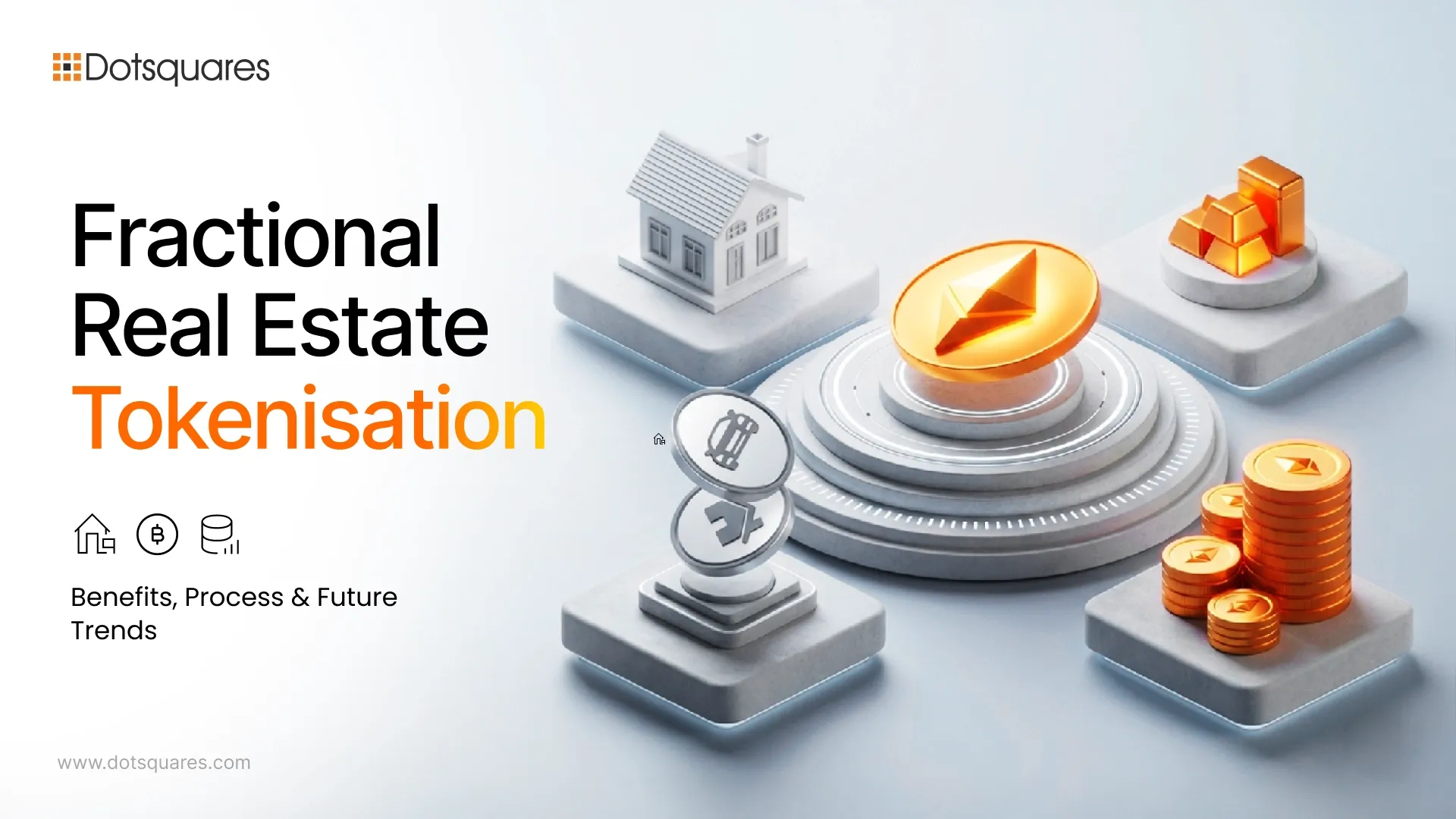
Fractional Real Estate Tokenisation: Benefits, Process & Future Trends
 7 min read
Have you ever looked at a massive commercial skyscraper or a luxury apartment complex and thought, "I’d love to own a piece of that," only to realise you’d need millions of dollars just to get a foot in the door?
For a long time, high-end property investment was a "members only" club. If you didn’t have a massive bank account or a deep connection to a private equity firm, you were stuck on the sidelines. But things are shifting. Thanks to real estate tokenisation, the walls around property investment are finally coming down.
The guide explains the operation of this technology to readers using basic English while demonstrating its impact on regular investors and forecasting upcoming developments in the real estate market.
What is Real Estate Tokenisation?
At its core, tokenisation is the process of converting the value of a physical property into digital tokens on a blockchain. Each token represents a specific percentage of ownership or a share of the underlying asset.
Instead of one person or entity owning 100% of a building, the ownership is distributed across a digital ledger. This allows for "fractional" participation, where multiple investors can own a small portion of a high-value asset. These digital shares are securely recorded, providing a transparent and verifiable proof of stake that is much easier to manage than traditional paper-based deeds.
Types of Real Estate Tokenisation
Not every tokenised project works the same way. Depending on the goals of the developer or the investor, there are three main ways to structure these deals:
Equity Tokenization
This is the most common form. When you buy an equity token, you are essentially buying a share of ownership in the property. If the property value goes up, your token value goes up. If the building collects rent, you get a proportional share of that income.
Debt Tokenization
In this model, the tokens represent a debt instrument, similar to a bond. You are essentially lending capital to the property owner. In return, you receive regular interest payments. It is a way to gain exposure to real estate returns without taking on the risks of direct ownership.
Hybrid Models
As the name suggests, this combines both. Investors might get a fixed interest rate (like debt) but also have a small stake in the property’s eventual sale price (like equity).
The Role of Blockchain in Tokenisation
You might wonder: "Why do we need a blockchain? Why can't we just use a spreadsheet?"
The problem with spreadsheets or private databases is trust and speed. Tokenisation in blockchain works because the ledger is "immutable", meaning no one can go in and secretly change who owns what. It provides a single, shared version of the truth.
When you use Blockchain development services to build these platforms, you are essentially building a trust machine. It handles the "paperwork" automatically, ensuring that when you buy a token, the ownership transfer is instant and verified without needing a dozen middlemen to sign off on it.
Step-by-Step Process of Real Estate Tokenisation
If you’re a developer or a property owner, how do you actually turn a building into tokens? It usually follows a four-step path:
- Asset Selection & Legal Prep: You pick a property (residential, commercial, or even land) and set up a legal entity (like an LLC) to hold the title.
- Smart Contract Development: Developers write the "rules" of the token. For example: “Every month, 70% of collected rent goes to token holders.”
- The Token Offering: The tokens are created on a real estate tokenisation platform and offered to investors.
- Ongoing Management: Once the tokens are sold, the blockchain handles the distribution of profits and the tracking of secondary sales.
Key Benefits of Real Estate Tokenisation
Why is everyone talking about this? Because it solves the "pain points" that have bothered property investors for decades.
Increased Accessibility for Investors
You no longer need $100,000 for a down payment. If a platform allows it, you could start your blockchain real estate investment journey with as little as $1,000 or even less.
Fractional Ownership Opportunities
You can diversify your money. Instead of putting all your savings into one single rental house, you could own "slices" of ten different buildings across different cities.
Enhanced Transparency and Security
Because every transaction is recorded on the blockchain, you don’t have to worry about "missing" payments or disputed ownership. Everything is out in the open.
Automated Income Distribution
In the old days, a property manager had to cut checks or send wires manually. With a real estate tokenisation solution, smart contracts can automatically send rent dividends directly to your digital wallet the moment they are collected.
Improved Liquidity
Real estate is famous for being "slow money." It takes months to sell a house. With tokens, you can potentially sell your "slices" on a secondary market much faster, almost like selling stocks.
Global Investment Access
A person in London can easily invest in a commercial plaza in Sydney without dealing with complex international banking hurdles.
Risks and Challenges of Real Estate Tokenisation
We have to be honest: it’s not all sunshine and rainbows. Since this is a new frontier, there are hurdles:
- Regulatory Maze: Governments are still catching up. Every country has different rules about what counts as a "security."
- Tech Literacy: Not everyone is comfortable with digital wallets and private keys yet.
- Market Volatility: While the property value might be stable, the price of the tokens themselves can fluctuate based on platform demand.
Key Features of a Modern Tokenised Blockchain Platform
If you are looking for a real estate tokenisation development partner, you need to ensure the platform has these "must-have" features:
Regulatory Compliance
The platform must have built-in KYC (Know Your Customer) and AML (Anti-Money Laundering) checks to stay on the right side of the law.
Technology Infrastructure
It needs to be scalable. You don't want a platform that crashes when 5,000 people try to buy tokens at once.
Security & Smart Contracts
The code needs to be audited. A bug in a smart contract could lead to lost funds, so top-tier security is non-negotiable.
Market Demand & Liquidity
A platform is only as good as its users. The best platforms have a healthy community of buyers and sellers to ensure you can exit your investment when you want to.
Pro tip: For the physical side of things, many firms are also integrating a Real estate document management system to keep the actual "paper" deeds and permits organised alongside the digital tokens.
Future of Fractional Real Estate Investment
Where is this all heading? We are moving toward a world where "Real Estate" is a tab on your phone's finance app right next to your stocks and crypto.
We expect to see more "cross-chain" investments, where you can move your property value into other digital assets instantly. We also anticipate that institutional banks will start tokenising their own massive portfolios, making real estate models more transparent and efficient for everyone involved.
Conclusion
Fractional real estate tokenisation is more than just a tech trend; it’s a shift toward a fairer investment world. By breaking down expensive assets into affordable digital tokens, we’re giving more people the chance to build real wealth.
The blockchain system requires two additional legal and technical obstacles to be resolved before its advantages will become functional. The "members only" sign is coming off the door. Are you ready to walk in?
FAQ
What is fractional real estate tokenization and how does it work?
It’s the process of splitting property ownership into digital tokens on a blockchain. Investors buy these tokens to own a "fraction" of the property and earn a share of the profits.
What are the key benefits of real estate tokenisation for investors?
The main draws of the system exist because it provides lower entry costs with an additional benefit of enabling users to invest in multiple properties while it handles automated rent payments and offers simple methods for users to sell their ownership shares.
How does blockchain technology support real estate tokenisation?
Blockchain functions as the trusted permanent record system which maintains ownership information, provides instant transfer capabilities, and protects against property record forgery.
What types of real estate assets can be tokenised?
Almost anything! The category includes residential homes, commercial office buildings, warehouses, retail spaces, and undeveloped land.
What is the future of fractional real estate tokenisation?
The future likely involves total integration with traditional finance, where property tokens are as common and easy to trade as shares in a public company.


Related Post
 October 15, 2026
Low-Code Integration: What It Is, How It Works and When Businesses Should Use It
Learn how low-code integration connects business apps and APIs, its key benefits, common use cases, limitations, and when to choose custom integration.
Keep Reading October 15, 2026
SAP BW to Cloud Migration: Benefits, Challenges and Planning Steps
Learn about SAP BW to cloud migration, including benefits, challenges, AWS options, cost factors and planning steps for a successful migration.
Keep Reading October 12, 2026
Mobile App Development with React Native and What You Need to Know
Learn how React Native works, where it saves time and cost, which industries use it, and whether it's still a good choice in 2026.
Keep Reading