Tech
From Appointments to Follow-Ups: Automating Patient Journeys in Healthcare
 5 min read
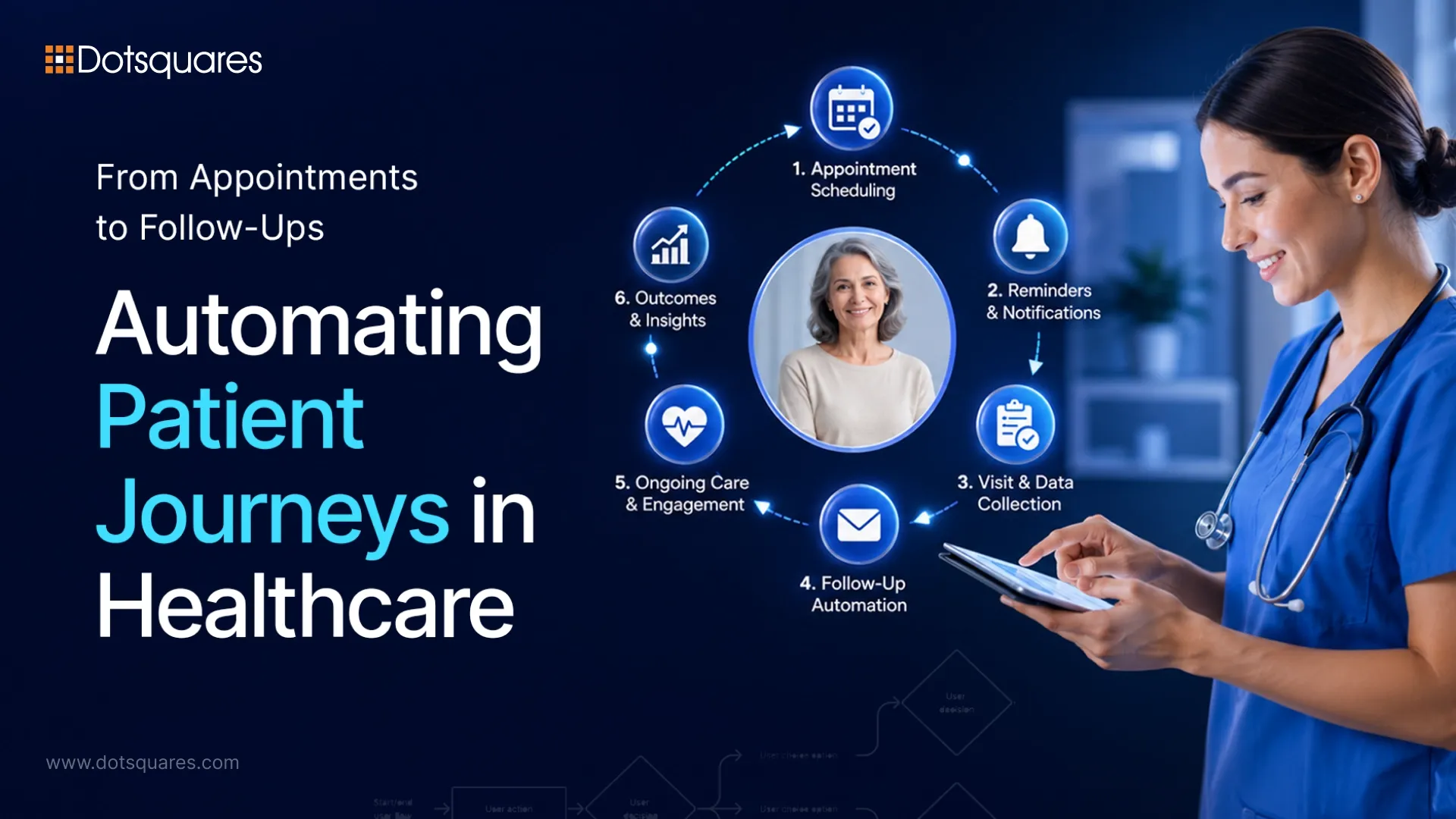
Booking a doctor’s appointment in 2026 still feels outdated. You call, get put on hold, leave a voicemail, wait for a callback and then find out the slot you wanted is gone. And that is just the booking part. What comes after, the reminders, the forms, the follow-ups, is somehow even more fragmented.
Healthcare providers are not oblivious to this. Most know the gaps exist. The harder question is where to start fixing them.
The Waiting Room Problem Nobody Talks About
Here is something worth thinking about. A patient’s experience of a clinic does not begin when they walk through the door. It begins the moment they try to book. And it does not end when they leave, it ends whenever the last follow-up lands, or does not.
That entire stretch, from first contact to post-visit care, is where most healthcare organisations bleed efficiency. Not in the consultation room, but in the parts that surround it.
Staff are manually sending reminders. Someone is chasing incomplete intake forms. Another person is calling patients who missed their appointment to reschedule. None of this is clinical work, but it consumes clinical hours.
Good healthcare IT solutions do not just digitise these tasks. They take them off the plate entirely.
One Booking Should Set Off a Chain Reaction
Think about what should happen the moment a patient books an appointment. A confirmation goes out immediately. Pre-visit instructions follow. Intake forms arrive digitally, with enough time for the patient to fill them before they arrive. The clinical team sees completed notes before the appointment starts.
That whole sequence should run without anyone triggering it manually. That is what healthcare app development actually solves when it is done well, not a prettier interface, but a workflow that moves on its own.
Most scheduling tools stop at the calendar. The appointment gets logged, and the system goes quiet. Everything else still falls on the staff.
Records That Should Travel But Usually Don’t
A patient sees a specialist. The GP does not get the notes for two weeks. Lab results sit in one system. The prescribing doctor works in another. Nobody has the full picture at the moment they need it.
This is not a new problem. It has existed for as long as healthcare has used digital records. The reason it persists is that most EHR software solutions were built to store information, not to move it.
When records connect properly, across departments, across care settings, across providers, the people treating a patient actually work from the same information. That cuts down on repeat tests. It reduces the back-and-forth that frustrates patients. And it removes the kind of diagnostic delay that happens simply because someone did not have access to a result that already existed.
Custom healthcare software built around an organisation’s real workflows handles this better than generic platforms that assume everyone operates the same way.
Patients Are on Their Phones. Meet Them There.
A patient portal that requires a login, a password reset and several clicks to find a result will not get used. That is not a theory; usage data from health systems across the board show it.
Patients respond to what is fast and familiar. A text message. A push notification. Something they can act on in under a minute.
Healthcare mobile app development has shifted toward this reality. A well-built healthcare app lets a patient confirm an appointment with one tap, read their results without calling the clinic and get post-visit instructions in plain language. For providers, the payoff is direct: no-show rates drop, patients follow care instructions more consistently and the front desk spends less time on calls that the app could have handled.
Healthcare mobile app development services that focus on how patients actually behave tend to deliver more than those focused on feature counts.
Follow-Ups Are Where Patient Journeys Quietly Fall Apart
The appointment goes well. The patient leaves with instructions. And then nothing happens until they either deteriorate or book again on their own initiative.
This is a common failure point, and it is almost entirely preventable. Automated follow-up does not require extra staff. It requires a system that knows when to reach out, what to say and to whom.
A post-visit message can go out at the right interval. Patients on chronic care pathways can receive check-ins tied to their condition. Those who have not responded to instructions can get flagged for a call. Custom AI-Powered healthcare solutions make this kind of targeted outreach possible across large patient volumes without any manual effort driving it.
Off-the-Shelf Software Rarely Fits Healthcare
A cardiology centre and a walk-in urgent care clinic have almost nothing in common operationally. A telehealth provider and a hospital outpatient unit handle intake completely differently. Generic software adapted for healthcare tends to force workarounds at every point where the real workflow does not match the assumed one.
Healthtech software development done properly starts from the organisation’s actual processes. Customised healthcare apps built this way do not need workarounds because the logic was written around the real situation, not a generalised version of it.
Working with healthcare software experts rather than adapting a general-purpose tool also means compliance requirements get built into the architecture from the start. That matters more in healthcare than in almost any other sector.
What Changes When the Journey Actually Connects
Organisations that have moved to connected, automated patient journeys tend to report the same outcomes. Fewer no-shows. Less time spent on administrative calls. Faster handoffs between care teams. Patients who feel more informed and less left in the dark.
These are not marginal gains. For a mid-sized clinic or a growing health network, they compound quickly.
If your team is looking to close the gaps across your patient journey, talk to the Dotsquares healthcare technology team. Tell us where the friction is, and we will show you what a connected system looks like for your organisation.


Related Post
 October 15, 2026
Low-Code Integration: What It Is, How It Works and When Businesses Should Use It
Learn how low-code integration connects business apps and APIs, its key benefits, common use cases, limitations, and when to choose custom integration.
Keep Reading October 15, 2026
SAP BW to Cloud Migration: Benefits, Challenges and Planning Steps
Learn about SAP BW to cloud migration, including benefits, challenges, AWS options, cost factors and planning steps for a successful migration.
Keep Reading October 12, 2026
Mobile App Development with React Native and What You Need to Know
Learn how React Native works, where it saves time and cost, which industries use it, and whether it's still a good choice in 2026.
Keep Reading