Tech
MySQL 8.0 End of Life: Why You Should Upgrade to MySQL 8.4 Now
 6 min read
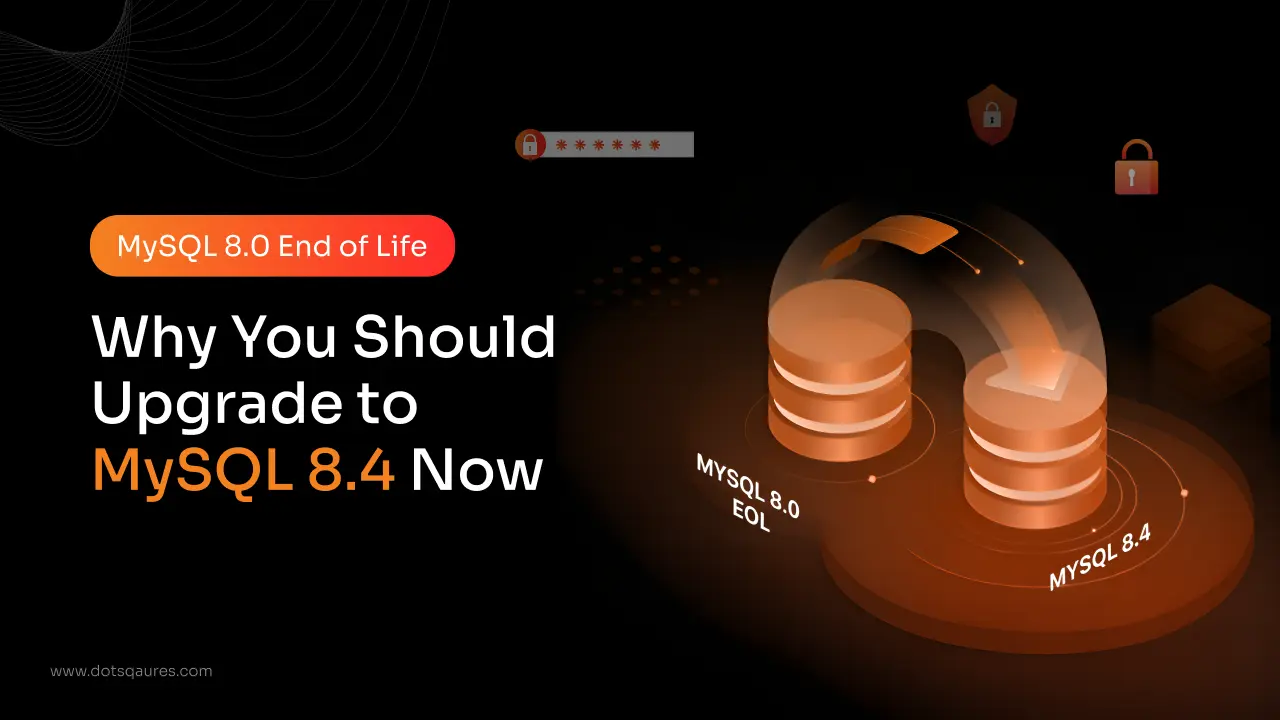

For those whose core applications depend on MySQL 8.0, a hard date is on the horizon. Oracle has formally scheduled acceptance of this major version to End-of-Life (EOL) in April 2026. This isn’t just a technical detail, this is a hard stop on security patches, fixes critical bugs, and vendor support, all of which keeps your business secure.
The decision all DBAs and development groups must make is more straightforward: Do you take the plunge and update to MySQL 8.4 (LTS) or leave your most expensive data exposed? Industry-wide the consensus is you cannot keep your enterprise on an EOL database.
We’re going to take a detailed look at why it’s not an ‘if’ but a ‘when’ to upgrade, and why MySQL 8.4 is the right building block for your next upgrade.
The Critical Dangers of Staying on MySQL 8.0 Past EOL
The most significant consequence of the EOL date is the immediate and escalating exposure of your data. The risks extend far beyond mere application stability.
1. Unmitigated Security Vulnerabilities
This is the single biggest threat. Once the support period expires, Oracle will no longer be releasing patches for any new critical vulnerabilities in MySQL 8.0.
- Known Vulnerabilities: In response to the EOL announcements, threat actors will notoriously continue to monitor whatever they pick up. They identified the possibility that anything exploit discovered after April 2026 will not be patched by the vendor, thus your system will become a target on the Internet for automated attacks for ransomware.
- Compliance issues: Mandated regulations such as PCI DSS, HIPAA, and others say you should only use supported and patched software. An EOL database could lead to failures of audits, not to mention major fines, and worst of all, create a situation of lasting damage with your clients learning you didn't use a supported technology.
2. Operational Paralysis and Instability
Once you operate on an unsupported database product the cost and time of resolving issues can become a nightmare.
- Lack of security patches: If you experience and upgrade, non-security bugs, or data corruption (or performance regressions), whatever it is, will need custom hacking by your internal technical staff or a third party- increasing your mean time to recovery (MTTR) catastrophically.
- Lack of compatibility: You will find your unsupported database will eventually operate inconsistently with modern operating systems, segmented containers regarding development frameworks, and cloud environments. Eventually, you will accumulate technical debt with the imposition of delays in code development in order to work around performance and compatibility issues to drive future iterations.
3. Escalating Technical Debt
Postponing the migration only exacerbates the situation. Transitioning from a legacy version to a future version (for example: MySQL 9.0 or 10.0) becomes exponentially involved, and ultimately, you will find yourself scampering around trying to figure out how to extricate yourself from an already planned project into a chaotic frenzy and nothing but task and stress level generally has an increased risk of downtime.
The Strategic Advantage of MySQL 8.4 LTS
Oracle has proposed its new versioning model to provide its customers the discretion of either Innovation Releases (ex. 8.1, 8.2, 8.3) or Long-Term Support (LTS) releases. MySQL 8.4 represents the newer LTS version being the clear and practical selection in production environments.
The LTS Promise: Stability and Longevity
The single best value of 8.4 is the extended support window, meaning:
- Guaranteed Support: 8.4 is projected to provide five years of Premier Support and three years of Extended Support, specifically into April of 2032. This means that your team is guaranteed a secure and low-stress upgrade path for nearly the next decade.
- Consistent Behavior: LTS releases focus on stability and performance optimisation. They receive only essential fixes, avoiding unexpected new features that could break existing application code.
Performance and Feature Enhancements
MySQL 8.4 isn't just a stability patch; it solidifies and improves upon the modern features introduced in 8.0:
|
Area |
Key 8.4 Enhancement |
Operational Impact |
|
I/O Performance |
Optimised defaults for InnoDB buffer pool, I/O capacity, and log buffer size. |
Faster recovery times and better handling of write-heavy workloads on modern hardware (like SSDs). |
|
Security Defaults |
Stronger default authentication and the deprecation/removal of weaker legacy plugins. |
Improved baseline security configuration out of the box. |
|
Data Integrity |
Enforcement of a stricter requirement for foreign key constraints, demanding a unique key on the parent table. |
Reduces the risk of data inconsistency and replication failures. |
|
Usability & DevOps |
Cleaner, more inclusive replication terminology (SOURCE/REPLICA instead of MASTER/SLAVE) and enhanced functionality in the Clone Plugin for easier environment creation. |
Better team collaboration and faster staging/testing workflows. |
Your Proactive Upgrade Action Plan
Given the April 2026 deadline, a structured upgrade process must start now. Migrating from 8.0 to 8.4 is designed to be smoother than past major migrations, but it requires diligence.
1. The Pre-Flight Check
- Audit Applications: Identify all code dependencies, ORMs, and connectors your applications use. Verify their compatibility with MySQL 8.4, paying close attention to deprecated features removed in 8.4 (e.g., SET_USER_ID privilege).
- Review Schema: Check your database schema for reliance on deprecated syntax, especially if you were using features like AUTO_INCREMENT on FLOAT or DOUBLE columns, which are now removed.
2. Execute the Migration Safely
- Staging Environment is King: Set up a dedicated testing/staging environment. Never attempt a production upgrade without this.
- Dry Run Data Migration: Migrate a copy of your current production data to the 8.4 instance.
- Run Regression Tests: Execute comprehensive performance tests and application-level integration tests against the new 8.4 staging instance. This is where you catch subtle changes in query plans or default setting adjustments before they hit users.
- Backup Strategy: Finalise your production backup strategy with multiple, verified, and restorable backups immediately before the live cutover.
3. Post-Upgrade Monitoring
Once live on 8.4, monitor system performance metrics closely, paying attention to memory usage, query execution times, and I/O rates. The new InnoDB defaults may require minor tuning for peak efficiency based on your specific workload.
The final takeaway: MySQL 8.4 LTS represents the most stable, secure, and modern version of the database yet. By prioritising this upgrade now, you are not just escaping the risks of EOL 8.0, you are investing in a robust foundation that will support your applications well into the next decade.
What Should You Do Next? Start Planning Today.
The decision is clear: you cannot run critical business applications on an unsupported database; that is a risk you cannot take. The EOL date of April 2026 is closer than it appears--especially when you consider the time that you will need for testing, code reviews, and safely migrating your data. Don't leave this to the last minute so that it becomes an overnight crisis. The first step is not action oriented; it is organisational--you must get organisational buy-in to initiate the project and effectively find the right expertise for the transition.
Q1. When is MySQL 8.0 reaching its end of life (EOL)?
MySQL 8.0 is scheduled to reach its official End-of-Life (EOL) in April 2026.
Q2. What happens if I continue using MySQL 8.0 after EOL?
You will no longer receive official security patches, bug fixes, or technical support from Oracle, leaving your system vulnerable and non-compliant.
Q3. How can I migrate from MySQL 8.0 to 8.4 safely?
The safest approach involves creating a test environment, running the MySQL Upgrade Checker Utility to identify issues, and performing a full backup before migration.


Related Post
 October 15, 2026
Low-Code Integration: What It Is, How It Works and When Businesses Should Use It
Learn how low-code integration connects business apps and APIs, its key benefits, common use cases, limitations, and when to choose custom integration.
Keep Reading October 15, 2026
SAP BW to Cloud Migration: Benefits, Challenges and Planning Steps
Learn about SAP BW to cloud migration, including benefits, challenges, AWS options, cost factors and planning steps for a successful migration.
Keep Reading October 12, 2026
Mobile App Development with React Native and What You Need to Know
Learn how React Native works, where it saves time and cost, which industries use it, and whether it's still a good choice in 2026.
Keep Reading