Tech
Common Salesforce Implementation Mistakes Melbourne Businesses Should Avoid
 7 min read
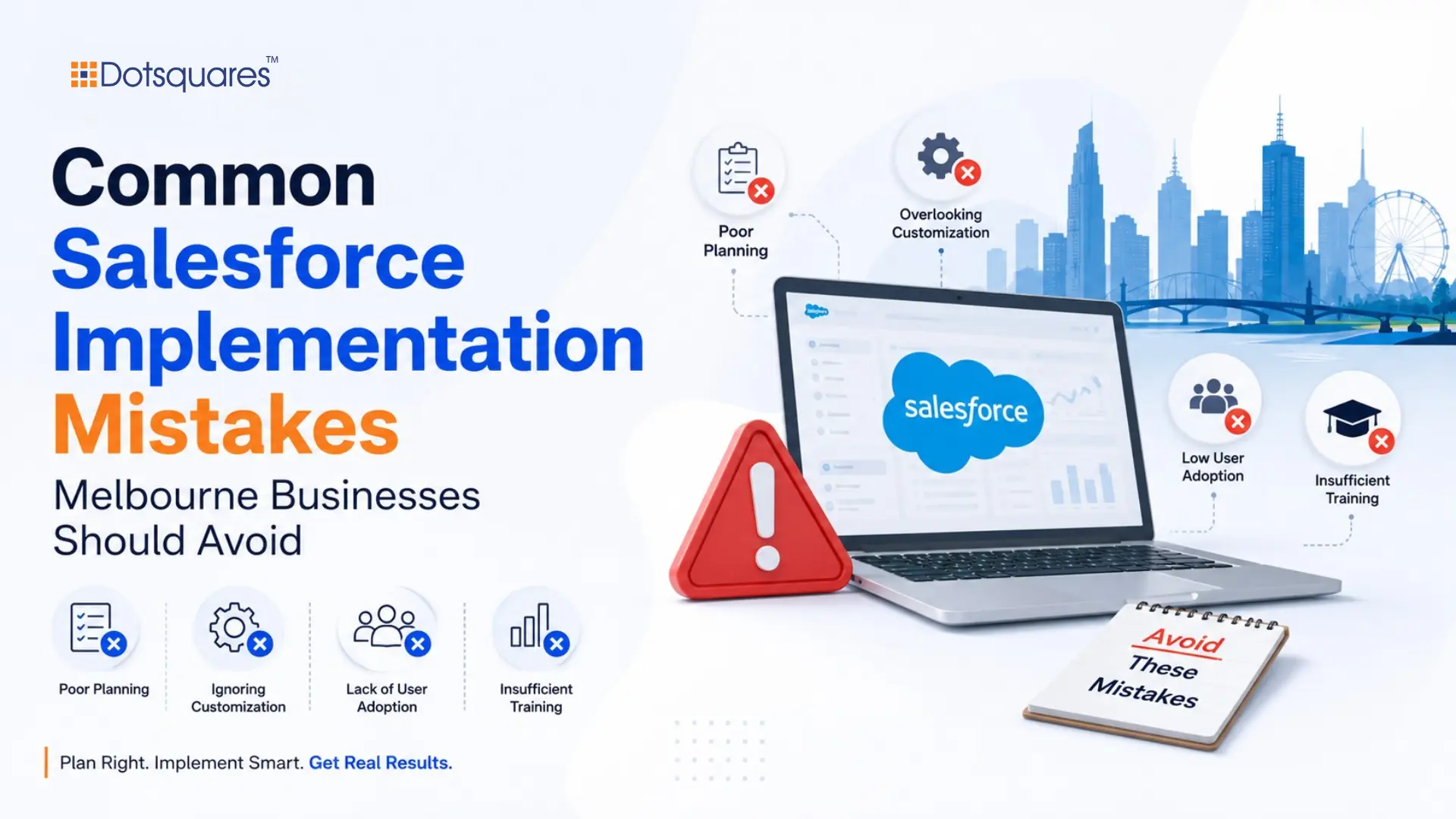
So, you’ve finally pulled the trigger on Salesforce. You’re ready to ditch the messy spreadsheets, align your sales and marketing teams, and actually start using your customer data to grow. In a tech-forward hub like Melbourne, where competition is fierce and digital transformation is no longer a "buzzword" but a survival tactic, Salesforce is the gold standard.
But here’s the reality: simply buying the licenses isn't the finish line. In fact, it’s barely the starting blocks.
The data from the present industry shows that 68% of CRM systems fail to deliver their expected return on investment within two years of their implementation. The software does not cause the main problem. Salesforce functions as a powerful system. The main problem occurs because organisations either lack strategic planning or fail to implement effective strategies.
If you’re a business owner or a project lead in Victoria, you know that time is money. Avoiding a messy rollout is about more than just convenience; it’s about protecting your investment. Let’s dive into the most common pitfalls we see in the Melbourne market and how you can steer clear of them.
1. Not Defining Clear Business Objectives
One of the biggest mistakes is treating a Salesforce rollout as an "IT project." It’s not. It’s a business transformation.
Many local companies jump into a salesforce implementation in Melbourne with a vague goal like "we want to be more organised." But what does that actually mean? Without specific KPIs (Key Performance Indicators), your system will end up bloated with features you don't use.
Ask yourself these questions:
- Are we trying to reduce the sales cycle by 15 days?
- Do we need to automate our lead follow-ups to happen within 2 hours?
- Are we trying to get a 360-degree view of our customer support tickets?
If you don't know what success looks like, you can't build a system that achieves it.
2. Hiring the Wrong Salesforce Partner
The "DIY" approach is tempting, but Salesforce is a beast. Many Melbourne firms try to handle the setup in-house using an IT manager who "knows a bit of code." This almost always leads to a system that works on paper but fails in practice.
The other trap? Hiring a partner based solely on the lowest quote. A salesforce partner in Australia should understand the local market nuances. They shouldn't just be "order takers"; they should be consultants who challenge your current processes to find a better way of working.
Choosing the right expert can be the difference between a system that scales and one that breaks. If you’re currently scouting for help, it’s worth checking out our breakdown of the Top 5 Salesforce Consulting Partners in Australia to see who aligns with your niche.
3. Poor Data Migration and Data Quality Management
The current customer list contains duplicates and outdated emails and incomplete addresses which makes it impossible to transfer data into a new Salesforce instance because the data resembles old dirty oil which should not go into a Ferrari engine. The system will operate poorly.
CRM migration challenges often stem from a rush to "go live." Businesses skip the data cleansing phase to save a week on the timeline, only to spend three months later trying to figure out which "John Smith" is the real one.
The Fix: Audit your data before the migration. Standardise your formats and purge the junk. It’s a boring job, but your sales team will thank you for it later.
4. Excessive Customisation That Creates Complexity
We get it, you want your Salesforce to feel like yours. But there is a very fine line between "tailored" and "over-engineered."
One of the most common requests we receive for Salesforce consulting in Melbourne is for fixing CRM systems that have become overly complex and difficult to manage. Over time, excessive custom fields, layered validation rules, and resource-heavy Apex code can slow down performance, reduce user productivity, and make the platform harder to maintain.
Salesforce updates its platform three times a year. Your workflows will break when your customisations become too inflexible for the platform updates. You should use "Out-of-the-Box" (OOTB) features as your main choice for software implementation. The standard Salesforce functionality provides 80% of your needs so you should modify your business process to handle the remaining 20% instead of making code modifications.
5. Ignoring Employee Training and CRM Adoption
You can build the most sophisticated CRM on the planet, but if your sales reps hate using it, it’s a waste of money.
The primary reason CRM projects fail exists because users do not adopt the system. The management team develops a system without employee input which they then force upon workers during Monday morning work hours. The process will face opposition because it contains elements that people will fight against.
How do you win them over?
- Involve them early: Get feedback from the people who will actually be clicking the buttons.
- Show the "What’s in it for me?": Don't tell them it’s for "reporting." Tell them it will help them close deals faster and spend less time on paperwork.
- Ongoing training: A one-hour Zoom session needs additional training which requires both practical workshops and simple "cheat sheets" that users can access anytime.
6. Failure to Integrate Salesforce with Existing Systems
Does your CRM talk to your accounting software? Your marketing automation tool? Your website?
A common mistake is leaving Salesforce as an "island." If your team has to manually copy data from Salesforce into Xero or MYOB, you haven't solved the problem; you’ve just moved it.
Connectivity is king in the modern Melbourne business landscape. If your business is also planning third-party system connectivity, read our guide on common Salesforce integration mistakes to ensure your data flows smoothly across your entire tech stack.
7. Skipping Proper Testing and Post-Launch Support
The "Go-Live" date is exciting, but it shouldn't be the end of the partnership. Many businesses spend their entire budget on the implementation and leave nothing for the "Day 2" support.
CRM implementation mistakes often go unnoticed until the whole team is using the system at once. This is why User Acceptance Testing (UAT) is non-negotiable. You need to run real-world scenarios through the system before you flip the switch.
Furthermore, Salesforce is a living platform. Your business will change, and your CRM needs to change with it. Having a plan for ongoing maintenance ensures your system doesn't become obsolete within a year.
Conclusion: Doing It Right the First Time
Every Melbourne business considers Salesforce implementation as a significant achievement. The project acts as a future growth investment for your company needs strategic planning. The implementation success factors your business should select include early goal setting simplified customisation processes and workforce priorities instead of technological solutions.
The cost of a failed implementation is always higher than the cost of doing it right from day one. If you’re worried about the financial side of things, it’s helpful to understand the market rates. You can find more details in our post: What is the Cost of Hiring a Salesforce Consultant?
Whether you’re just starting your journey or looking to fix a rollout that’s gone off the rails, professional salesforce consulting melbourne can provide the roadmap you need.
Frequently Asked Questions
Why do so many Salesforce implementations fail?
The primary cause of most failures comes from insufficient user adoption along with defective data and the absence of a defined business plan which should have been established before development work began.
How long does a typical Salesforce deployment take?
For a small to medium Melbourne business, a standard implementation can take anywhere from 6 to 14 weeks, depending on the complexity and the amount of data being migrated.
Should we use an internal team or an external partner?
Your internal teams possess knowledge about your business operations while an external partner provides specialised expertise about Salesforce's current features which enables them to help you prevent frequent technical mistakes that result in enduring problems.
What is the most important part of a Salesforce rollout?
Training and adoption. If your staff isn't comfortable using the system, you will never see the ROI you’re looking for, regardless of how good the tech is.


Related Post

 October 15, 2026
Low-Code Integration: What It Is, How It Works and When Businesses Should Use It
Learn how low-code integration connects business apps and APIs, its key benefits, common use cases, limitations, and when to choose custom integration.
Keep Reading October 15, 2026
SAP BW to Cloud Migration: Benefits, Challenges and Planning Steps
Learn about SAP BW to cloud migration, including benefits, challenges, AWS options, cost factors and planning steps for a successful migration.
Keep Reading October 12, 2026
Mobile App Development with React Native and What You Need to Know
Learn how React Native works, where it saves time and cost, which industries use it, and whether it's still a good choice in 2026.
Keep Reading