Why API Development & Integration Is Crucial for Modern Web Apps
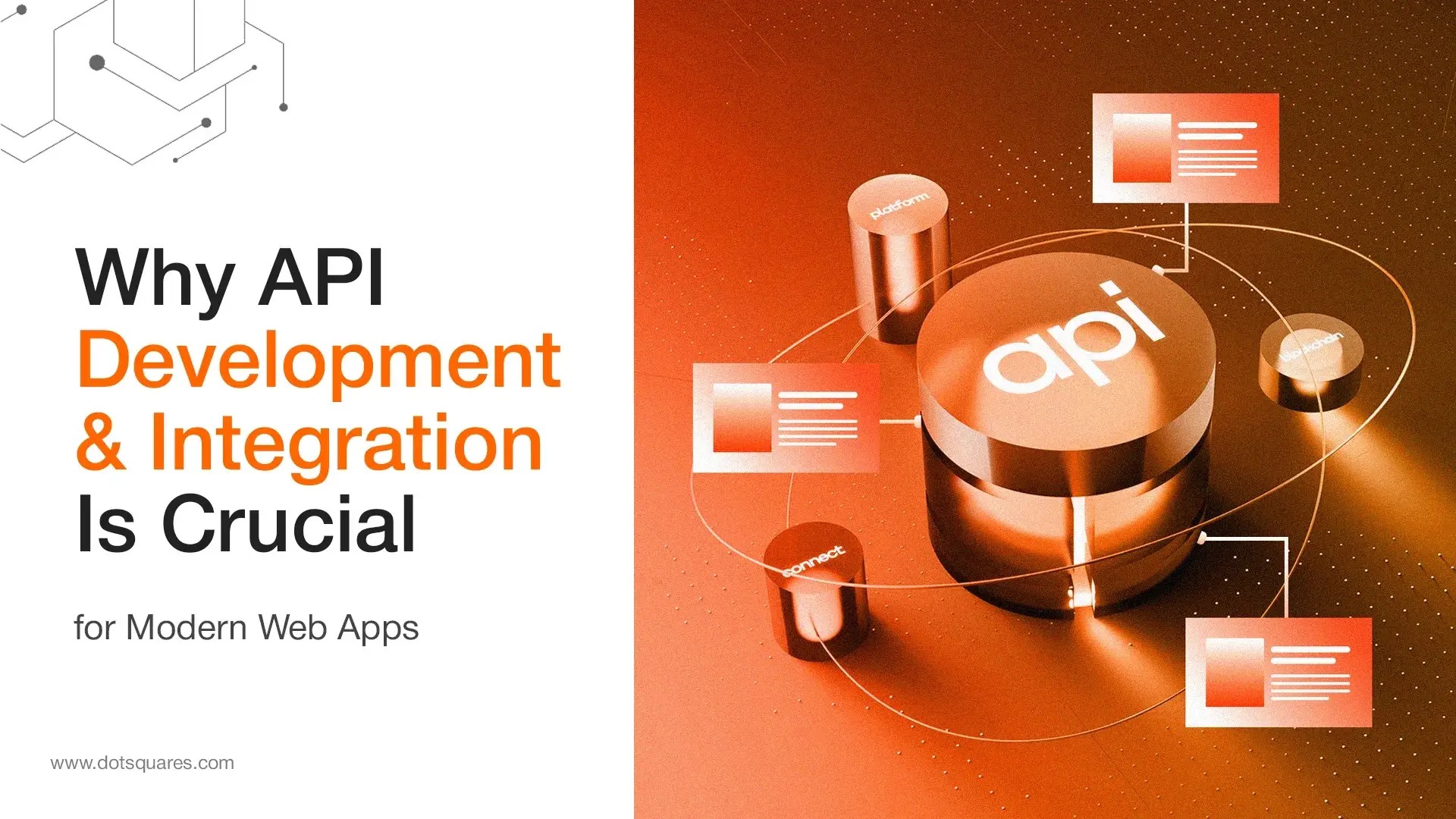
In the early days of the web, most applications were like islands. All services kept their own data and ran their logic independently, without needing to interact with other services for support or assistance. In this increasingly networked world of technology, web applications that are unable to interact with the wider world around them are not just reduced in scope – they are obsolete from an architecture standpoint.
Whether it is a fintech app pulling real-time market data or an e-commerce platform syncing inventory with a warehouse, the "glue" holding it all together is the API. This is why API Development & Integration has moved from being a back-end footnote to the absolute center of software strategy. If your systems aren't talking to each other, you are losing data, wasting time, and frustrating your users.
The Reality of the "Connected" Ecosystem
As we understand this now, no single piece of software can do everything. A modern web app is actually a collection of specialised services. One service manages payments (such as Stripe), one manages emails (such as SendGrid) and another manages customers (such as HubSpot).
To put it simply, the value of your app now depends not only on the code you write but also on how well you connect through APIs to various services across the Internet. This is where professional API development services becomes a critical differentiator for your application. It's not simply about creating a connection; rather, it's about creating a secure, scalable and fast connection that can handle thousands of requests each second.
Why "Off-the-Shelf" Isn't Always Enough
Many businesses start by using standard, "out-of-the-box" connectors. But the reality is that your business logic is unique. Standard plugins often create data silos or fail to sync the specific fields your team needs to make decisions.
This is why custom api development & integration services are in such high demand. You might need a bridge that doesn't exist yet, or perhaps you need to modify how two massive platforms interact. For instance, when we look at something like HubSpot custom API integration, the "Dos and Don'ts" usually come down to how much customisation is required to make the CRM reflect your actual sales process rather than a generic template.
The Core Benefits: Beyond Just "Syncing Data"
When you invest in high-quality API Development & Integration, you are solving three major problems at once:
1. Eliminating Manual Data Entry
To simplify things, if you are manually copying data from one screen to another using your current system, then you've failed at providing an automated solution. An API automates this process so that when someone fills out a lead form on your website, it will automatically be imported into your CRM and Marketing Tool. Automating this way helps you save time and eliminates the chances of human error, which can lead to losing out on sales.
2. Scalability and Future-Proofing
Top API development companies are in for the long haul and build for long term scalability not just immediate functionality. Using a decoupled and little flaky base, this well-engineered API allows underlying services to be turned around or swapped with minimal interference of the front-end user interface. If you decide to switch payment processing companies or change your data storage solution, the API layer allows you to make those changes without ever having to alter your user's experience.
3. Creating New Revenue Streams
Sometimes, the API itself is the product. Think about companies like Twilio or Weatherbit. They don't have a "website" in the traditional sense; they sell access to their data and functionality via an API. By investing in custom api development & integration services, you might find that the data your app generates is valuable enough to be shared (and monetised) with partners.
What to Look for in API Development Companies
Not all APIs are created equal. Let’s be honest: there is a lot of "messy" code out there that works for a week and then breaks the moment a platform updates its version. When evaluating api development services, you need to look for a few non-negotiables:
- Security (OAuth, JWT, etc.): APIs provide access to your system and must be properly secured to avoid malicious intrusion.
- Documentation: An API is useless unless developers have clear, well written documentation.
- Rate Limiting and Throttling: You need to ensure that one "hungry" user cannot crash your system by sending too many requests in a short time period.
The Challenges We Face
It’s a straightforward but intentional process, but that doesn't mean it’s easy. The reality is that APIs are "living" things. Third-party platforms change their requirements, deprecate old versions, and update their security protocols.
Now we have come to the realisation that "integration" is not a one-time event; it is an ongoing relationship. This is why many organisations prefer long-term partnerships with api development companies who can monitor these connections and fix breaks before the users even notice.
As We Understand This Now: The Strategic View
APIs are essential for operating a business today. Your web application needs to communicate with its related systems (i.e. logistics, marketing and billing) in order to operate properly; without this capability your web application might be stuck.
Your ability to create a minimum viable product (MVP) as a startup or upgrade your old legacy system will depend on your ability to connect to other systems. To do this you need to ensure that your data can be easily exchanged between your systems, and that your business processes will be able to run on autopilot.
The Bottom Line
The bottom line is that the "walled garden" approach to software is dead. The future belongs to the apps that play well with others. By prioritising API development & integration, you aren't just adding a feature; you are building a foundation for a more agile, responsive, and profitable business.
At the end of the day, your customers don't care about the complex "handshakes" happening in the background. They just want their data to be there when they need it. It’s our job as developers and consultants to make sure that "glue" is so strong and so transparent that they never have to think about it.
Now we have come to this: if you want to compete in the modern market, stop thinking about your app as a standalone tool. Start thinking about it as a node in a global network. That shift in mindset, backed by professional api development services, is what separates the market leaders from the rest.


Related Post
 March 31, 2026
Power BI or Tableau: Which BI Tool Is Good for Your Business?
Compare Power BI and Tableau on cost, features, ease of use, and performance. Find the right BI tool for your business data and decision-making needs.
Keep Reading March 31, 2026
7 Key Benefits of Sitefinity That Drive Real Business Value
Discover 7 key benefits of Sitefinity CMS, including flexibility, integrations, security, and personalization to drive real business growth and digital success.
Keep Reading March 27, 2026
Fractional Real Estate Tokenisation: Benefits, Process & Future Trends
Discover how fractional real estate tokenisation works, including benefits, step-by-step process, and how it makes property investment more accessible & liquid.
Keep Reading