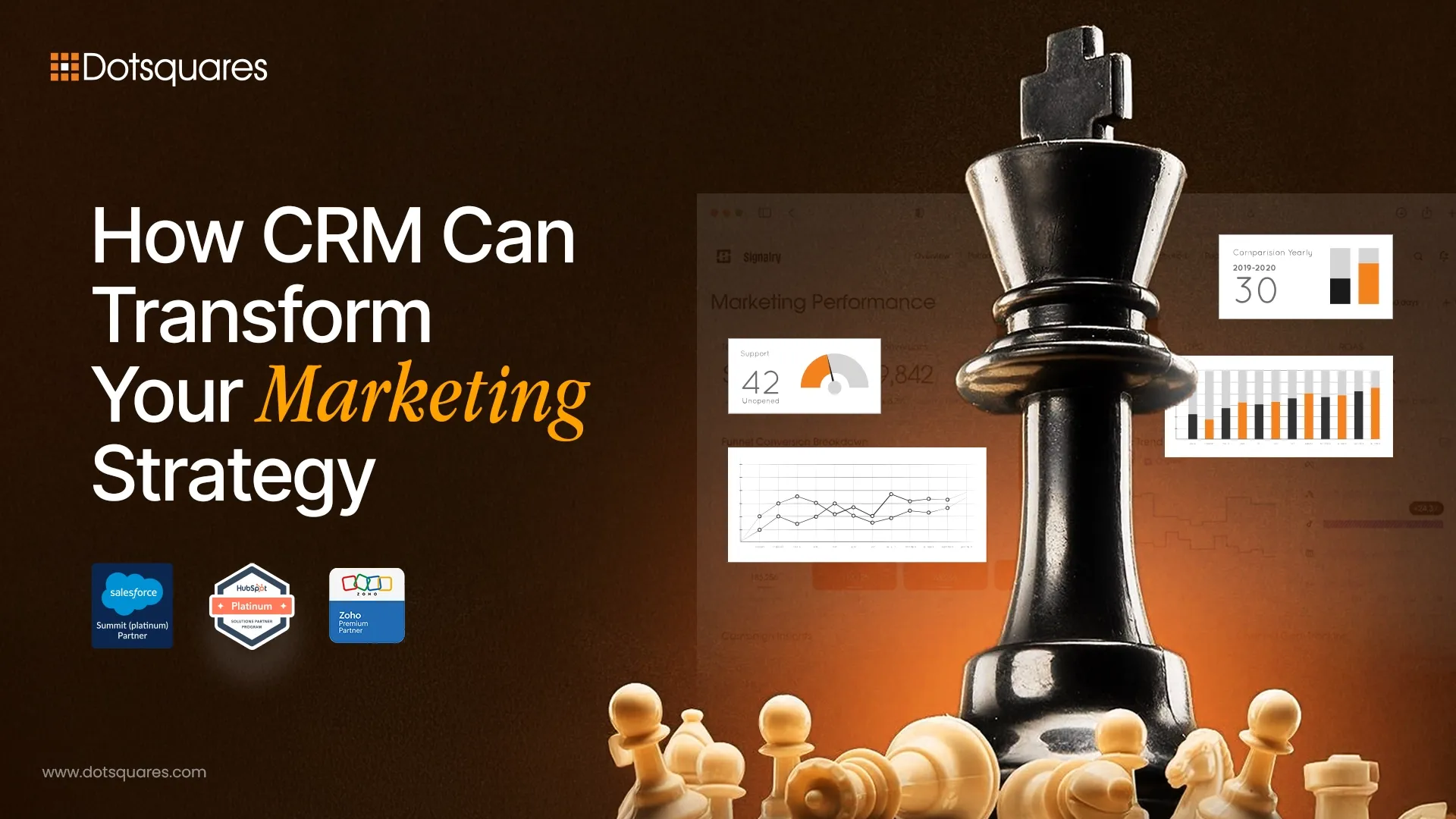
How CRM Can Transform Your Marketing Strategy
Customer relationships are no longer built through occasional emails or random follow-ups. Today’s customers expect businesses to remember their preferences, understand their needs, and communicate at the right moment. That shift has pushed companies to rethink how they manage customer data and engagement.
This is where AI-Powered CRM for Customer Relationships is changing the landscape. Instead of functioning as a simple database, modern CRM systems now analyse behaviour, predict intent, and automate communication in ways that directly impact growth.
Why Traditional CRM Systems Are No Longer Enough
Earlier CRM systems were designed primarily to store information. They logged calls, saved contact details, and tracked deals in a pipeline. While that worked in the past, today’s competitive market demands more intelligence and automation.
Marketing and sales teams now need deeper insights, not just data, but direction. They need to know which lead is most likely to convert, which customer might churn, and which campaign is underperforming. AI integration allows CRM platforms to move from being reactive tools to proactive decision-making systems.
This shift is exactly why AI-powered smart CRM is redefining customer relationships across industries.
How AI Improves Marketing and Sales Performance
Artificial intelligence brings context into customer data. Instead of relying only on manual segmentation, AI continuously studies customer interactions, website visits, email engagement, purchase history, and response patterns.
For marketing teams, this means campaigns are no longer generic. Messages are personalised based on behaviour, timing, and interest. A CRM can automatically trigger follow-ups, nurture leads, and even suggest the best time to reach out.
Sales teams benefit just as much. Predictive analytics can highlight high-intent prospects and recommend next actions. Rather than chasing every lead equally, teams focus their energy where it matters most.
Over time, this creates a smoother, more consistent customer journey.
Why Real Estate Is Rapidly Adopting AI-Driven CRM
Few industries rely on relationship management as heavily as real estate. Agents handle multiple leads, property listings, site visits, negotiations, and long follow-up cycles. Managing this manually often leads to missed opportunities.
This explains Why Real Estate moving to Zoho CRM and similar platforms. Real estate businesses require automated lead assignment, pipeline visibility, property-based segmentation, and integrated communication tools.
When businesses evaluate real estate choose zoho crm, they typically look for a system that can:
- Track every inquiry in one place
- Automate follow-ups with potential buyers
- Provide visibility into deal stages
- Integrate email, SMS, and marketing campaigns
AI features within CRM platforms help agents prioritise serious buyers and reduce manual workload, making the entire process more efficient.
The Growing Demand for CRM Software Development
While platforms like Zoho offer strong built-in features, many companies eventually require deeper customisation. That’s where CRM Software Development becomes important.
Every organisation has its own sales cycle, approval workflows, reporting needs, and integration requirements. A generic setup may not fully support complex operations. Through tailored crm development, businesses can design systems that align perfectly with their internal processes.
Custom CRM development can include:
- Integration with accounting or ERP systems
- Custom dashboards and reporting tools
- AI-based analytics modules
- Automated workflow design
- Advanced data security features
This level of flexibility ensures the CRM grows with the business instead of limiting it.
The Role of Technology and App Development
Modern CRM systems are no longer limited to desktop environments. Teams need mobile access, cloud syncing, and seamless performance across devices.
Building such systems often involves using the best app development software and modern frameworks that support scalability and security. Businesses that partner with one of the best software development companies can ensure their CRM solution is robust, user-friendly, and future-ready.
A well-developed CRM is not just a management tool; it becomes a central hub connecting marketing, sales, and customer support.
Where AI-Powered Smart CRM Is Headed
The future of CRM is moving toward deeper automation and predictive intelligence. AI systems will increasingly handle lead nurturing, customer journey mapping, and performance optimisation with minimal manual intervention.
We are also likely to see tighter integration between CRM platforms and conversational tools, allowing businesses to manage customer communication from a single intelligent system.
As customer expectations continue to rise, businesses that invest in AI-driven CRM systems will be better positioned to deliver personalised, consistent, and efficient experiences.
Conclusion
AI-powered smart CRM is not simply an upgrade to traditional systems; it represents a shift in how businesses approach customer relationships.
Whether it’s real estate firms adopting Zoho CRM, companies investing in custom CRM software development, or organisations modernising their systems through advanced app development, the objective remains the same: build stronger, smarter, and more profitable customer relationships.
In a competitive market, the businesses that understand and adapt to this shift will lead the way.


Related Post
 April 03, 2026
Building an Advanced LMS with SharePoint Online, Power Apps, and Power Automate
Create a scalable LMS using SharePoint Online, Power Apps, and Power Automate. Manage training, automate workflows, and keep data secure within Microsoft 365.
Keep Reading March 31, 2026
Power BI or Tableau: Which BI Tool Is Good for Your Business?
Compare Power BI and Tableau on cost, features, ease of use, and performance. Find the right BI tool for your business data and decision-making needs.
Keep Reading March 31, 2026
7 Key Benefits of Sitefinity That Drive Real Business Value
Discover 7 key benefits of Sitefinity CMS, including flexibility, integrations, security, and personalization to drive real business growth and digital success.
Keep Reading