Tech
Why Outdated Healthcare Systems are Costing Hospitals Time, Money, and Patients
 4 min read
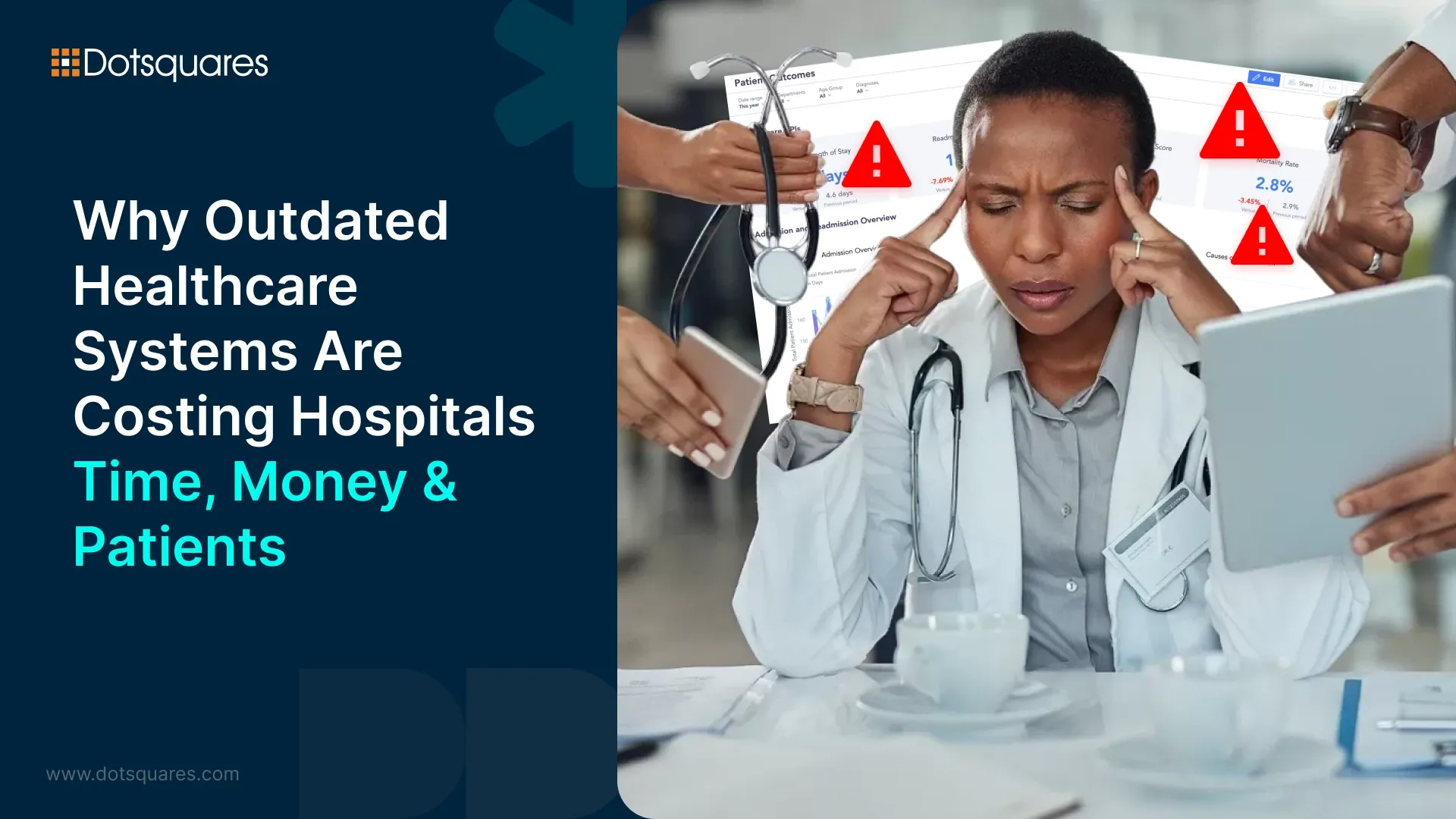
Could it be that one of the greatest barriers to modernising hospitals is that hospital staff have become comfortable with "good enough" technology, rather than pushing for cutting-edge innovations?
For many healthcare administrators, outdated systems have become a persistent, background noise that everyone has simply learned to live with. In many hospitals, slow patient intake, unlinked lab results, billing errors, and the constant `freezing' of old software are seen as just a nuisance; but after so many days and weeks of issues compounding, the staff become disheartened and lose faith in their patients, which has an even greater impact on hospital revenue and the entire organisation.
The hard truth is that healthcare IT cannot be "patched" indefinitely. Incremental fixes or asking overstretched internal teams to "just make it work" are no longer viable strategies in an era defined by rapid digital transformation and strict data regulations. The solution starts with realising that hospital operations need a structural evolution, not just a tactical reboot.
What Does an "Outdated System" Actually Look Like in 2026?
To understand why healthcare operations break down, we have to look at what's happening under the hood. In many facilities, the "backbone" of the hospital is a mix of legacy software that was never designed to talk to modern devices.
An outdated system is any platform that siloes data, requires manual workarounds, or lacks mobile accessibility. It’s the software that forces a doctor to log into three different screens just to see a single patient’s history. It’s the billing system that still relies on manual coding, leading to frequent insurance rejections. These functions, policy administration, data management, and workflow coordination, are the engine of the hospital. When that engine is old and rusty, the entire facility slows down.
Health system leaders view these systems as the bedrock of safe patient care as well as just another technology. Precision is the currency in healthcare, and fragmented data creates small errors that have the potential to create significant risk to both clinical and financial outcomes.
The Financial Reality: Why "Old" is More Expensive Than "New"
There is a common misconception that maintaining a legacy system is a cost-saving measure. After all, the "big spend" happened years ago. But the reality is that inefficiency is incredibly expensive.
Outdated systems act like a slow leak in a hospital’s budget. The costs show up in hours of wasted staff time, high maintenance fees for obsolete hardware, and the inability to scale services. Furthermore, there is the massive cost of "lost opportunity." If a hospital cannot offer telehealth or digital self-service portals because its backend can’t handle it, patients will simply migrate to providers who can.
Investing in modern software development is an operational reset. It’s about moving away from reactive "firefighting" and building a predictable, scalable financial model where billing is automated and resource allocation is backed by real-time data.
The Impact on the "Care Team" and Patient Trust
We often talk about the "Patient Experience," but that experience is entirely dependent on the "Staff Experience." When healthcare professionals are forced to fight with slow, non-intuitive software, their focus shifts away from the patient and onto the screen. This "digital friction" is a primary driver of burnout.
A well-structured healthcare app development services approach removes administrative noise and improves operational efficiency. It allows for:
- Seamless Data Flow: Information moves from the lab to the doctor’s tablet instantly.
- Reduced human error: As a result of having Automations in place to manage processes around Checks and Balances for Medication Administration and Documentation, even before there is an actual Medication Error recorded.
- Predictable Workflows: All Employees can rely upon knowing where to find information, decreasing anxiety in a fast-paced workplace.
To patients, a well-organised hospital translates into shorter wait times, clearer communication and confidence in the security of their patient information in relation to the healthcare systems they are supporting.
Building Resilience for a Digital-First Future
Modernising hospital technology is more than just "new computers". It is an Strategic Leverage point for Long Term Resilience of an Organisation. Hospitals can mitigate Risks associated with the Increasing Threat of Cyberattack, in addition to staying compliant with ever-expanding Regulations by making their Internal Portals transitioning to Modern Web Development and their Technology Architecture to Cloud Based Architectures.
The goal is to turn the hospital's IT from a support function into a performance engine. At Dotsquares, we believe the most successful healthcare providers in 2026 will be those who stop trying to patch the past and start building a foundation that is ready for the future. Acceptance of the problem is the first step; structural change is the only way forward.


Related Post

 October 15, 2026
Low-Code Integration: What It Is, How It Works and When Businesses Should Use It
Learn how low-code integration connects business apps and APIs, its key benefits, common use cases, limitations, and when to choose custom integration.
Keep Reading October 15, 2026
SAP BW to Cloud Migration: Benefits, Challenges and Planning Steps
Learn about SAP BW to cloud migration, including benefits, challenges, AWS options, cost factors and planning steps for a successful migration.
Keep Reading October 12, 2026
Mobile App Development with React Native and What You Need to Know
Learn how React Native works, where it saves time and cost, which industries use it, and whether it's still a good choice in 2026.
Keep Reading