
Is Your Business AI-Ready?

Tech
 5 min read
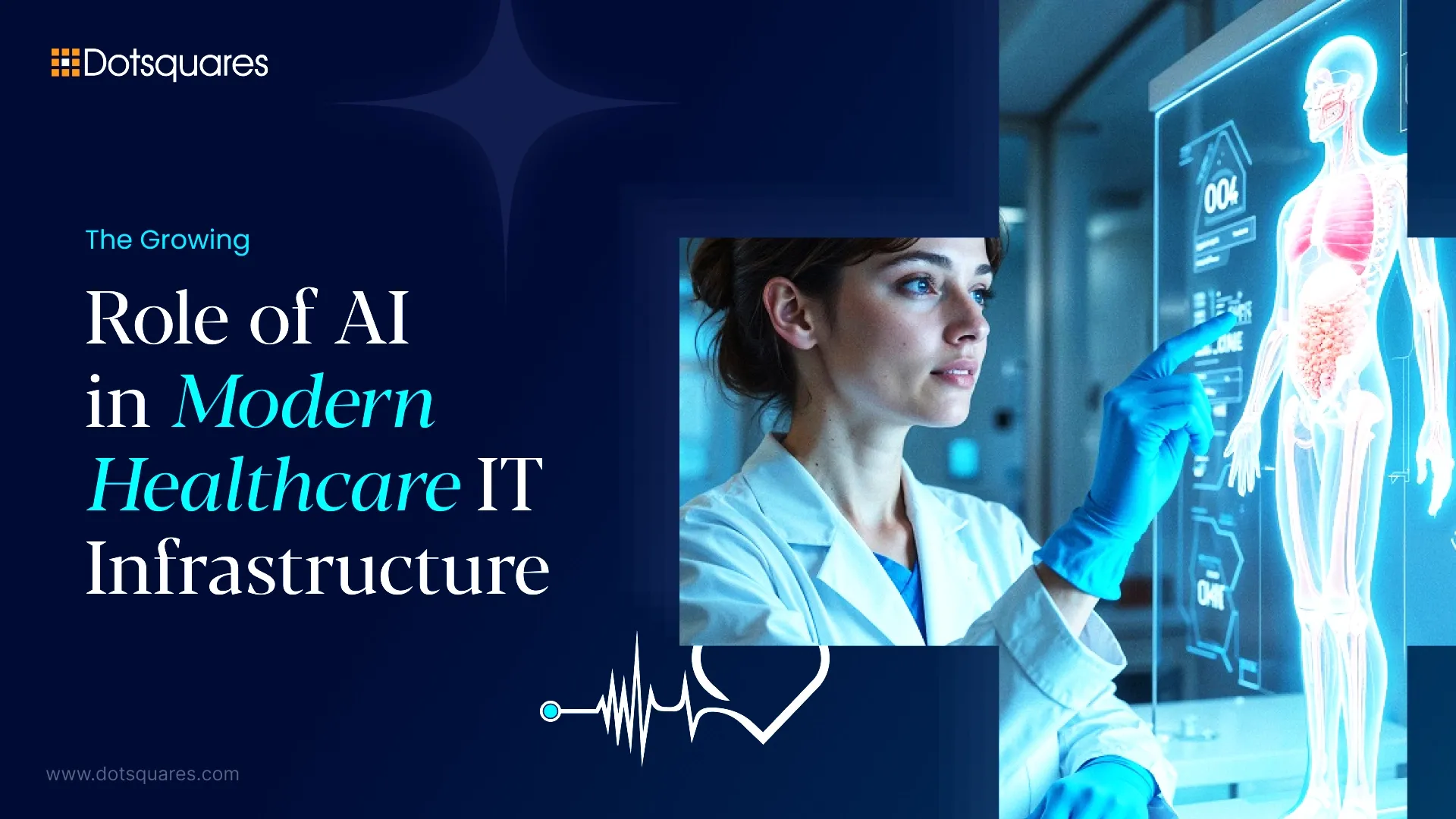
Every hospital generates massive amounts of patient data daily, including vitals, test results, imaging, medication records, and billing codes. The volume isn’t the problem anymore. It’s that nobody can access all of it in one place when they actually need it.
Walk through any hospital, and you will see doctors juggling multiple logins throughout their shift. Lab results live in one database and scans in another, whereas medication histories are somewhere else entirely. A physician trying to get a complete patient picture might need credentials for four or five different systems. This fragmentation slows things down and creates genuine safety risks when critical information lives in a system someone didn’t think to check.
There’s been so much overpromising around AI in healthcare that it’s hard to separate what actually functions from what’s just marketing. But some real applications do exist, and they are worth examining.
Over the past few years, something shifted in how radiology departments operate. Not obvious from the outside, and radiologists still review every scan, and that part hasn’t budged. What’s different is they now have algorithms pre-screening images and flagging stuff that looks off.
These systems have seen millions of scans. They catch patterns humans might miss on a first pass:
But this doesn’t replace the radiologist’s expertise, but changes their workflow pretty fundamentally.
Instead of hunting through hundreds of normal scans for the few problematic ones, they can jump straight to the cases that need their attention. Time from scan to diagnosis drops from days to hours in some facilities.
Similar shifts are visible in pathology labs, cardiology departments, dermatology clinics, and more. It’s become a recognisable pattern: algorithms screen for anomalies, doctors make the actual diagnostic calls.
Clinical applications get all the attention. Which makes sense, nobody wants to read about supply chain optimisation. But operational improvements often deliver the most immediate financial impact.
Hospitals are complicated to run. Staff schedules need constant adjustment. Operating rooms sit empty or create backups. Equipment breaks down at the worst times. Supply chains run out of critical items or overflow with waste. Patient flow through emergency departments creates unpredictable bottlenecks.
Any one of these problems is bleeding money or delaying patient care. Custom software development for healthcare operations addresses these specific pain points. Some predictive systems now look at historical admission data and can forecast when you will need extra nursing staff with decent accuracy.
One mid-sized hospital system cut medication waste by 31% just by using AI to predict what drugs they’d actually use. Not 30%, not “approximately a third”, 31%. Someone measured it. Another facility slashed equipment downtime by switching from calendar-based maintenance to predictive maintenance based on actual usage patterns.
These are practical, high-impact projects that apply proven technology to solve clear business challenges. Most importantly, they deliver results.
Healthcare apps have earned their terrible reputation. Most are genuinely awful, confusing interfaces, features nobody asked for, solutions to problems that don’t exist.
But symptom checkers, when done right, actually help. Not the generic ones that tell everyone they might have cancer. Better ones guide people through relevant questions and land on useful recommendations: emergency room, urgent care clinic, schedule with your primary care doctor, or wait it out at home.
Mobile healthcare apps need to tackle real problems, not just look slick. The functional ones do a few things well:
Remote monitoring works for chronic conditions, too. People managing diabetes or heart disease connect devices that track their numbers. AI algorithms watch for troubling patterns and send alerts to both patient and doctor before a crisis hits. That’s the shift healthcare needs, catching problems early instead of reacting to emergencies.
Here’s what makes all of this harder than it should be: legacy systems.
Most hospital IT infrastructure dates back to the 1990s. Sometimes earlier. These platforms store decades of patient records and power daily workflows for thousands of staff. Ripping them out and starting over sounds appealing until you think about the actual logistics. Where does all that historical data go? How do you retrain an entire workforce on new systems while still treating patients?
So the question becomes: how do you layer modern AI on top of infrastructure that predates smartphones? Carefully, with APIs and middleware doing the heavy lifting. Old databases need to feed into new analytics tools without breaking what currently works.
Cloud deployment at least removes some barriers. Rural clinics don’t need massive server rooms anymore. They can access the same diagnostic tools as major urban hospitals, scaling usage and costs based on actual need.
But integration remains messy, time-consuming work that doesn’t fit into a neat timeline.
Hospitals seeing genuine AI results aren’t necessarily the ones spending the most money. They are asking better questions upfront: What specific problem needs solving? What metrics prove whether this worked?
Just “implementing AI” as an objective accomplishes nothing. Targeting AI to cut medication errors by a specific percentage, reduce readmissions, or improve diagnostic accuracy for particular conditions, those focused goals have a shot at succeeding.
Healthcare remains human work at its core. Technology works best when it amplifies what people do well. Let algorithms handle data entry, pattern detection, schedule optimisation, and repetitive grinding work. That frees up healthcare professionals for the parts that genuinely need human judgment and empathy.
This isn’t speculative. It’s already happening in facilities that moved past the hype cycle and focused on building practical tools.
Most healthcare IT vendors will tell you what’s trendy. Dotsquares focuses on what actually works for your facility, custom AI solutions targeting your specific operational challenges, patient experience gaps, or legacy system nightmares. If you are tired of shiny demos that don’t translate to results, we should talk.



 October 15, 2026
Learn how low-code integration connects business apps and APIs, its key benefits, common use cases, limitations, and when to choose custom integration.
Keep Reading October 15, 2026
Learn about SAP BW to cloud migration, including benefits, challenges, AWS options, cost factors and planning steps for a successful migration.
Keep Reading October 12, 2026
Learn how React Native works, where it saves time and cost, which industries use it, and whether it's still a good choice in 2026.
Keep Reading