 5 min read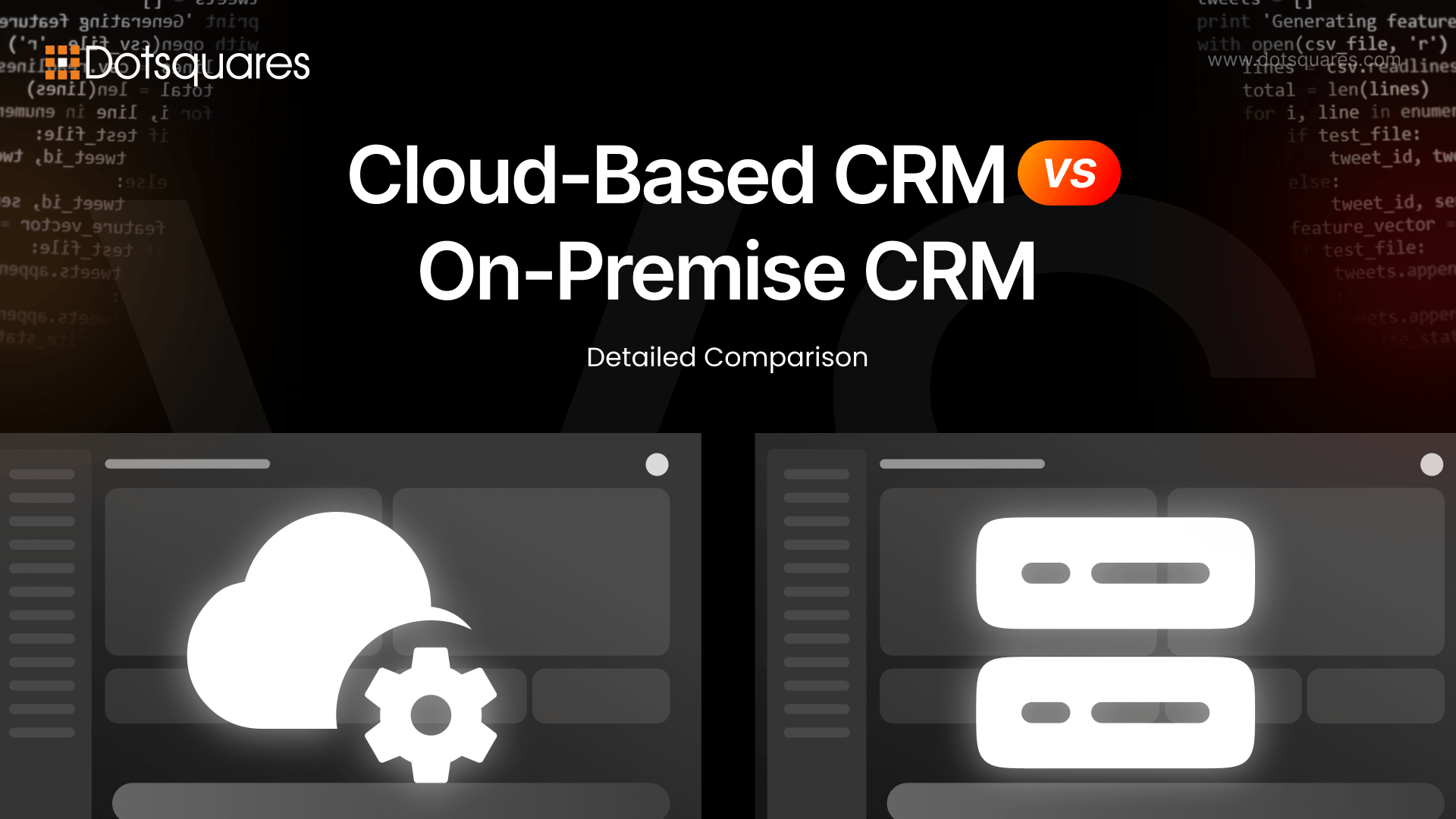
Customer Relationship Management (CRM) software has become an important part of modern business operations. It helps companies manage customer interactions, improve communication, streamline sales processes, and enhance customer satisfaction. But, when it comes to choosing an effective Customer Relationship solution, one question which confuses all businesses is which solution they should deploy in their operations – a cloud-based or an on-premise.
This is because both have their individual benefits and limitations. Considering this factor, it is essential for businesses to understand the difference between their features and uses.
What Is a Cloud-Based CRM?
A cloud-based, also known as Software-as-a-Service (SaaS), is hosted on the servers managed by a third-party provider. Businesses can use this through the internet using a web browser or a mobile application. The CRM provider is responsible for updating the software, maintaining the server, backing up the data, and following security measures strictly. Some established cloud platforms are Salesforce, HubSpot, and Zoho. The cloud-based CRMs are mainly preferred by businesses looking for flexibility, easy accessibility, and reduced infrastructure costs.
What Is an On-Premise CRM?
As the name suggests, this type of CRM is installed directly on the servers of the company. The organisation itself has to manage and update the software, maintain hardware, backups, and overall maintenance internally. The use of this allows businesses to retain full control over their access, customer data and configurations. It is mainly suitable for organisations that follow strict security policies or have specific customisation requirements.
How do these two platforms differ from each other
Difference in Deployment and Accessibility
One of the major differences between these two types is the difference in their deployment and access.
Cloud-based systems can be accessed from remote locations with an internet connection. Employees can log in from anywhere with their laptops, smartphones, or tablets. This makes cloud solutions highly suitable for teams working at remote locations and businesses having their offices at different locations.
On-premise systems are usually connected to the company’s local network. Although it is possible to access them from remote locations, this however, requires an extra layer of technical setups such as VPN connections or dedicated remote servers.
Difference in Cost
As cloud-based CRM solutions are provided by third-party service providers, they are usually offered on a subscription basis. Businesses have to pay monthly or annual fees based on the number of users and features used. As there is no need for expensive hardware or server setup, the use of this is comparatively lower than that of an on-premises.
For on-premises systems, businesses need to purchase servers, networking equipment, storage systems, software licenses, and security infrastructure. Apart from this, there is a need for expert IT professionals to maintain and support the system.
Difference in Maintenance and Technical Support
In cloud-based, the service provider is responsible for software maintenance, updates, security patches, backups, and troubleshooting. This allows businesses to focus more on daily operations and not on the technical issues.
With on-premise, the company itself is responsible for maintaining the entire system. Internal IT teams must manage server performance, install updates, monitor security, and handle technical issues.
Difference in Scalability
Cloud CRM systems are highly scalable. Businesses can easily increase storage capacity, add new users, or upgrade features according to their requirements. Upgrading the system is performed quickly without any major changes in the infrastructure.
On the other side, scaling on-premises CRM systems is comparatively less flexible. To expand the system, businesses may need to purchase additional servers, upgrade hardware, and increase storage capacity.
Difference in Data Security and Control
Data security is one of the most important factors to consider when it comes to selecting a CRM system.
In cloud-based CRM, customer data is stored on external servers maintained by the CRM provider. Going through this reason, established providers deploy advanced security technologies such as encryption, firewalls, and regular backups.
Businesses deploying on-premises CRM have full control over their data because everything is stored internally. Organisations have the freedom to implement their own security protocols and compliance policies according to industry requirements.
Difference in Customisation
Cloud CRM solutions generally offer standard customisation features such as workflow automation, dashboards, integrations, and reporting tools. However, customisation capabilities may be limited to what the vendor allows within the platform.
On-premise CRM systems offer much deeper customisation possibilities. Businesses can modify the Data architecture, workflows, and functionalities according to their unique operational requirements.
Difference in Software Updates
As cloud-based CRMs are provided by third-party providers, they automatically update the software and add new features to the system. Businesses can use the latest changes without manual installations or downtime.
In on-premise CRM systems, updates are managed by the internal IT team. This team is responsible for installing updates, testing compatibility, and ensuring system stability during upgrades.
Difference in Internet Dependency
Cloud-based systems are completely dependent on internet connectivity. If there is any interruption in the internet or a network issue, in that scenario, accessing the CRM may become difficult.
On-premise systems can continue operating within the company’s internal network even if internet connectivity is temporarily unavailable.
Which Businesses Should Choose Cloud-Based?
Cloud-based CRM is suitable for:
- Startups and small businesses
- Companies with remote or hybrid workforces
- Businesses seeking quick deployment
- Organizations with limited IT infrastructure
- Fast-growing companies requiring scalability
Which Businesses Should Choose On-Premise?
On-premise CRM is suitable for:
- Large enterprises
- Organizations with dedicated IT teams
- Businesses requiring strict data control
- Companies with extensive customization needs
- Industries with strong regulatory compliance requirements
Final Thoughts
Both cloud-based and on-premise CRM have their own strengths and limitations. The decision of investing in any of them mainly depends on the size of the business, budget, security requirements, technical capabilities, and long-term goals.
Cloud-based focuses on convenience, accessibility, scalability, and lower maintenance responsibilities. On-premise based solution emphasises complete control, customisation, and internal data management.
Before making a decision, businesses should carefully assess their operational needs and future growth plans to select the right solution that best supports their objectives.
If you are looking for an appropriate CRM solution for your business, then hiring the services of an expert CRM solution provider will help in selecting a suitable bespoke solution tailored to your business needs.


Related Post

 October 16, 2026
E-commerce Security: Protect Your Store From Cyber Threats
Learn how E-commerce security protects your online store from fraud, data breaches, and bots. Explore threats, PCI DSS, and best practices.
Keep Reading October 15, 2026
Low-Code Integration: What It Is, How It Works and When Businesses Should Use It
Learn how low-code integration connects business apps and APIs, its key benefits, common use cases, limitations, and when to choose custom integration.
Keep Reading October 15, 2026
SAP BW to Cloud Migration: Benefits, Challenges and Planning Steps
Learn about SAP BW to cloud migration, including benefits, challenges, AWS options, cost factors and planning steps for a successful migration.
Keep Reading