
Is Your Business AI-Ready?

Tech
 6 min read
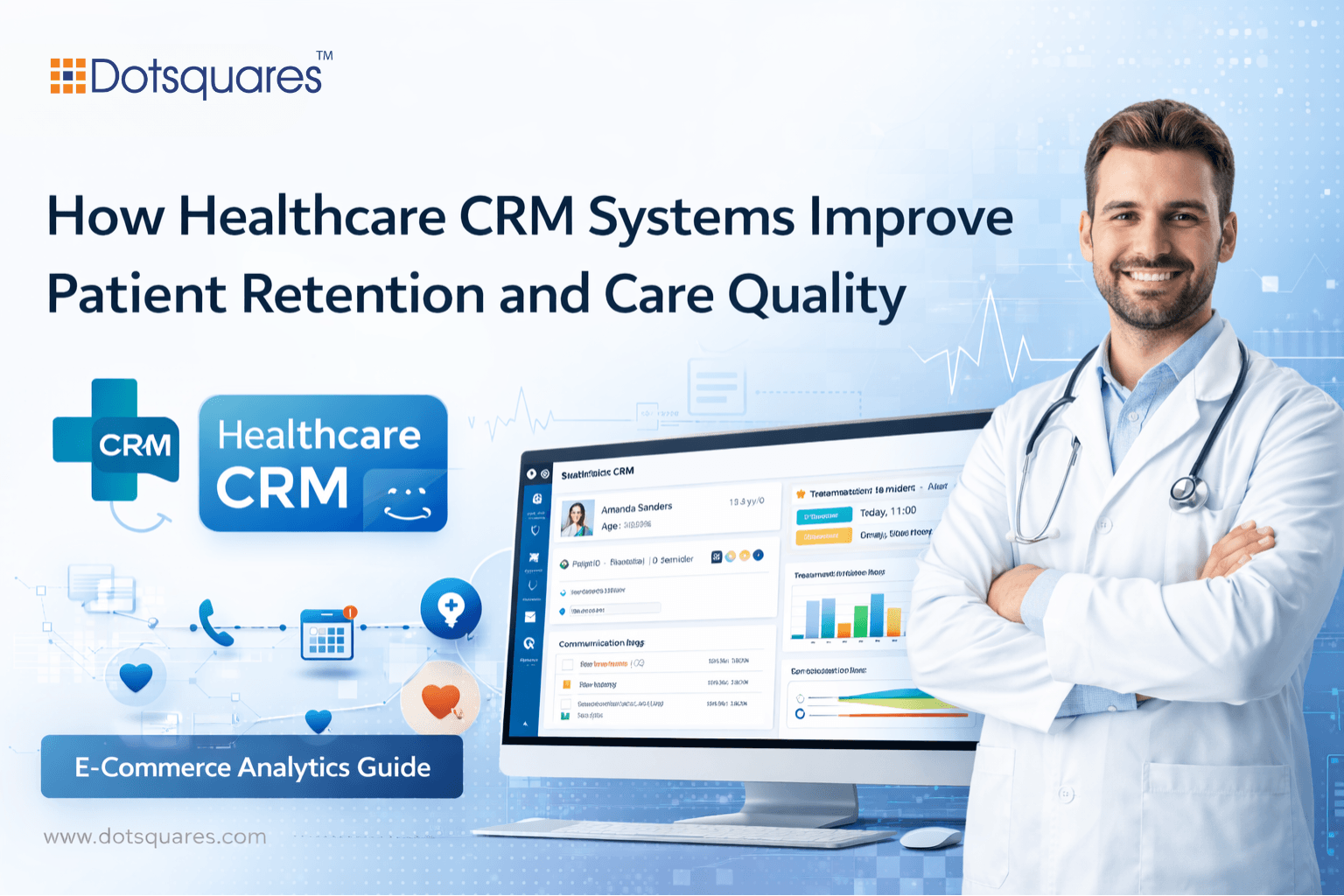
There is a quiet frustration that builds in healthcare practices, and most teams do not clock it until the numbers start slipping. Patients book once, have a decent experience, and then simply do not come back. Because nothing actually pulled them back in, no follow-ups or reminders were given.
A patient engagement CRM addresses this directly. But it only does so when the full picture is in place, and that picture starts well before anyone opens a patient record.
Most people hear CRM and picture a sales team chasing leads. Fair enough. But in a healthcare setting, the whole point shifts. You are not converting prospects, you are keeping patients connected to their own care.
Appointment histories, recall schedules, post-visit check-ins, health campaigns, the system handles all of it, so your team is not chasing each one manually across spreadsheets and post-it notes. That consistency is what stops the right patient from slipping through the gaps.
A well-configured healthcare CRM does not replace the human side of care. It protects it by making sure the administrative layer never lets someone fall off the radar.
Take the no-show problem. Most practices know that no-shows are costing them. Finding the time to actually fix it is another matter. A CRM handles it quietly, sending a reminder two days out, another the morning of, with a rescheduling link if they cannot make it.
Then there are lapsed patients. Someone who visited fourteen months ago and has not been back is completely invisible without a system watching for it. With patient retention software flagging them, they get a message that reflects their actual history with the practice. Not a blast to everyone on the list. That distinction matters. Patients notice when communication feels considered rather than generic, and they respond to it differently.
Practices that get this right tend to see return rates climb steadily. Not overnight, but consistently, which is more useful in the long run than any one-off campaign.
Care quality is honestly the less glamorous part of this conversation. Everyone wants to talk retention, but what happens inside the appointment matters just as much.
Here is where most conversations about healthcare CRM miss something important. A CRM depends entirely on patient data flowing into it. And for most patients, that data journey begins not in the clinic, but on your website.
Before a patient books, calls, or walks through the door, they visit your site. What happens there either feeds your CRM or it does not. A contact form that goes nowhere, a booking widget that sends data into a void, a homepage that gives patients no clear reason to act. All of that is a lost opportunity before a single appointment is booked.
A good medical website design company builds with this in mind from the start:
When these things are designed together, the CRM has real, usable data from the moment a new patient finds you. Medical website design services that treat the site as a clinical asset rather than a brochure produce genuinely different results: higher form completion, more bookings that convert, and patients who arrive at their first appointment already feeling looked after.
Most medical practices still treat their website as an afterthought. The ones that do not tend to be the ones patients remember
Any CRM handling patient data needs to be built with compliance at the core, not added later as an afterthought. HIPAA, GDPR, HITECH, HL7 interoperability standards, these are not boxes to tick. They are the difference between a system you can trust and one that creates risk.
The same applies to the website and any integrated systems. Role-based access controls, encrypted data handling, audit-ready workflows, secure patient portals, all of it needs to be considered at the build stage, not after the system is already live. A medical practice website design that skips this thinking early tends to be expensive to fix later.
Practices that have combined a properly configured healthcare CRM with a well-built digital presence tend to describe the same shift. Fewer gaps in the appointment book. Less time spent on manual admin and outbound reminder calls. Patients who stay with the practice rather than drifting away when life gets busy.
There is also a clinical dimension that is easy to underestimate. Patients who receive timely, relevant communication are more likely to follow through on treatment plans and attend follow-up appointments. That has a direct effect on outcomes, which is ultimately what all of this is for.
If your website and your patient communication are not working together, you are not getting the return you should from either. Dotsquares works with healthcare providers globally to build digital solutions that are joined up from day one, from medical website design agency services through to custom CRM development for medical practices, specialist clinics and healthcare groups. Our healthcare software is built with on-demand compliance-aware development practices covering HIPAA, GDPR, HITECH, and HL7 standards, with secure architectures, role-based access controls and audit-ready system design built in as standard.
Speak with our experts to learn how integrated healthcare technology solutions can streamline workflows and improve patient care



 October 15, 2026
Learn how low-code integration connects business apps and APIs, its key benefits, common use cases, limitations, and when to choose custom integration.
Keep Reading October 15, 2026
Learn about SAP BW to cloud migration, including benefits, challenges, AWS options, cost factors and planning steps for a successful migration.
Keep Reading October 12, 2026
Learn how React Native works, where it saves time and cost, which industries use it, and whether it's still a good choice in 2026.
Keep Reading