Tech
Using Data Analytics to Improve Clinical and Business Decisions
 6 min read
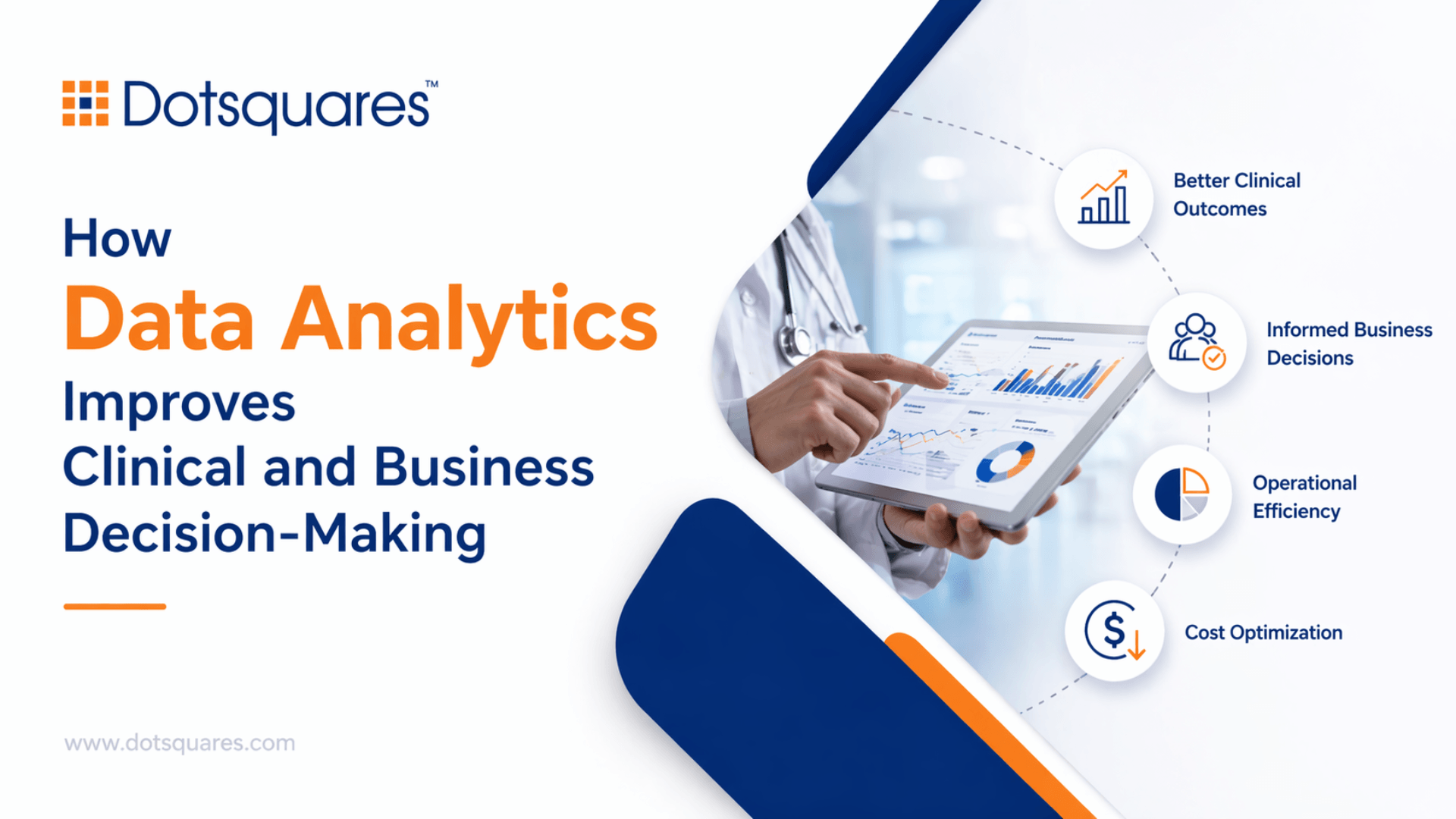
Every day in a health setting, hundreds of decisions get made, such as which treatment plan to follow, whether a patient is stable enough for discharge, how many staff to schedule on a Thursday night, whether a claim is ready to submit or not, etc. etc. Most of these decisions happen fast, often with incomplete information and the consequences of getting them wrong range from costly to catastrophic.
Data analytics does not replace the people making those decisions. It changes what they are working with when they make them.
Better Information at the Point of Clinical Decision
A clinician assessing a patient rarely has the luxury of time. They need relevant history, current readings, known risk factors and flagged contraindications, all of it quickly and in one place.
When health systems run on integrated EHR software solutions, that information is genuinely accessible rather than buried across disconnected systems. A doctor reviewing a patient with recurring admissions can see the contributing pattern rather than reconstructing it from scattered notes. The decision to adjust a treatment plan, escalate care or arrange a specialist referral becomes grounded in a fuller picture.
Readmission decisions improve effectively when care teams can see which patients carry a documented risk of returning within 30 days. Early intervention decisions get made earlier when deterioration signals appear in the data before symptoms become a crisis. The clinical judgement does not change, but the evidence feeding it does.
What Happens When Operations Lack Visibility
On the business side of healthcare, a surprising number of decisions are still made on instinct or outdated reports. Healthcare IT solutions built around operational data answer these questions with specificity. Better schedules come from understanding when patients don’t show up. Procurement decisions get sharper when supply usage data reflects what is actually being consumed rather than what was estimated. Discharge planning decisions move faster when bed occupancy data flows in real time rather than appearing in a morning report.
IT solutions for the healthcare industry work best when they connect these data streams across departments. A discharge delay that looks like a clinical issue often has its root in a staffing or bed management decision made hours earlier. Connected data makes that visible.
Where AI Shifts Decision-Making from Reactive to Predictive
Standard reporting supports one kind of decision: responding to what already happened. AI supports a more valuable kind: acting before a situation deteriorates.
Custom AI-powered healthcare solutions are now embedded in clinical workflows at a production level. They identify patients likely to deteriorate hours before vital signs would prompt a manual review, giving care teams time to make a preventive decision rather than a crisis one. They flag billing records likely to result in claim denials before submission, so the correction decision happens at the right moment. They surface care pathway options drawn from outcomes data across comparable patient profiles, informing decisions that would otherwise rely entirely on individual experience.
Healthcare software development has reached a point where these capabilities are not specialist tools. They are built into the platforms clinicians and administrators use every day, through scalable HealthTech systems designed to handle the data volumes that make prediction reliable.
The Decision to Discharge, Refer or Monitor
One of the most consequential decisions in clinical care is also one of the most data-dependent: when to discharge a patient and what to put in place afterwards.
Discharge too early and the patient returns. Discharge too late and the bed is unavailable for someone who needs it. Both outcomes carry clinical and financial costs.
Custom healthcare software built around integrated patient data supports this decision with a level of specificity that manual review cannot match. Predicted recovery trajectories, social circumstance flags, follow-up appointment availability and community support capacity can all feed into a discharge decision in a way that makes the outcome more reliable on both sides.
Customised healthcare apps extend this further. When patients managing long-term conditions have access to remote monitoring tools that feed data back to the care team, clinicians can make informed decisions about whether a face-to-face visit is necessary or whether a remote intervention is sufficient. Healthcare mobile appdevelopment services built for this purpose reduce unnecessary appointments while keeping the clinical team genuinely informed.
Financial Decisions That Depend on Accurate Data
Revenue cycle management is, at its core, a series of decisions like, which codes to apply? when a claim is ready to submit, how to respond to a denial, whether a payer contract is worth renewing.
Each of these decisions improves when the underlying data is clean, connected and accessible. Health organisations that invest in healthcare software development solutions with strong financial data integration see measurable reductions in denial rates and faster reimbursement cycles, grow not because the rules changed, but because the people making the decisions have better information to act on.
Labour costs represent the largest operational expense in most health organisations. Predictive staffing models built into healthtech software development platforms help workforce managers make scheduling decisions based on anticipated patient volumes rather than last week’s figures. The financial impact of getting those decisions right consistently is significant.
Building the Foundation That Makes Good Decisions Possible
None of this works on a fragmented data infrastructure. A health organisation running on disconnected legacy systems will always find that the data needed for a good decision is either unavailable or arrives too late.
Custom HealthTech software built around interoperability addresses this at the foundation. When EHR records, billing data, operational figures and patient-reported information move through a shared architecture, the right data reaches the right person at the right moment. That is the condition under which better decisions actually get made.
Working with experienced healthcare software experts from the outset matters because the architecture choices made early determine what is possible later. Systems built for connectivity support better decisions indefinitely. Systems built in silos constrain them indefinitely.
Decisions Are the Outcome That Matters
Analytics tools, AI models and integrated platforms are all means to an end. The end is a clinician making a better-informed care decision, an operations manager catching a cost problem before it compounds, or a billing team submitting a claim that holds.
Dotsquares builds healthcare IT solutions designed around the decisions that matter most in your organisation. From custom healthcare software to full healthtech software development services, the work starts with understanding what your teams need to decide and builds the data infrastructure to support it.
Talk to our healthcare IT team about where better decisions would make the biggest difference.


Related Post
 October 15, 2026
Low-Code Integration: What It Is, How It Works and When Businesses Should Use It
Learn how low-code integration connects business apps and APIs, its key benefits, common use cases, limitations, and when to choose custom integration.
Keep Reading October 15, 2026
SAP BW to Cloud Migration: Benefits, Challenges and Planning Steps
Learn about SAP BW to cloud migration, including benefits, challenges, AWS options, cost factors and planning steps for a successful migration.
Keep Reading October 12, 2026
Mobile App Development with React Native and What You Need to Know
Learn how React Native works, where it saves time and cost, which industries use it, and whether it's still a good choice in 2026.
Keep Reading