
Is Your Business AI-Ready?

Tech
 6 min read
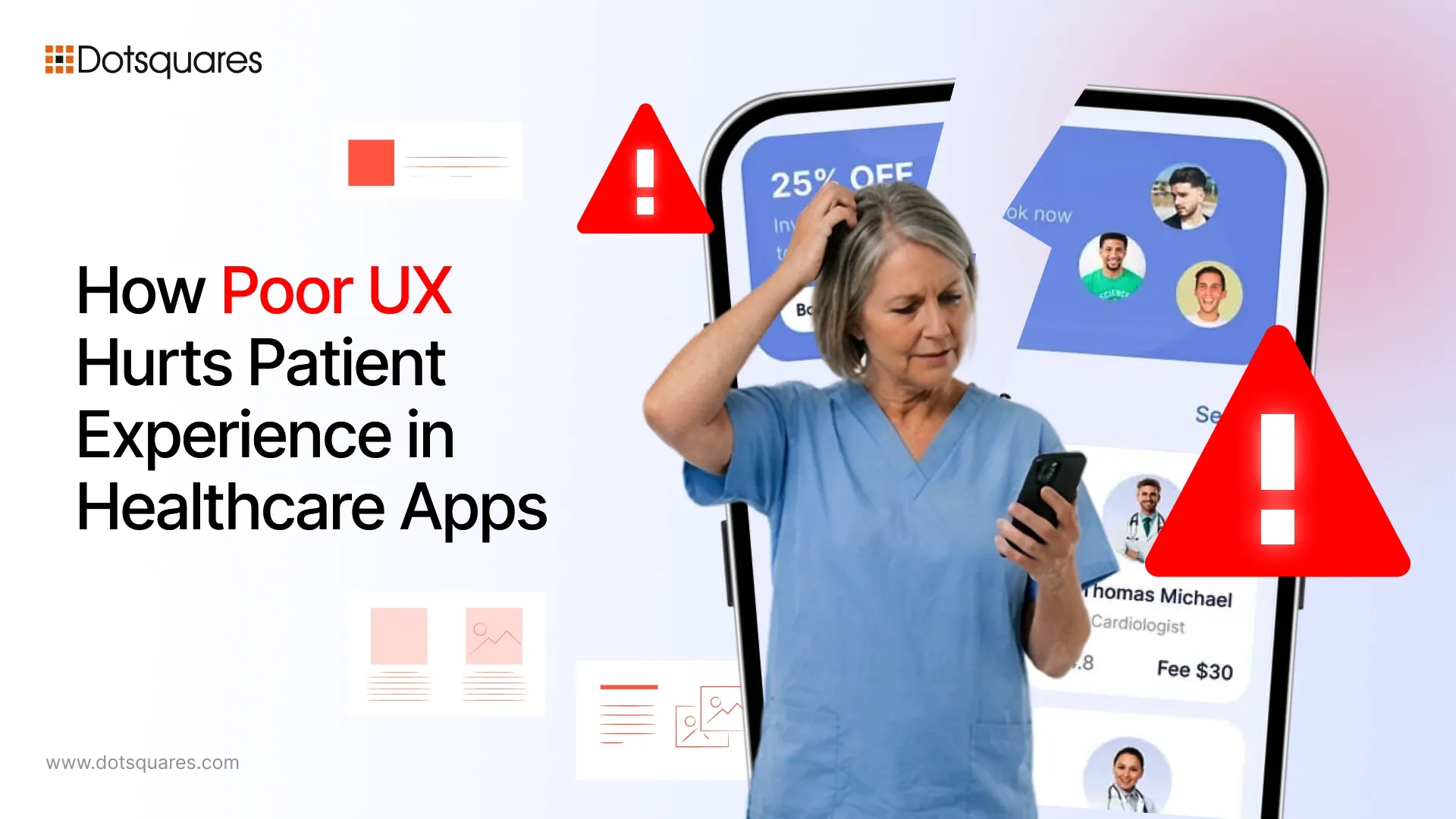
According to Experian Health’s 2026 State of Patient Access Survey of US patients, conducted across 200+ providers and 1,000 patients, only 18% of patients believe their digital healthcare access has actually improved, even as providers continue investing in new tools and platforms.
That gap between what providers build and what patients experience is a UX problem.
As more people rely on apps and portals to manage their healthcare interactions, the quality of that digital experience directly shapes how patients feel about their care. When the interface fails them, they may disengage, with some delaying care or walking away entirely.
Think about the last time you struggled to find something on an app. Frustrating, right? Now imagine you just got a worrying test result back and you are trying to reach your doctor. You open the portal, click around for two minutes, hit a dead end and give up.
For many patients, this happens almost all the time.
Navigation problems are one of the biggest reasons people abandon healthcare platforms entirely. Some of the most common ones:
A good medical website design agency thinks about who is actually on the other end of the screen, and often it is someone elderly, unwell or stressed. For them, every extra click is a barrier to care.
Here is something that does not get talked about enough. The people who need healthcare apps the most, older adults, people with chronic conditions and those with disabilities, are often the ones those apps fail hardest.
Walk through a few real examples:
Beyond the human cost, there is a legal one. WCAG (Web Content Accessibility Guidelines) compliance is not optional for many healthcare providers, and ignoring it creates real liability. Medical practice website design that takes accessibility seriously from day one costs far less than retrofitting it later, and it serves far more people.
Patients are sharing some of their most personal information on these platforms. Medical history, insurance details, and symptoms they have not even told their family about yet. When they land on a portal that looks outdated, loads slowly or behaves strangely, something shifts.
They do not consciously think, but feel that this site looks insecure. And that feeling is often enough to make them close the tab.
Healthcare trust is fragile at the best of times. A well-designed interface does not just look better, it communicates that the provider behind it is competent, careful and worth trusting. It affects whether patients return, whether they complete their care journey and whether they recommend the practice to anyone else.
Working with a medical website design company that understands this psychology is a different proposition entirely from hiring a generalist agency that treats healthcare like any other sector.
Patient intake forms are everywhere in healthcare apps. They are also, almost universally, a nightmare to fill out. A few reasons why:
Individually, each of these feels like a minor annoyance. Stack them together, and you have a patient who abandons the form, skips the appointment, and does not reschedule. Website design for medical doctors needs to treat the intake form as seriously as any clinical process, because at that moment, it is one.
Mobile devices have overtaken desktop computers as the primary method of accessing healthcare technology solutions. Patients are now using their phones instead of a computer or tablet to check their test results, communicate with a provider, or schedule a follow-up appointment. Patients frequently access their healthcare via mobile devices and do so while eating lunch or commuting to and from work and while at home relaxing on the couch. Because of this shift in patient access, the design of healthcare applications must produce a seamless experience regardless of where the patient is and at what time; therefore, the applications must perform quickly, reliably, and easy to use in the real world while on the go.
Many do not. Common failures:
If a healthcare app feels harder to use than a banking app or a food delivery service, patients notice. They may not say it out loud, but it changes how they feel about the provider attached to it.
It is not a long list, honestly. Clear navigation. Forms that do not fight back. A mobile experience that holds up. Language that a non-medical person can understand without having to Google anything. Feedback that tells the patient something actually happened when they hit submit.
That 18% patient satisfaction figure from Experian Health is not a technology problem. Providers have the technology. What is missing, far too often, is the design thinking that makes that technology usable for real people in real situations.
If your platform isn’t working the way your patients need it to, Dotsquares can help. The team brings deep expertise in building trusted medical websites, with design services tailored to how healthcare users actually behave not how we assume they do.



 October 15, 2026
Learn how low-code integration connects business apps and APIs, its key benefits, common use cases, limitations, and when to choose custom integration.
Keep Reading October 15, 2026
Learn about SAP BW to cloud migration, including benefits, challenges, AWS options, cost factors and planning steps for a successful migration.
Keep Reading October 12, 2026
Learn how React Native works, where it saves time and cost, which industries use it, and whether it's still a good choice in 2026.
Keep Reading