
Is Your Business AI-Ready?

Tech
 6 min read
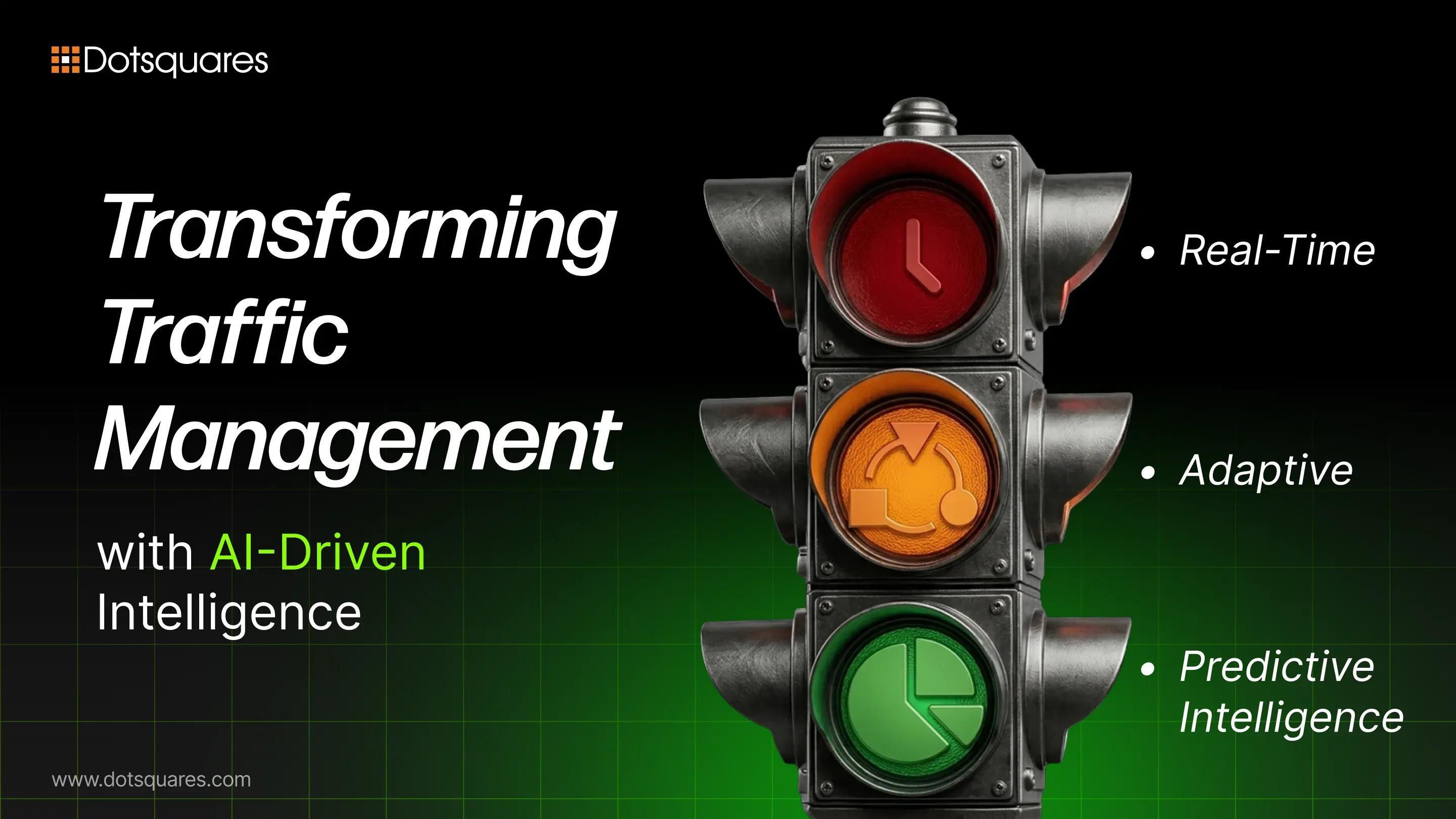
The last time you experienced traffic congestion please think about it. The situation creates frustration because it results in traffic jams which occur throughout the entire city without any system to determine the causes or develop solutions.
The current situation describes what most urban locations experience. The situation has reached a point which needs immediate action.
The speed of urban expansion exceeds the rate at which cities develop necessary infrastructure. Roads today experience vehicle traffic which exceeds their original design specifications. The existing systems which handle all operations present a management challenge because their development has not kept pace with current requirements.
The traditional approach to traffic management depends on three core elements which include fixed signal timings and manual monitoring and traffic flow control through reactive decision-making. The system reaches the point of congestion which occurs because of existing incidents when the system encounters its peak traffic volume and all relevant data becomes outdated by several hours.
The issue does not involve traffic. The core challenge involves collecting information. AI has begun to provide solutions for the issue.
Before getting into what's possible, it's worth understanding what cities and transport authorities are actually up against.
Active systems today can only detect a small portion of current road network activities. The presence of blind spots creates a situation where all hidden elements become unmanageable.
Operators sitting in control rooms watching feeds manually simply can't process information fast enough. Important events get missed, responses are delayed, and the sheer volume of data becomes unmanageable at scale.
More vehicles, more delivery traffic, more complexity. Urban congestion isn't just an inconvenience; it has real economic costs, environmental impact, and knock-on effects across public transport and emergency response times.
Traffic management throughout a city requires solving multiple different problems which create operational challenges at various intersections and roadways and dedicated areas. The complete coordination process becomes highly challenging because organizations need to use advanced technology systems for successful operations.
Traffic decisions are made using current data instead of relying on intuitive feelings and obsolete models. Because of this, all operational processes need to establish their timing for signals and distribution of resources and construction activities based on their existing data.
The growth of camera networks together with sensor systems creates an enormous data production rate. Most legacy systems lack the necessary infrastructure and intelligence capabilities required for real-time processing and data transformation into useful outcomes.
The situation develops into its most fascinating phase during this moment. The AI traffic management system functions as a complete entity which combines multiple interconnected functions to create a comprehensive operational system. The following explains how this concept operates within actual working environments.
The system uses computer vision and machine learning technology to detect and classify vehicles which it tracks across multiple camera feeds without human supervision. The system operates without human supervision because it can monitor multiple screens simultaneously and provide accurate results throughout the day. The foundation of this system establishes the essential requirements for any advanced AI traffic management solution.
The increasing size of data generated by expanding camera networks and sensor systems creates an enormous data processing challenge because most traditional systems lack the required infrastructure and intelligence needed for real-time processing and useful output creation.
The system tracks vehicle density throughout different zones and corridors to predict which areas will experience traffic congestion before it develops into a major issue. Planners utilize emerging patterns from data analysis to understand present circumstances and determine the reasons for their continuous occurrence.
The process of manual reporting requires an extended period while it introduces multiple possibilities for generating incorrect information. The traffic analytics software solution creates precise and consistent reports which include peak traffic times, incident counts, and areas of severe traffic congestion without any need for spreadsheet data entry.
The system requires capacity to process multiple camera streams which number from hundreds to thousands across the entire city. The system achieves scalable performance through its correct architectural design, which enables system expansion by connecting additional cameras to new areas without requiring system reconstruction.
When something goes wrong, an accident, a breakdown, or unusual congestion, the system detects it automatically and sends alerts to the right people. Response times improve. Secondary incidents caused by delayed reactions decrease.
The combination of these elements creates a system that delivers advanced capabilities beyond simple monitoring functions. The advanced smart traffic management system establishes live signal control through real-time traffic conditions while it gives emergency vehicles priority and detects traffic anomalies before they grow into major problems, which it uses to create data for smart city traffic systems that connect various urban transportation networks.
A city foundation for traffic operations needs to develop systems which allow for prediction of traffic problems instead of responding to actual traffic problems. The development of this platform needs specialized knowledge which spans both AI and Machine Learning Services and Custom Software Development because its technical difficulties require expertise in both AI technologies and system design and component integration.
An AI-powered traffic monitoring platform is only as good as its ability to perform under pressure. Rush hour doesn't slow down; the system can't either.
That means low-latency processing, reliable uptime, and the ability to scale as the network grows. Good intelligent transportation system development bakes these requirements in from the start rather than trying to retrofit them later. Edge computing, cloud infrastructure, and API-based architecture all play a role in making sure the system stays fast and responsive regardless of how much data it's handling.
The downstream effects of getting traffic management right are significant. Reduced congestion means lower emissions. Better incident response means fewer secondary accidents. Smarter signal control means public transport runs more reliably.
Cities that develop smart infrastructure see AI traffic management system development as essential. The data generated from this process supports city planning initiatives, proves the need for infrastructure development, and establishes an ongoing process of improvement which continues to enhance efficiency.
If you're curious about where AI-driven urban systems are heading more broadly, it's worth exploring what the best AI agent development companies are building. The underlying technology is advancing quickly.
Traffic management through its initial appearance shows simplicity which conceals deeper complexities which arise when you begin to examine its details. The system contains extensive complexity which leads to high expenses because any errors will result in lost operational time and fuel costs together with failed emergency responses and public dissatisfaction.
AI-powered traffic management doesn't eliminate that complexity. But it makes it manageable, and for the first time, it makes truly intelligent, responsive, city-scale traffic control a realistic goal rather than a distant ambition.
The technology is ready. The question now is whether cities are willing to use it.



 October 15, 2026
Learn how low-code integration connects business apps and APIs, its key benefits, common use cases, limitations, and when to choose custom integration.
Keep Reading October 15, 2026
Learn about SAP BW to cloud migration, including benefits, challenges, AWS options, cost factors and planning steps for a successful migration.
Keep Reading October 12, 2026
Learn how React Native works, where it saves time and cost, which industries use it, and whether it's still a good choice in 2026.
Keep Reading