 4 min read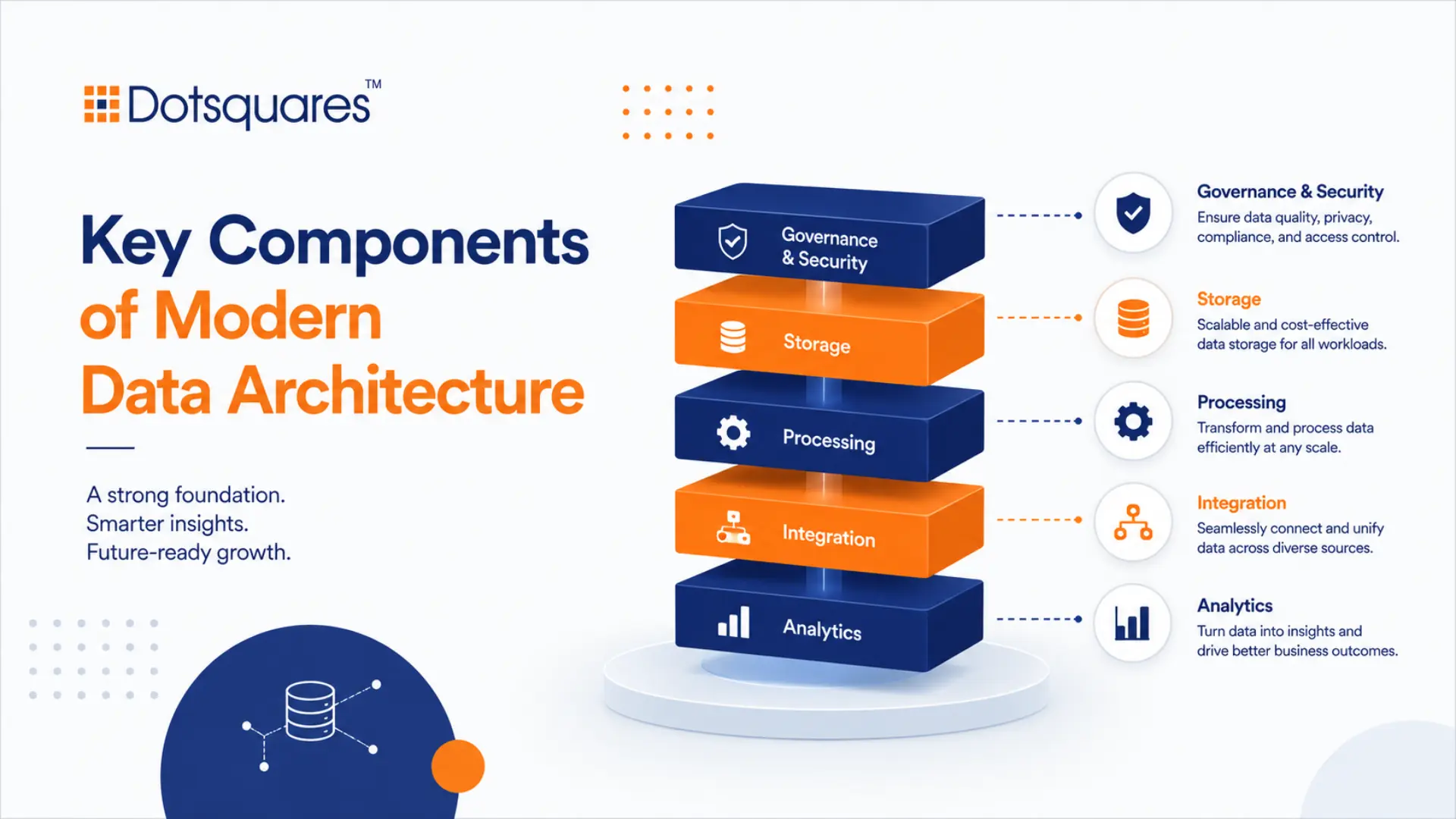
Today organisations rely on well-structured data architecture to manage, process, and utilise information effectively. The presence of a well-planned data structure determines how data is collected, stored, integrated, and used across the business. An effective architecture of data not only helps in making appropriate decisions but also enhances efficiency, scalability and compliance.
But, then a question arises about how an effective data architecture is designed, because data collection is not restricted to only the collection of data at one place, it requires proper segmentation, storage, designing their models and many more. This requires a proper understanding of the components that are required to make an effective architecture for data.
Data Sources:
Data sources are the places from which the data is collected. These sources can be CRM platforms, financial tools, or data collected from the market or third-party APIs. Businesses should consider the types of data and their source, and ensure the quality and reliability of the data collected.
Data Ingestion:
Data ingestion is the process of collecting data from multiple sources and storing it in a centralised system. Data ingestion aims at significant transfer of data with safety and accuracy. It should focus on validating the data collected from different sources, managing errors and latency, and ensuring data storage capacity can be expanded as the quantity of data increases.
Data Storage:
Data collection doesn’t mean collecting the data and storing at a centralised system. Once the data is collected, it should be stored in such a way that it is easily accessible and enhances the performance of an organisation. For this, businesses use a combination of multiple technologies, such as databases, data lakes, and data warehouses. The approach to data storage solutions mainly depends on how the data will be used, how many times it will be accessed, and the compliance required in its maintenance. Backup strategies and lifecycle management are also critical to ensure data durability.
Data Models:
Data models are used to determine how the data is presented and related to business. Data models provide a logical framework that helps organisations organise and interpret data effectively. Development of data models is done at three levels, conceptual, logical and physical.
Data Processing:
Data processing in the process of converting the actual collected data into meaningful information by filtering and sorting. There are different ways in which data is processed, including batch processing, real-time processing, or a hybrid approach based on their business requirements.
Data Governance:
This component ensures that data is accurate, consistent, and collected according to regulations. It includes defining policies for using data, determining responsibilities, and maintaining accountability through auditing. Strict rules and regulations in data management minimise the risks of data leakage and enhance trust in data within the organisation.
Data Integration:
Data integration is the process of combining data collected from multiple sources on a unified platform to get a consistent view. Integration of data helps in maintaining the same data available on all systems at the same time. It also involves defining the rules of data transformation and selecting tools that are in accordance with the organisation’s technology ecosystem.
Data Security and Privacy:
Protecting data is the core objective of modern architecture. Techniques like encryption, access control, and threat detection help in protecting sensitive information. With all these practices, businesses should also ensure to follow the rules and regulations determined for processing and storing data.
Data Management:
Management of metadata refers to the complete data history from the place of its origin to its usage for which it is used. Availability of well-managed metadata is helpful in understanding the data more clearly improves its quality, and supporting governance initiatives. It also enhances transparency by tracking how data is shared within the different departments.
Conclusion:
Modern data architecture is based on various interconnected components working together to manage the complete data set. Starting from data collection to its ingestion to compliance and security, every component plays an important role in ensuring the reliability, accessibility and value of data. If you're still evaluating the best approach for your business, explore our guide on the right data architecture to make a more informed decision


Related Post
 October 15, 2026
Low-Code Integration: What It Is, How It Works and When Businesses Should Use It
Learn how low-code integration connects business apps and APIs, its key benefits, common use cases, limitations, and when to choose custom integration.
Keep Reading October 15, 2026
SAP BW to Cloud Migration: Benefits, Challenges and Planning Steps
Learn about SAP BW to cloud migration, including benefits, challenges, AWS options, cost factors and planning steps for a successful migration.
Keep Reading October 12, 2026
Mobile App Development with React Native and What You Need to Know
Learn how React Native works, where it saves time and cost, which industries use it, and whether it's still a good choice in 2026.
Keep Reading